
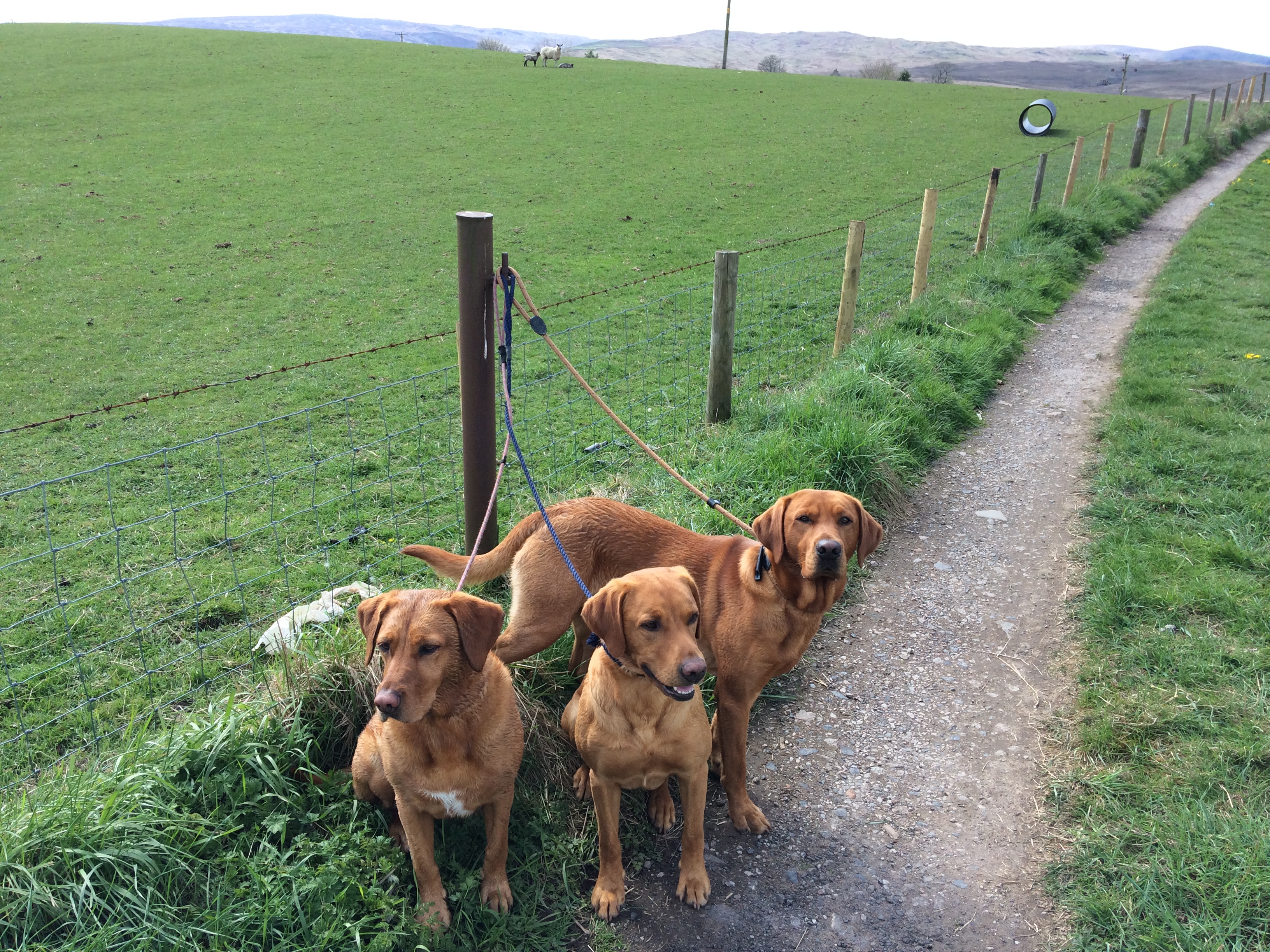
When running with the dog around the local roads here in the east of the Lake District National Park occasionally I come across a lost motorist. Following GPSs these days can take drivers on roads that are not really suitable. There is a private United Utilities road that runs almost 6 miles from the M6 to Hawes Water. It is rough and narrow and there are many clear signs that say it is private and cars are not insured when on it. It doesn’t stop many from following their GPS though.
A couple of weeks ago I met such a transgressor near Naddle Farm who stopped me and asked me the way to the lake. After my brief directions he told me that his wife wanted to visit, as her grandfather had worked on the dam in the 1930s. Specifically, he had been a Royal Engineer, and part of the team that had worked on the destruction of Mardale Green village. I took interest immediately, as such a change in the landscape was so controversial at the time, not to mention the rehousing the farming families of two villages who had been established there for many years. Alfred Wainwright, the famous walker and author, was a vociferous critic and protested bitterly, “Mardale is still a noble valley. But man works with such clumsy hands! Gone for ever are the quiet wooded bays and shingly shores that nature had fashioned so sweetly in the Haweswater of old; how aggressively ugly is the tidemark of the new Haweswater.”
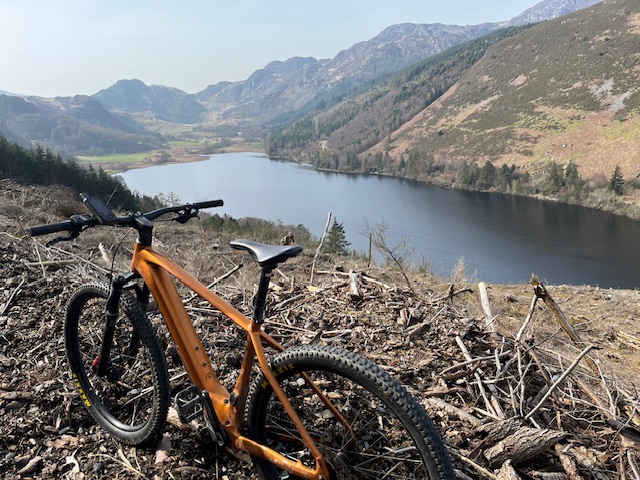
Originally, Haweswater was a natural lake about four kilometres long, nearly divided by a tongue of land at Measand. The two reaches of the lake were known as High Water and Low Water. The resultant flooding would provide much needed water for Manchester, as it has done so efficiently since then.
Before the valley was flooded in 1935, all the farms and dwellings of the villages of Mardale Green and Measand were demolished, as well as the centuries-old Dun Bull Inn at Mardale Green. The village church was dismantled and the stone used in constructing the dam; most of the bodies in the churchyard were exhumed and re-buried at Shap. Today, when the water in the reservoir is low, the remains of the submerged village of Mardale Green can still be seen, including stone walls and the village bridge. This most recently happened in July 2010. Absolutely no such occurence this year though, as there has been so much rain.
Specifically this Royal Engineer, along with with a colleague, was responsible for moving the church external wall and all of its graveyard. By this time I was hooked by their story. Though most of bodies were recovered with some ease, some were beyond exhumation, those lying in the outer parts of the graveyard; their coffins and mortal remains were in no state to be moved anywhere. Though the Manchester Corporation claimed 97 were moved, the Royal Engineers, had two practically empty caskets, any withered body part that had remained in them were lost in transportation.
Their brief story became even more mysterious. The series of events had been related to the granddaughter by her father, as both of the Engineers had died not long after the flooding; the Royal Engineer-grandfather by his own hand, jumping from the new dam into the waters weighed down by a heavy stone backpack. The woman’s father had done some more investigation and found that the spoiled graves belonged to two women accused of witchcraft, and hence had been buried just outside the walls of the church. This woman and her daughter were hanged at Mardale Green in 1614 following the visit of a Witchfinder and a hasty trial. The nearby Lancaster Assizes and Pendle Witch Trials had been just two years earlier. Evadne and her daughter 16 year old daughter, Venetia, had made a living from trading healing potions, but this came unstuck when they prescribed the local Squire with a potion that killed him the day after he had taken it, even though he was so sick he could well have died anyway. This had led to a visit from the then Witchfinder General, John Hopkins, who had been nearby in Morecambe. He struggled to find evidence of any “witch’s marks” on either of their bodies, and resorted to current practice of “pricking” with his self-designed “pricker”. The theory was that witches were supposedly insensitive to pain and would not bleed. Evadne and Venetia shed no blood. Only months after Hopkins was discovered as a conman and himself hung (and drawn and quartered). He was found to use trick dulled needle-points to falsely accuse, and had become rich and famous from the purse and acclamation he received from each ‘successful’ case.
Half an hour had passed with the telling of their tale and we both had places to be. I resolved to research further and speak to some local families, they drove the remaining 5 miles around the lake to pay their respects.
It wasn’t until three days later that I picked up some relevant local news. A car had been discovered near Wet Sleddale not far from the M6 junction, and inside it, two bodies, an elderly couple who had died as a result of carbon monoxide poisoning. The vicar at St Michael’s Church in Shap had seen the couple at the Mardale graves in the early afternoon. He remembered their strange behaviour; they had crudely written the names Evadne and Venetia on two unmarked headstones. It appears that not long after this, they had stopped for a doze just a mile off the road and left the engine running to stay warm. A malfunction of the exhaust system appeared to be the cause, the local news reported. Surely, I thought, it couldn’t be the couple I met earlier in the week at the road junction at Naddle?


 Safe Return Doubtful
Leave a comment