Pentalofos on a Friday evening is a noisy place, which wasn’t a surprise, I knew it would be. First it was the chainsaws, all afternoon. It’s the time of the year for chainsaws. I note that I don’t often see women operating chainsaws. Something about men and power tools; as loud as possible, without any safety clothing. I’d take a wild guess that the operators all have small ones, and need a substitute.
In the evening the four bars are all popular; 70s and 80s music gives an idea of the age of the clientele. But every now and then I quite like this. From my position above the ‘downtown’ I can watch the place, and it’s folk, parading between the bars. Children and dogs also.
And in the morning there is the Orthodox chant, that began this morning at 8 am. The speaker, about 20 metres from where I was parked. I was up and about already, but it didn’t help my concentration on my new literature discovery, the horror of Hans Heinz Ewers, a German who wrote boldly and was quite shocking in the early 1900s, a big influence on Lovecraft.
The Greek Orthodox chant dates back to the origins of the Byzantine times, around the year 400. Chanting in the Orthodox tradition can be described as being halfway between talking and singing; it is musical but not music. Only a few notes are used in chanting, and the chanter reads the words to these notes at a steady rhythm.
Looking back at Pentalofos this morning..
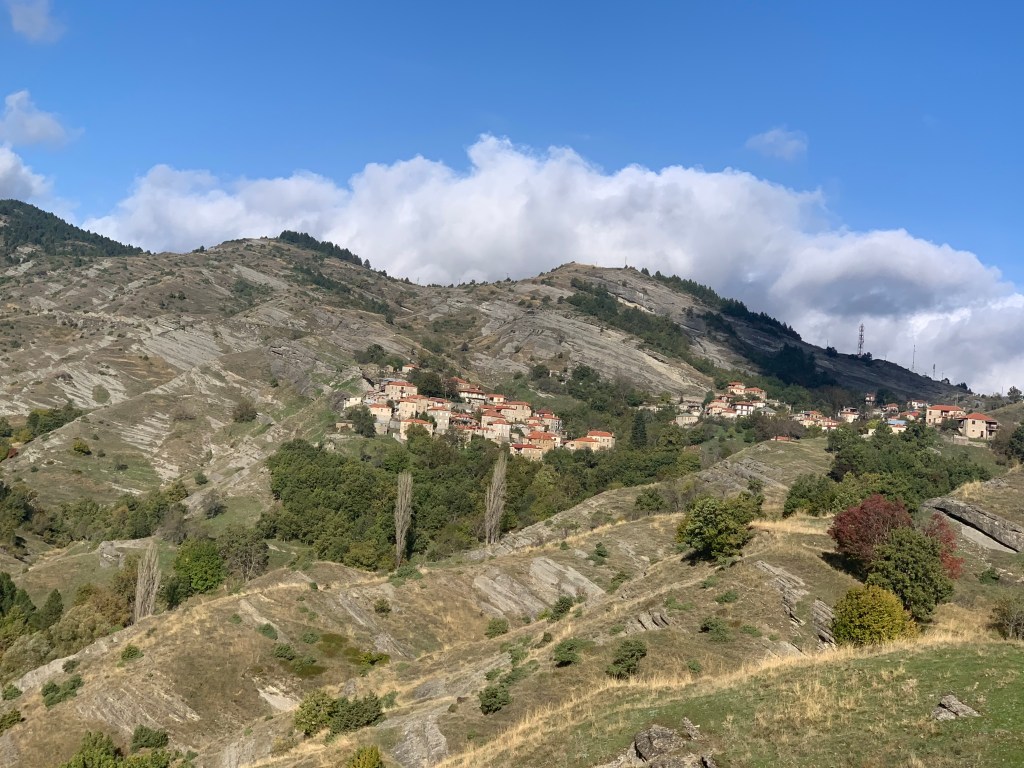
I’m now in the Grevena region of Western Macedonia. Macedonia means highlands, and travelling the 40 kilometres between Pentalofos and Spileo this morning was a slow rollercoaster of a journey, up and down between about 800 and 1000 metres frequently, on rarely used narrow roads with sharp bends and hairpins. It was tremendous.
Pentalofos on a Friday evening is a noisy place, which wasn’t a surprise, I knew it would be. First it was the chainsaws, all afternoon. It’s the time of the year for chainsaws. I note that I don’t often see women operating chainsaws. Something about men and power tools; as loud as possible, without any safety clothing. I’d take a wild guess that the operators all have small ones, and need a substitute.
In the evening the four bars are all popular; 70s and 80s music gives an idea of the age of the clientele. But every now and then I quite like this. From my position above the ‘downtown’ I can watch the place, and it’s folk, parading between the bars. Children and dogs also.
And in the morning there is the Orthodox chant, that began this morning at 8 am. The speaker, about 20 metres from where I was parked. I was up and about already, but it didn’t help my concentration on my new literature discovery, the horror of Hans Heinz Ewers, a German who wrote boldly and was quite shocking in the early 1900s, a big influence on Lovecraft.
The Greek Orthodox chant dates back to the origins of the Byzantine times, around the year 400. Chanting in the Orthodox tradition can be described as being halfway between talking and singing; it is musical but not music. Only a few notes are used in chanting, and the chanter reads the words to these notes at a steady rhythm.
I’m now in the Grevena region of Western Macedonia. Macedonia means highlands, and travelling the 40 kilometres between Pentalofos and Spileo this morning was a slow rollercoaster of a journey, up and down between about 800 and 1000 metres frequently, on rarely used narrow roads with sharp bends and hairpins. It was tremendous.
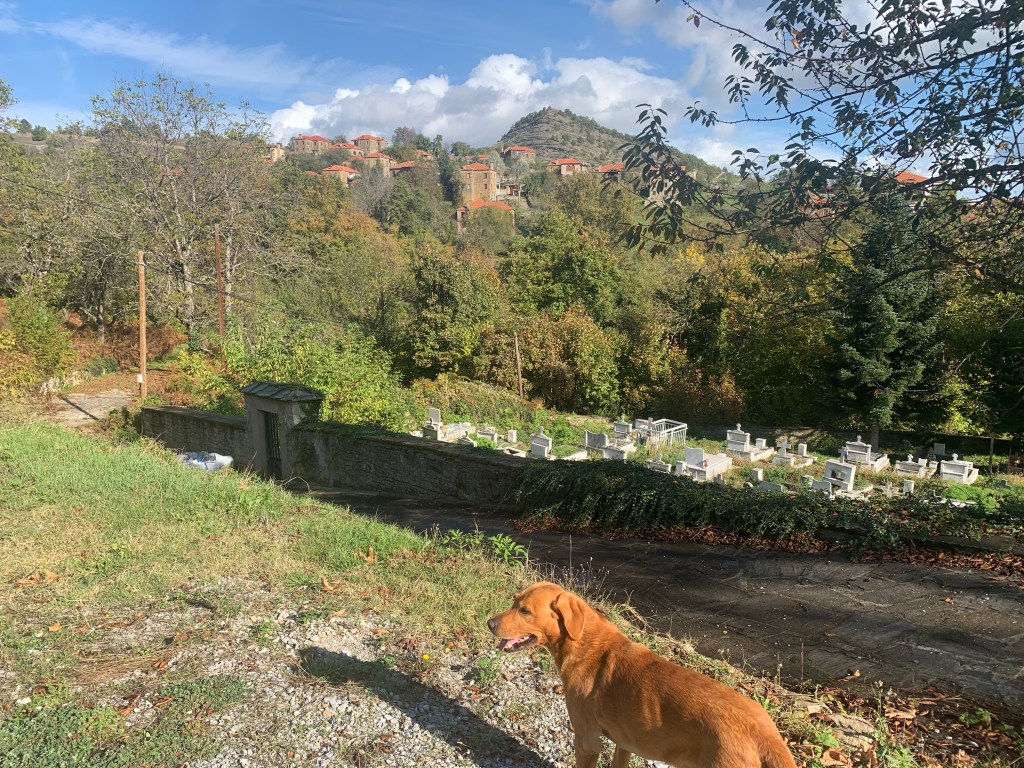
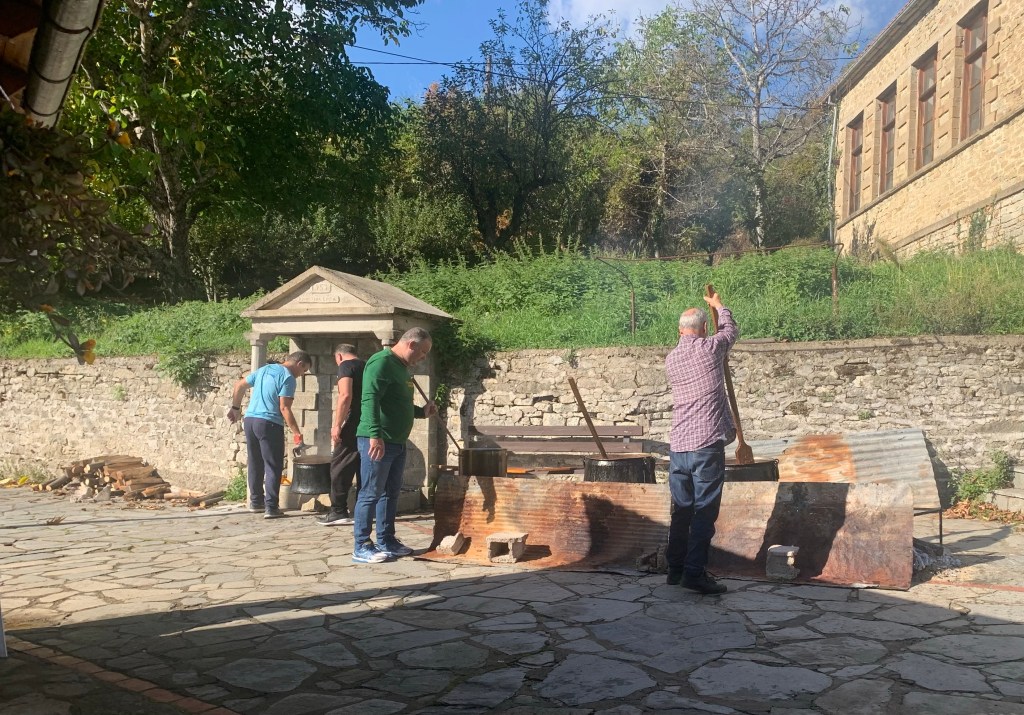
The first village I came across was Dilofo, at 1050 metres, and there were quite a few people around, so I parked up, took a wander with Roja, and went in search of coffee. I was soon talking to the locals, who told me it was Autumn Festival day, their real celebration of the year. In the summer there are too many tourists, they told me. One guy asked me why I wasn’t in Mykonos, then smiled, and said that I didn’t look like the sort of person who enjoyed Mykonos, rather, the highlands. He was keen to know where I considered my favourite places, a question I often ponder myself.
The Festival was explained. Preparation of the food was underway, most people drinking iced coffee. It will begin in the late morning and last until about 5 pm. There will be a local band, who were just setting up. Though their very mention caused some laughter. And dancing. It is strictly a local affair, to which they invite two or three other nearby villages. Food is the highlight; kontosouvli, slow cooked pork which then resembles pulled pork, but more spicy, really good actually. I was offered a taste, to go with the coffee I was presented with. Many will drink tsipouro, a local and traditional spirit.
We rolled on, up and down, round the curves steadily, stopping often to take in the spectacular country, and the historical Byzantine sites, bridges, monasteries, chapels, and villages. The weather is pleasant, partly cloudy, a maximum of around 20C, and up at 1000 metres, an overnight low of about 10C.
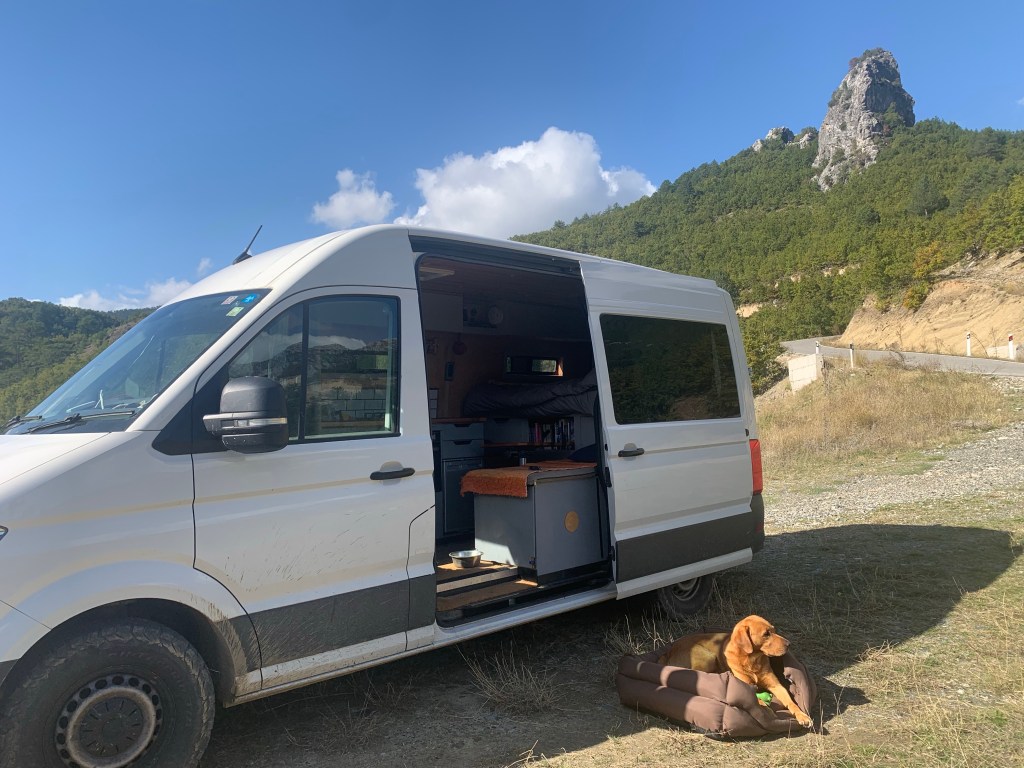
The village of Spileo is more accessible to day visitors from nearby towns of Grevena and Konitsa, and there were quite a few people having lunch in the village centre, here also most likely, to visit the Portitsa Gorge. The Venetikos river is 300 metres below the village, and the gorge is a popular tourist spot. I drove the curly road down, but with quite a few cars around, and it being early afternoon, I postponed my visit until tomorrow morning, and retreated back, about halfway up the curly road, to a suitable stopover spot I had seen earlier.
We spent an afternoon lazing about, watching sport, catching up on some admin, before a wander prior to the Premiership rugby. The hour gives back across Europe tonight, so it will be dark at around 6 pm tomorrow.

The first village I came across was Dilofo, at 1050 metres, and there were quite a few people around, so I parked up, took a wander with Roja, and went in search of coffee. I was soon talking to the locals, who told me it was Autumn Festival day, their real celebration of the year. In the summer there are too many tourists, they told me. One guy asked me why I wasn’t in Mykonos, then smiled, and said that I didn’t look like the sort of person who enjoyed Mykonos, rather, the highlands. He was keen to know where I considered my favourite places, a question I often ponder myself.
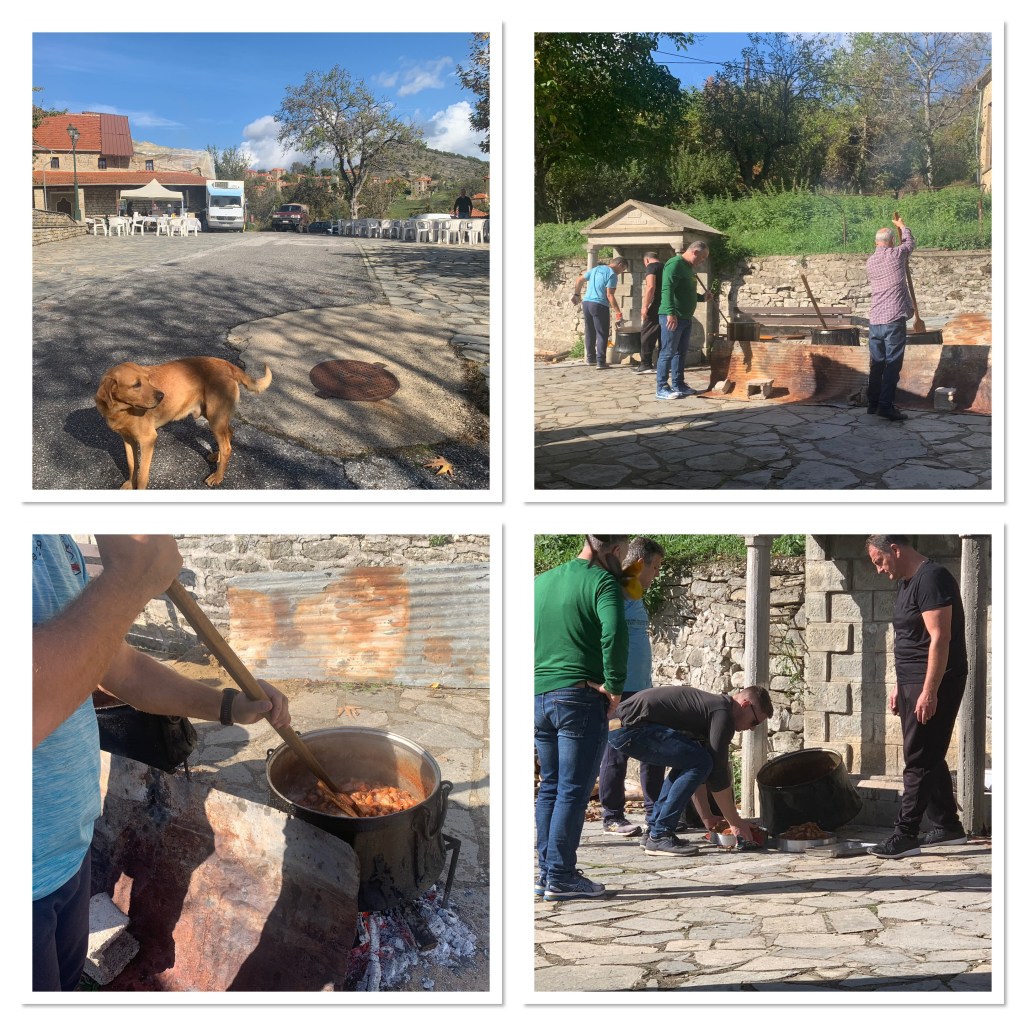
The Festival was explained. Preparation of the food was underway, most people drinking iced coffee. It will begin in the late morning and last until about 5 pm. There will be a local band, who were just setting up. Though their very mention caused some laughter. And dancing. It is strictly a local affair, to which they invite two or three other nearby villages. Food is the highlight; kontosouvli, slow cooked pork which then resembles pulled pork, but more spicy, really good actually. I was offered a taste, to go with the coffee I was presented with. Many will drink tsipouro, a local and traditional spirit.
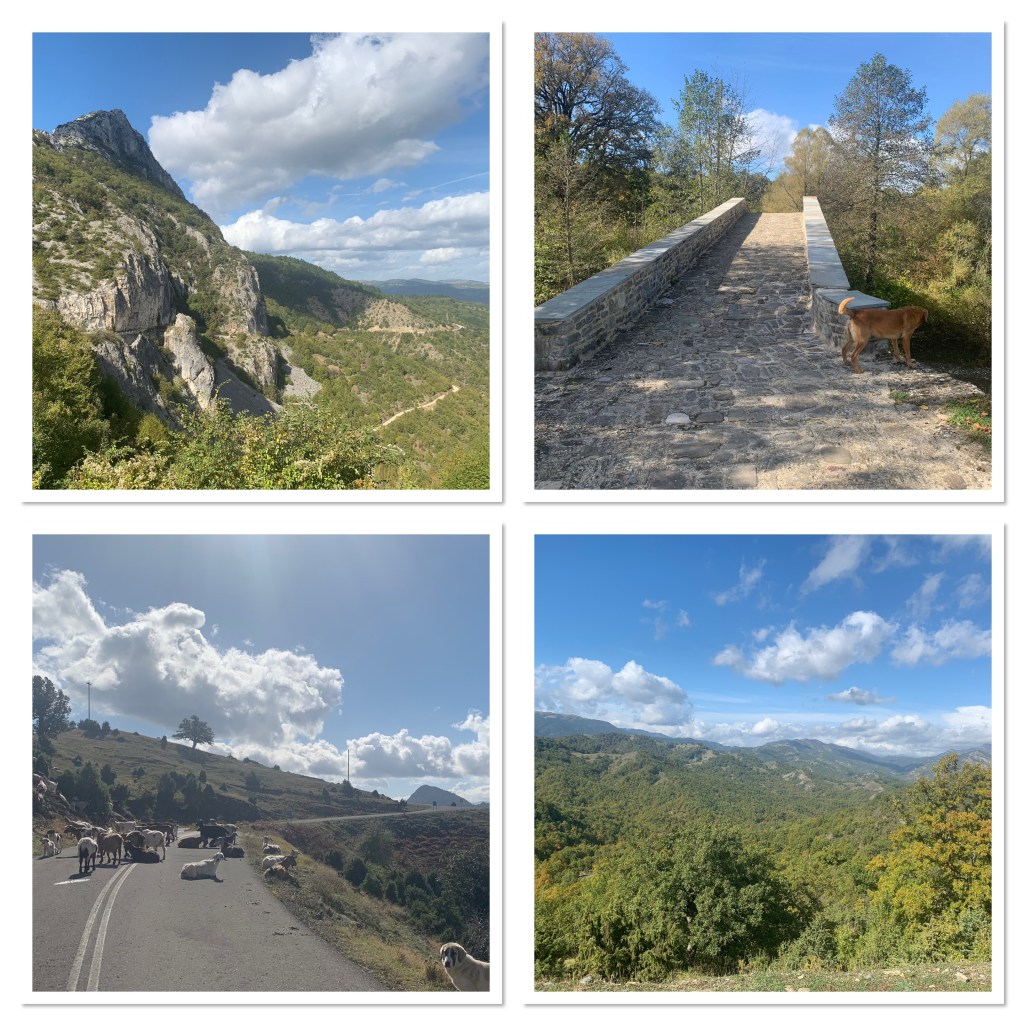
We rolled on, up and down, round the curves steadily, stopping often to take in the spectacular country, and the historical Byzantine sites, bridges, monasteries, chapels, and villages. The weather is pleasant, partly cloudy, a maximum of around 20C, and up at 1000 metres, an overnight low of about 10C.
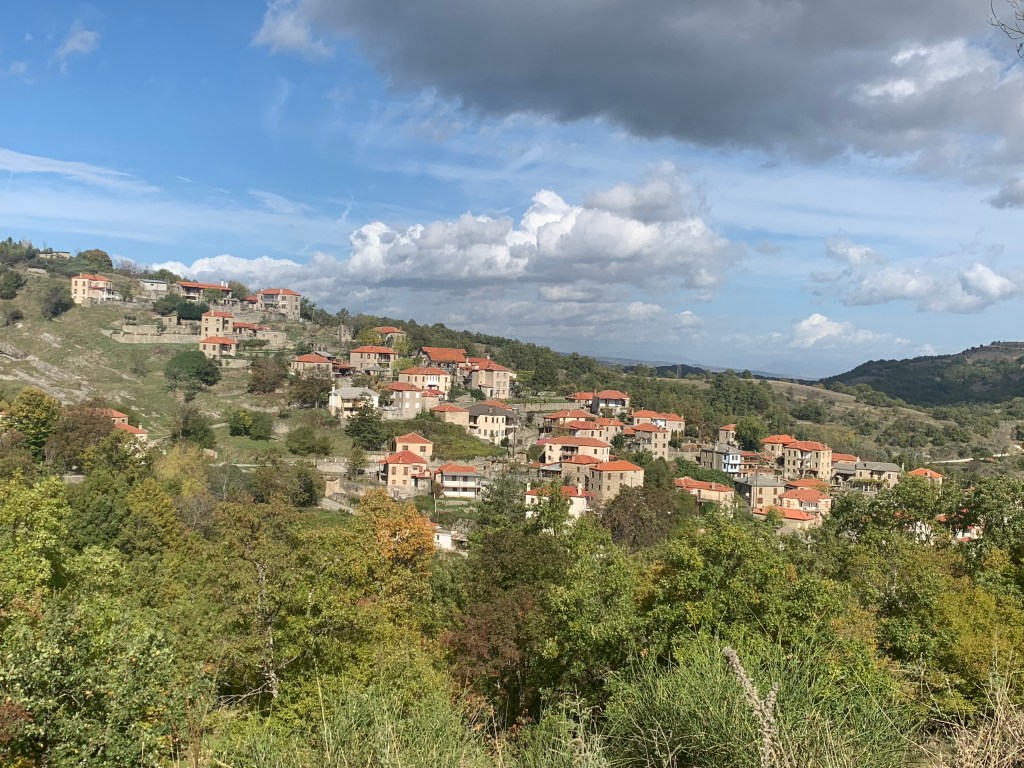
The village of Spileo is more accessible to day visitors from nearby towns of Grevena and Konitsa, and there were quite a few people having lunch in the village centre, here also most likely, to visit the Portitsa Gorge.
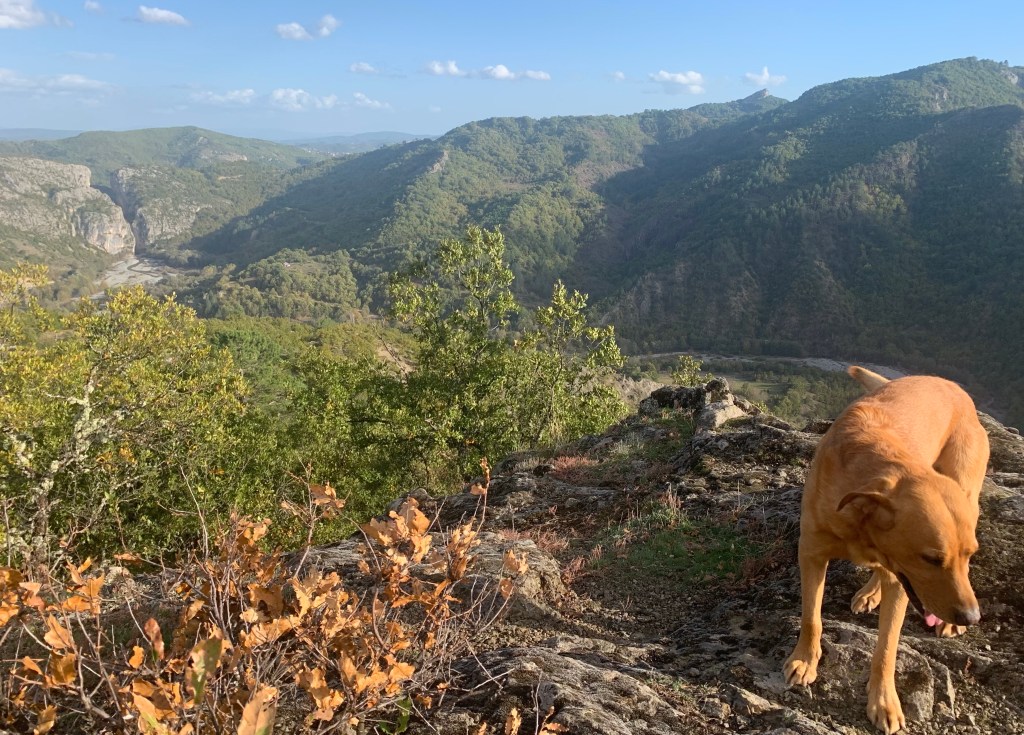
The Venetikos river is 300 metres below the village, and the gorge is a popular tourist spot. I drove the curly road down, but with quite a few cars around, and it being early afternoon, I postponed my visit until tomorrow morning, and retreated back, about halfway up the curly road, to a suitable stopover spot I had seen earlier.
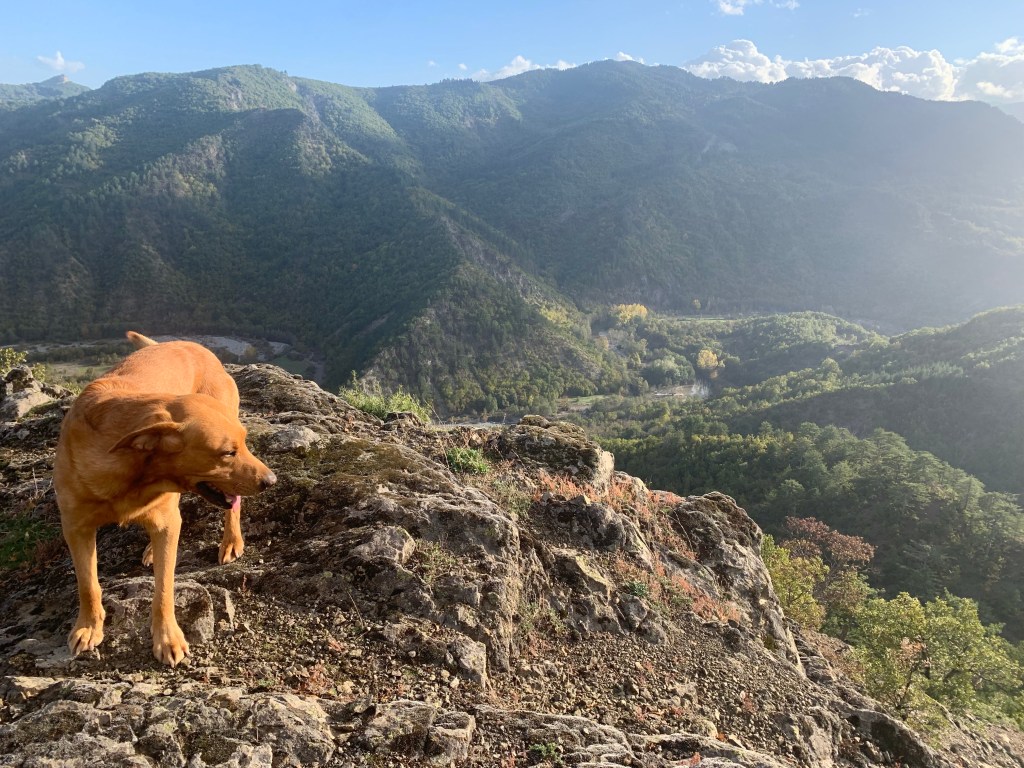
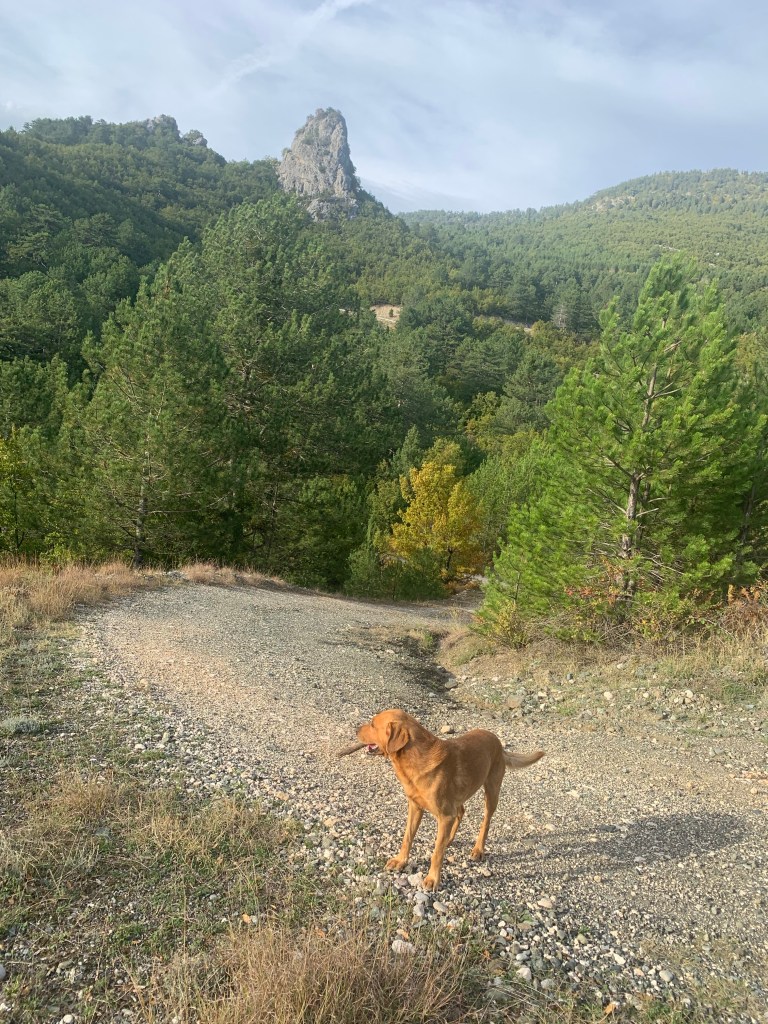
We spent an afternoon lazing about, watching sport, catching up on some admin, before a wander prior to the Premiership rugby. The hour gives back across Europe tonight, so it will be dark at around 6 pm tomorrow.

 Safe Return Doubtful
Leave a comment