This journey of mine, my route here in Greece, is inspired by Patrick Leigh Fermor’s books, Roumeli, and Mani. I’m in Roumeli territory right now, and have been for a couple of weeks, the Pindos mountains. Meteora is the subject of the second chapter ‘The Monasteries of the Air’.
Fermor’s description of the Meteora area is typical of his writing, and rather than attempt my own, I’m going to quote some passages from him..
<
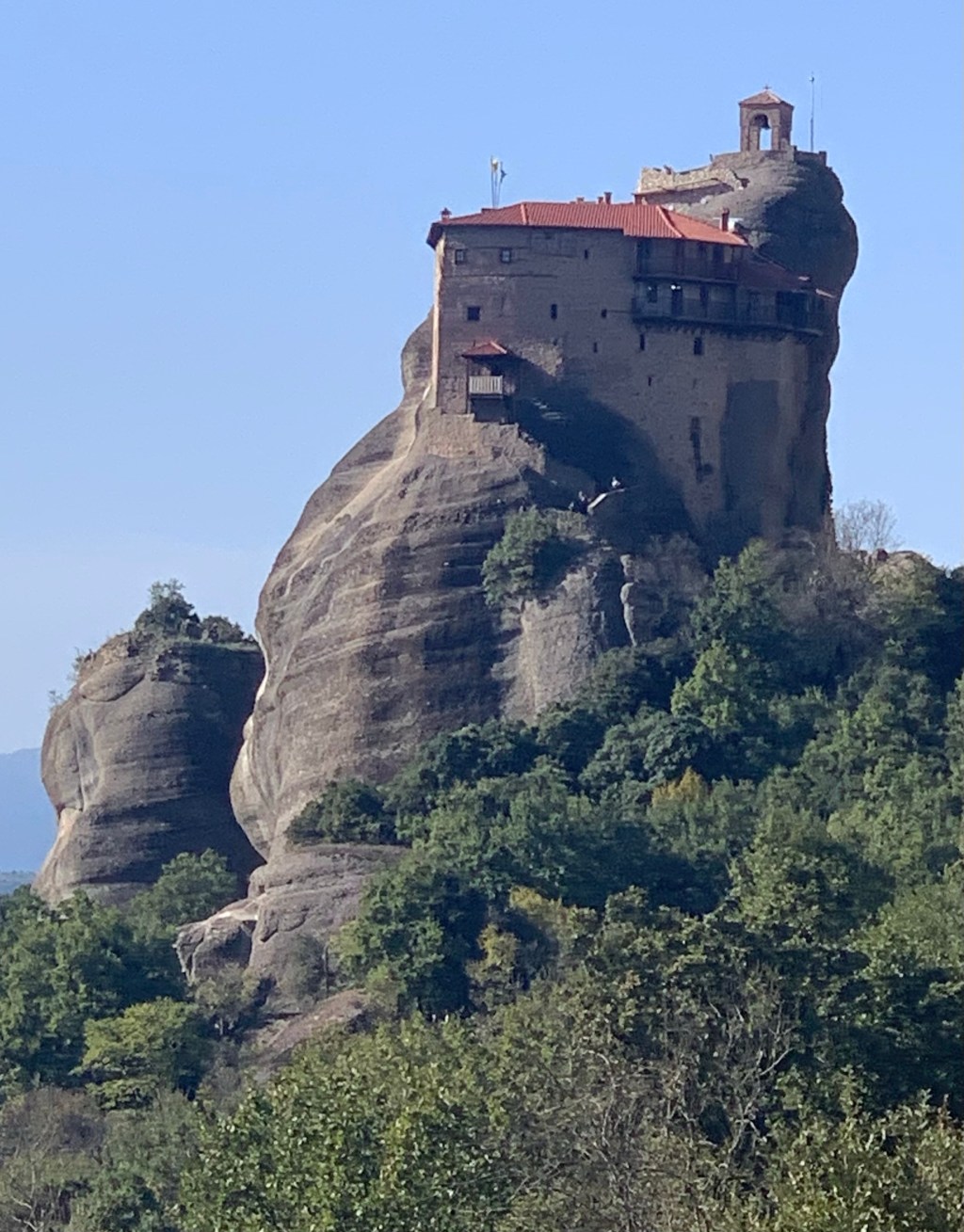
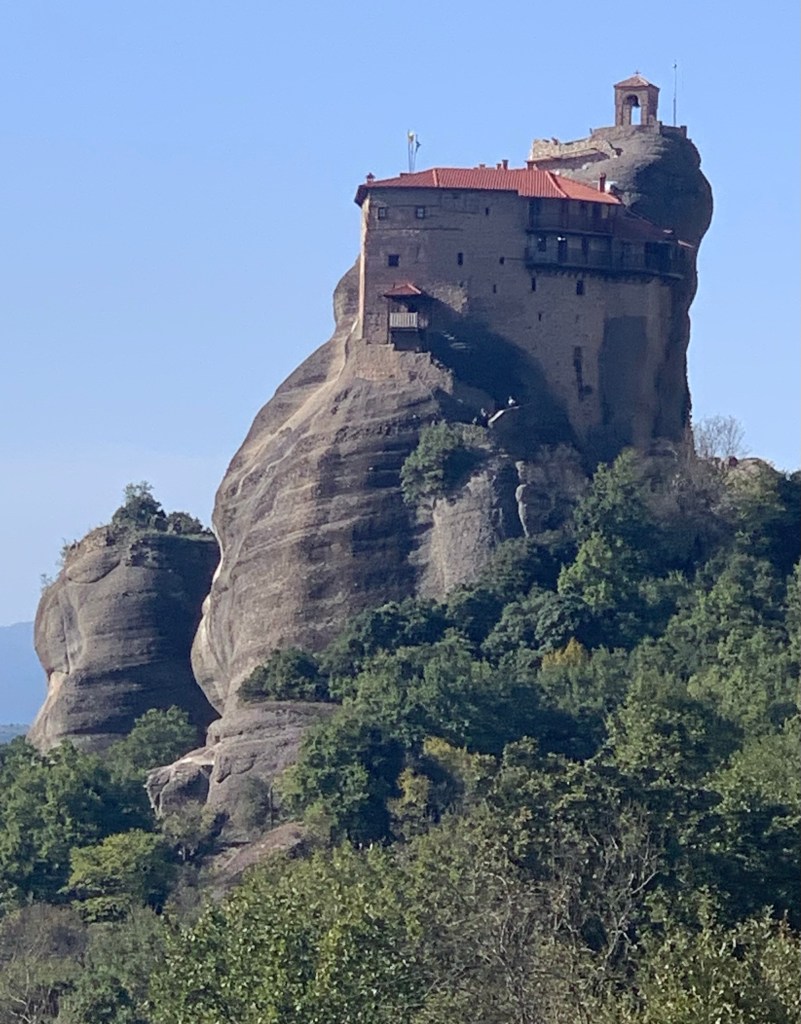
Only when we were nearly in the streets of Kalabaka did we gaze up at the tremendous spikes and cylinders of rock that soared for perpendicular hundreds of feet into the sky. There was nothing to halt the upward path of the eye, except, here and there, an irrelevant tuft of vegetation curling from the rock-face on a single stalk; or the straight damp smear of some spring’s overflow, shining like a snail’s track from the eagle-hunted regions to the outskirts of the grovelling village. One immense drum of stone ascended immediately overhead. Behind, separated by leaf-filled valleys, the pillars and stalagmites retreated in demented confusion, rising, curling and leaning, tapering to precarious isolated pedestals (on the summit of one of which the wall and belfry of a monastery, minute and foreshortened, could just be discerned) or swelling and gathering like silent troops of mammoth halted In meditation on the tundra’s edge.
Fathoms above, the reception platform of St Barlaam and the jutting tiles of its eaves penthouse projected in the moonlight in a galleon’s poop, from which, like an anchor at the end of its cable, the great hook hung. The smooth sides of the cliff were not only perpendicular, but at many points they curved outward and overhung their base, as naked of projection or foothold as the glass mountain in a fairy tale. High in the void, the fabric of the monastery overflowed its monolithic pedestal in a circle of jutting walls and eaves and storeys.
In the early Christian times and the Middle Ages monasticism was much more prolific, in the East there was barely a desert without a tower (a stylite) or a mountain summit without a monastery.
Before 1932, from their founding in the early 1500s access the most spectacularly set Monasteries, the biggest two for example, the Great Meteora and St Varlaam, was by net. A hook was lowered 170 metres down the rock face. The visitor climbed into a net, and was hoisted up, then lowered into the courtyard. Some with lesser height to climb were accessible by rope ladder.
Fermor asks the Deacon on his visit in 1958 how often the net was replaced or repaired, to which the reply was, ‘only when it breaks’.
In Fermor’s time the monastic life was becoming much less favoured. At Varlaam for example, there were 35 monks living there in the 1500s. The decline started in the 17th century, and lasted until 1961, just a couple of years after Fermor’s visit. A monastic community arrived at the rock, motivated to move away from the cities by war, and disillusionment with society. Today the monastic community consists of 7 monks. it’s a similar story on the other rocks.
I’m not that keen about visiting the monasteries themselves. There are plenty of visitors at the two largest. They have big car parks, with coach loads arriving frequently. Instead Roja and I followed the route of the recent Meteora Trail Run, which is just on small forest tracks, takes in several of the best viewpoints, and traverses a pass at 500 metres between two of the columns of rock.
It was about 12 kilometres in all, with a height gain of just under 500 metres. It was slow going for me at the steepest sections, but on our route, we passed nobody, and nobody passed us. It got up to 24C just as we were finishing, without a breath of wind. I can’t imagine taking that hike on in the height of summer.
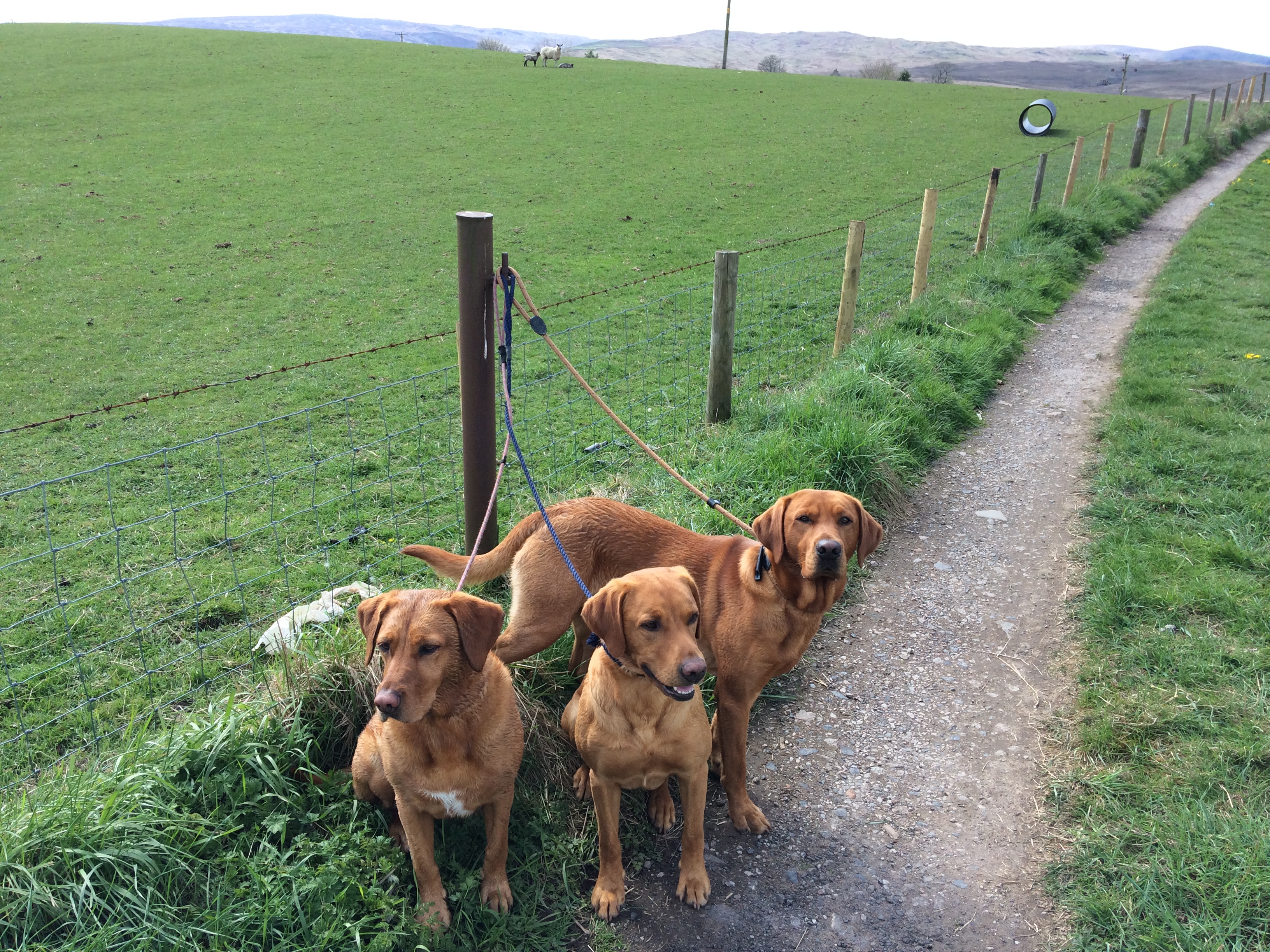
Shap, Cumbria circa 2016 – Tia, Roja and Mac behind
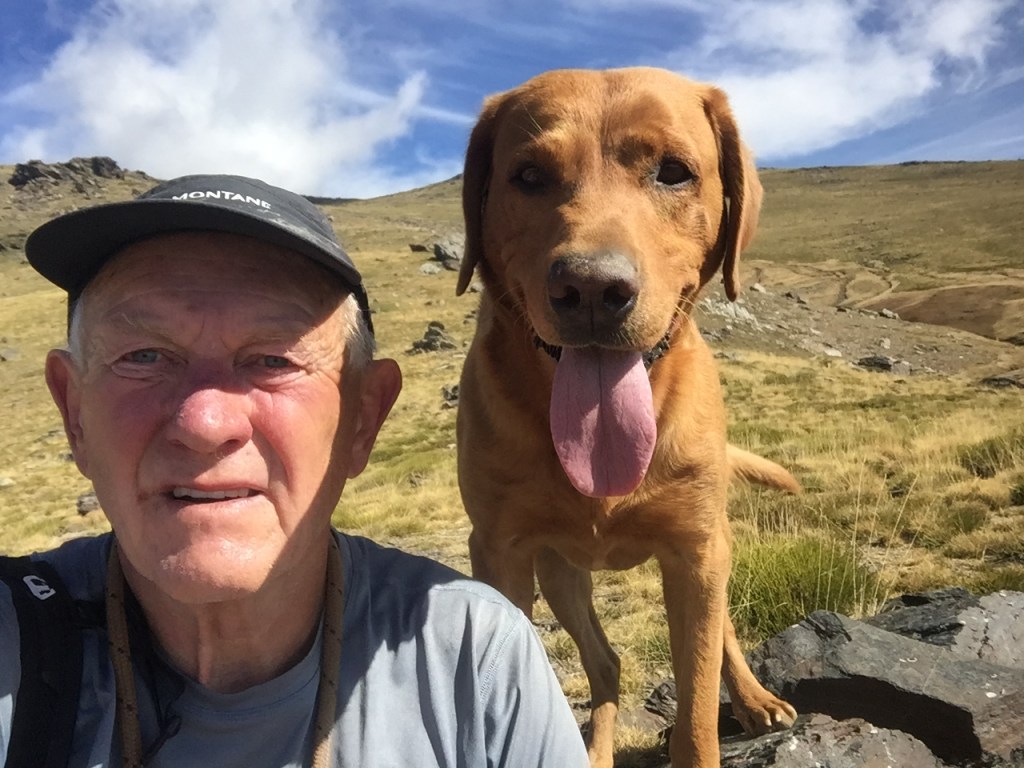
I was so much older then…
Dartmoor 2019
Quote of the Week
Alice asked the Cheshire Cat, who was sitting in a tree, ‘What road do I take?’ The cat asked, ‘Where do you want to go?’ ‘I don’t know,’ Alice answered. ‘Then,’ said the cat, ‘it really doesn’t matter, does it?’





 Safe Return Doubtful
Leave a comment