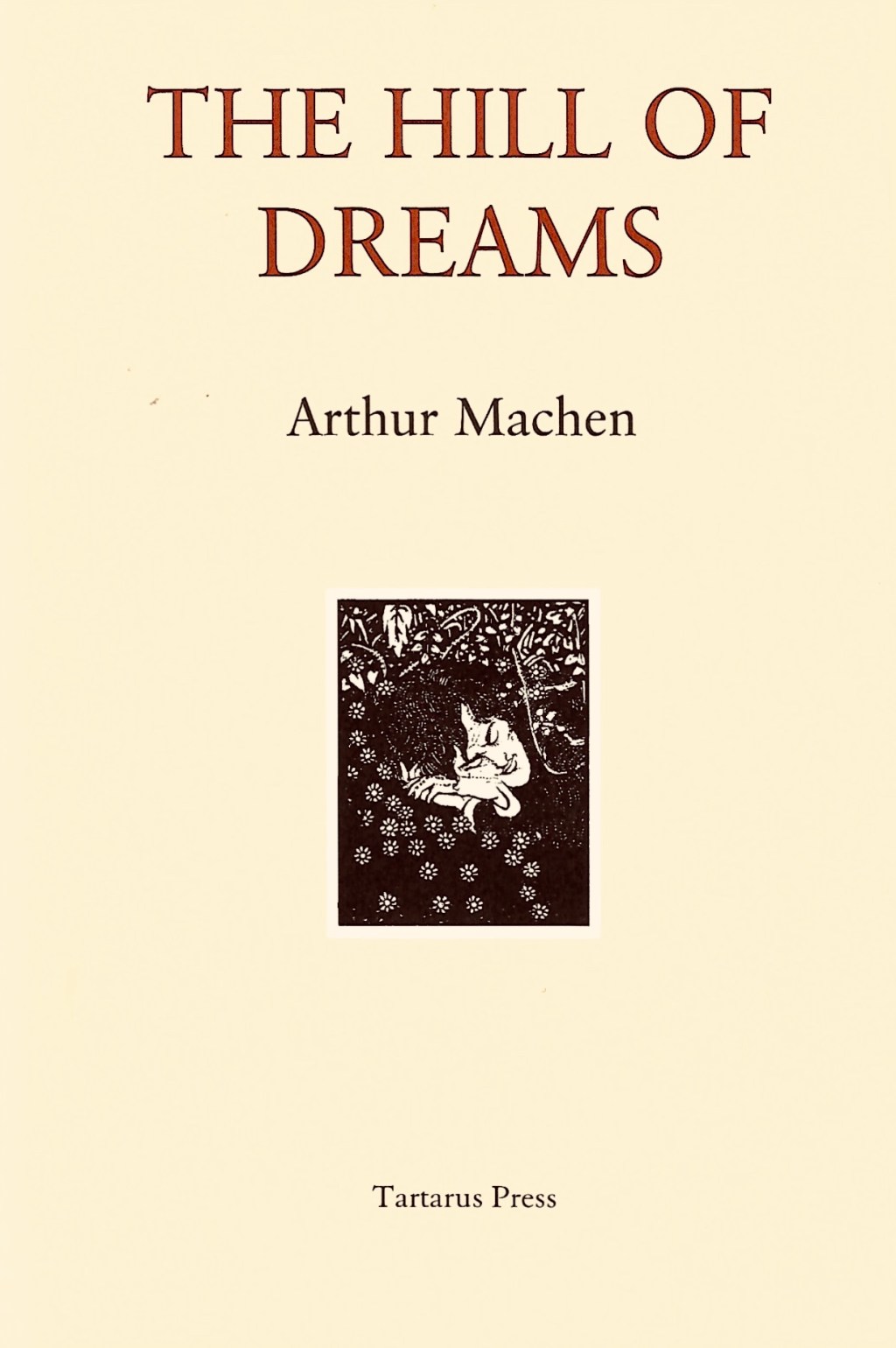
Lucian Taylor, a rector’s son, comes of age in a rural Welsh village in the early 1900s, then wanders the world on a quest for beauty, through art and literature, dreamscapes, drugs, and of course, love.
Frequently he teeters perilously between the blurred realms of fantasy and reality. It fits the tag of weird fiction perfectly. There’s a plot, a simple one, but hidden beneath the lines is a much deeper story. Many of the gloomy visions that Lucian experiences were shared by Machen himself in his youth. Different editions have different introductions, one by Lord Dunsany, an interesting one by Catherine Fisher who compares the seven sections of the novel to a symphony in structure, the Tartarus centenary edition (2006) has a preface by Machen himself. All should be read, if at all possible.

There are aspects of this book that particularly appeal to me personally. I found the first two chapters, with Lucian is an adolescent, to be quite memorable, some of the best writing I can recall reading. The boy appreciates nature and this is a strength of Machen’s prose. It reminded me of Benjamin Myers and Cynan Jones, two of today’s great British writers, who I would not be at all surprised to learn that Machen was an inspiration. He describes beautifully, and with some humour, the boy’s influences.. Mr Taylor was a man of very wide and irregular reading and a tenacious memory..
People said they would often have liked to invite Mr Taylor to garden-parties, tea-parties, and other cheap entertainment, if only he had not been such an extreme man and so queer.
Morgan was a sturdy, thick set old man of ancient stock; a stiff churchman, who breakfasted regularly on fat broth and Caerphilly cheese in the fashion of his ancestors; hot, spiced elder wine was for winter nights, and gin for festal seasons.
During one of his contemplative walks around his village, at the age of 12, on a hot summer afternoon he finds himself at a place he visits often, an ancient Roman fort on a hill. Inside its circle of dark trees he falls asleep and undergoes a psychic experience that changes him forever.
As he proceeds through school and into adulthood he becomes sensitive, withdrawn and introverted. He grows to despise the society around him. As an adult Lucian looks back at the experience at the fort with terror; the writing gets darker as Lucian gets older. Gone is the levity of his youth.
Then, like the hero of a fairy book, he went on and on, catching now and again glimpses of the amazing country into which he had penetrated, and perceiving rather than seeing that as the day waned everything grew more grey and somber. It was growing late, and as the shadows blackened he walked faster, till one more the lane began to descend, there was a sharp turn, and he found himself, with a good deal of relief, and a little disappointment, on familiar ground.
First published 1907 – GoodReads score 3.88 / 5 – My version Tartarus published 2006 – My score 4 / 5



 Safe Return Doubtful
Leave a comment