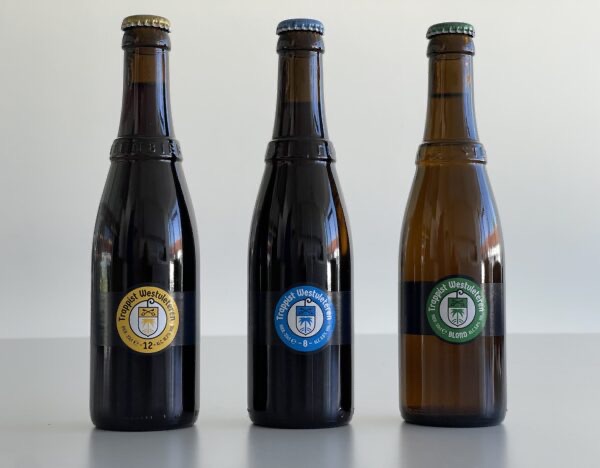
Westvleteren Abbey, within which Saint Sixtus beer is brewed, is an authentic Trappist brewery. Their motto, or mission statement on their website states ‘We brew to live. We do not live to brew.’ They brew three beers, a Blond at 5%, and a brown and an amber ale, called 8 and 12, which are 8% strength, and 10.5%, respectively. They only brew for private sale. This can either be by customers at their ‘meeting rooms’ (a bar and restaurant) across the road, or their shop (at the meeting rooms), or through a complicated process at the Abbey. There are quite different prices; at the bar sells at 5-6 euros, the shop at 4-5 euros, and the Abbey, at 2-3 euros. To order from the Abbey, locals must order a week ahead of time, within the few hours that the website sale is available, and collect, in person, a week later, at a designated time. No photography is allowed close to the Abbey.
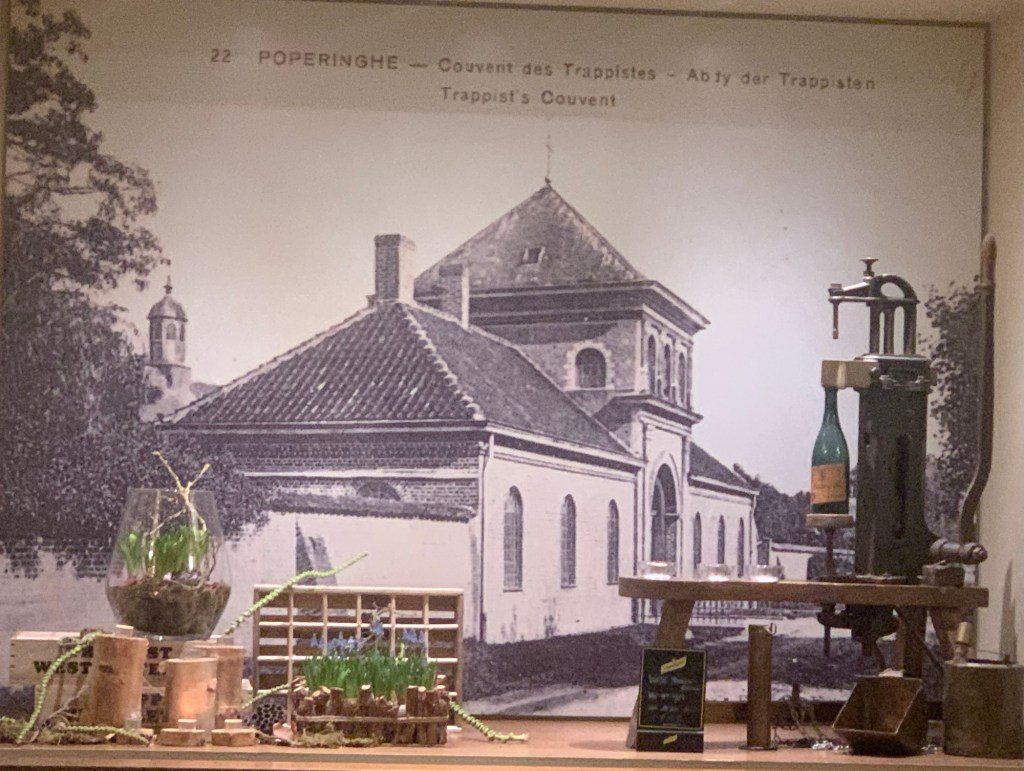
This seemingly convoluted process, is because the monks are praying most of the time.
Westvleteren is one of the 7 authentic Trappist breweries, the others being Achel, Chimay, Orval, Rochefort, La Trappe (in Netherlands) and Westmalle. There are four others that are ‘associated’; Mount St Barnard, Stift Engelszell, Zundert, and Tre Fontane. Westvleteren produces the least, by a long way. This year, they started an online service, as previously, their ‘beer-phone’ was getting over 85,000 calls each hour at times.
Because of the ‘scarcity factor’ which it has become known for, a grey market has emerged online in which people try to resell bottles they bought at the abbey for $50 or more per bottle. Other cafes also sell the beer, at exorbitant prices, having broken the rules and purchased as private individuals. The Abbey works will several of the main beer forums online, to shut down the sale through cafes when reviews appear.
In 2022 the Westvleteren 12 again appeared on Rate Beer’s list of top beers in the world. It is regularly in that top 100.
Brother Godfried is currently in charge of the brewing, and says the monks are quite overwhelmed by the accolades, though it is nice to know that people appreciate their work.
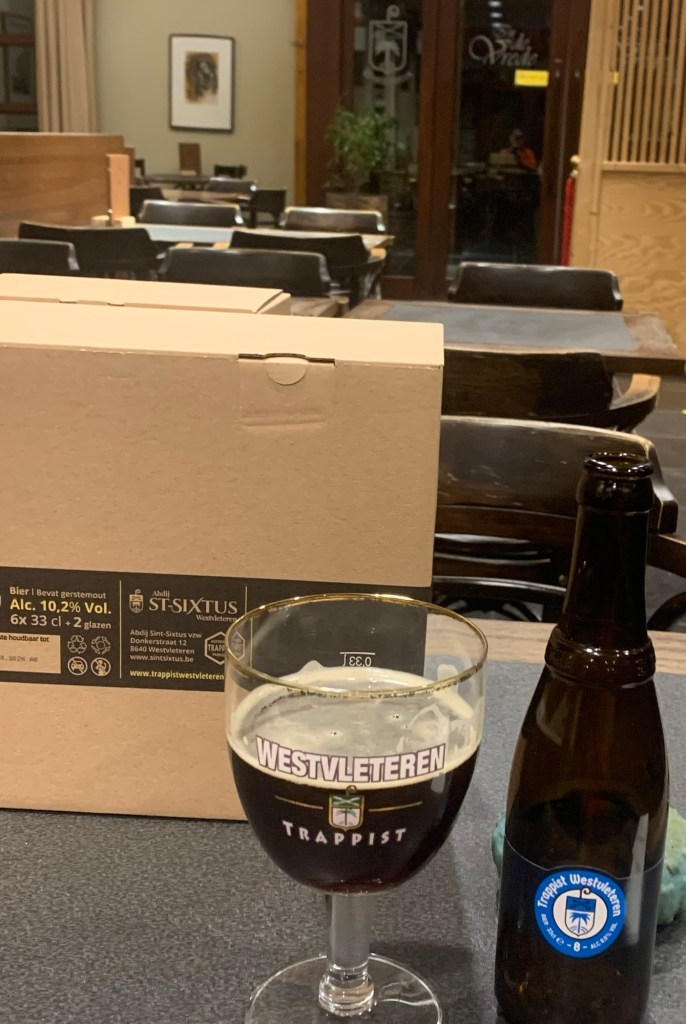
I missed out on the online process of ordering, so had to resort to buying from the shop, with one, an ‘8’, in the bar. There is a museum also, but its opening hours at this time of year are just once a week, and I miss that. But, I do think I will be back.. the ‘8’, was excellent.
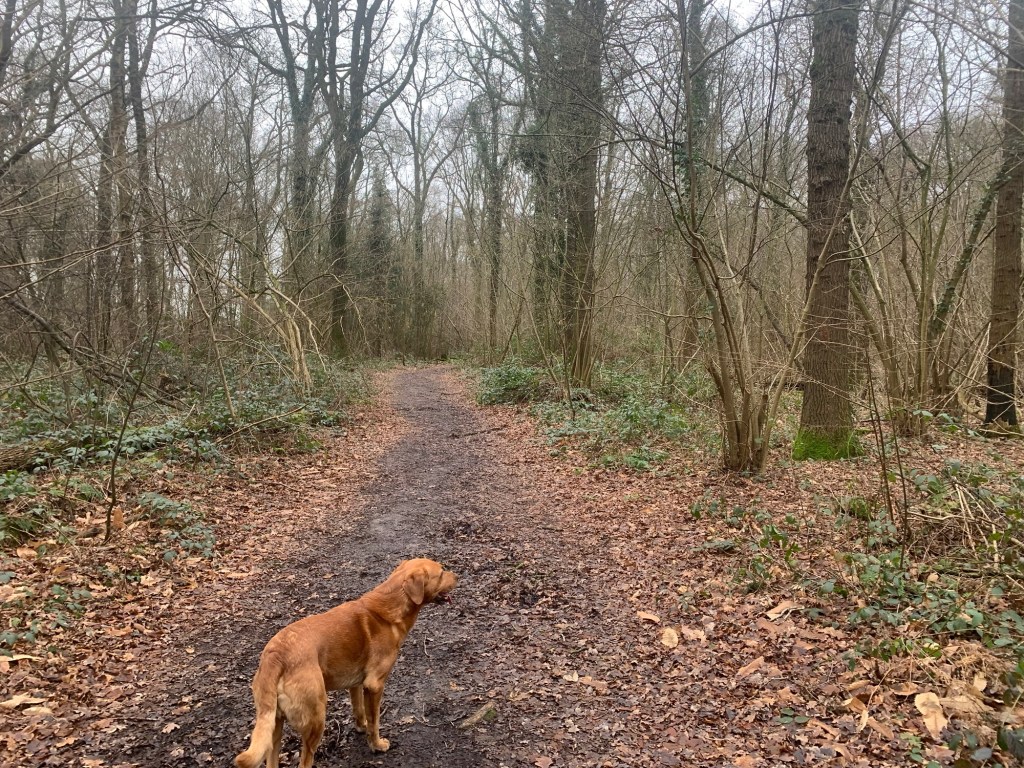
Otherwise, it was a wet day, but good enough to get out for a few hours. We walked the Saint Sixtus Trail, an 8 kilometre wander through the local farms and forests, taking in Dozinghem Military Cemetery.
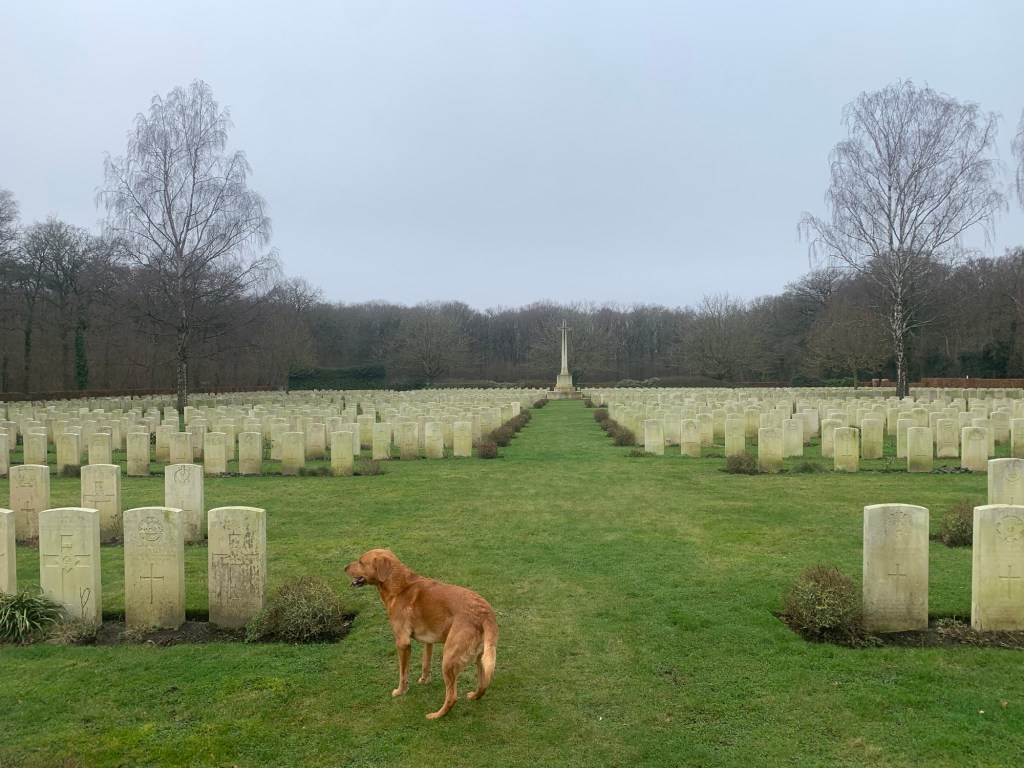
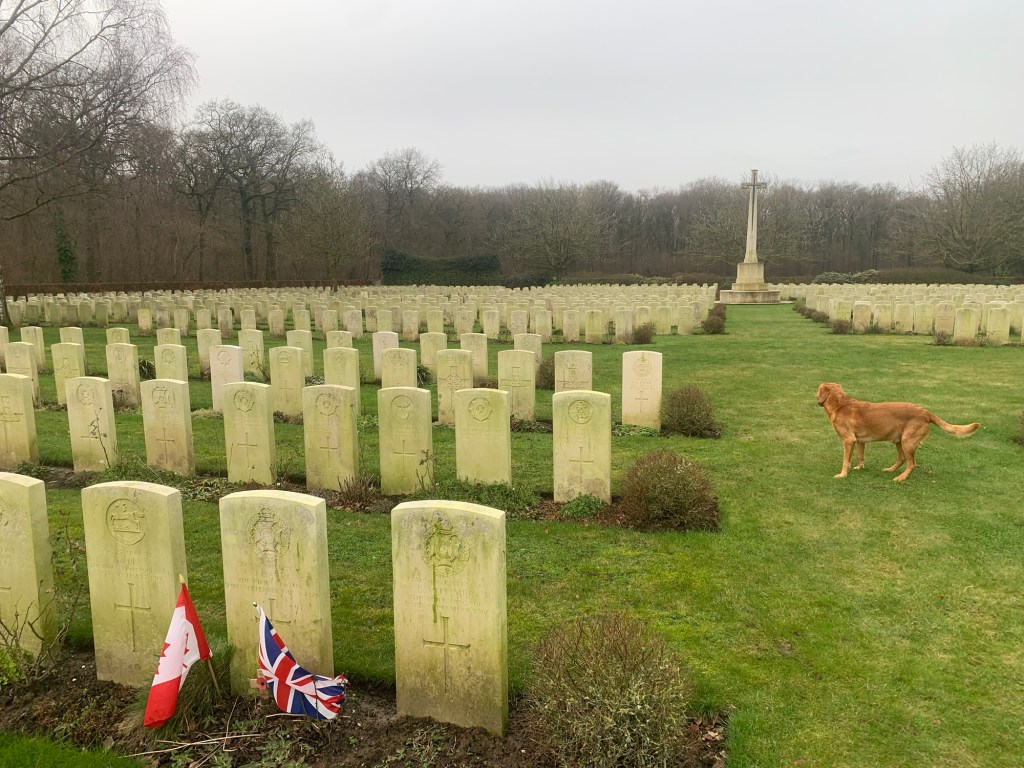
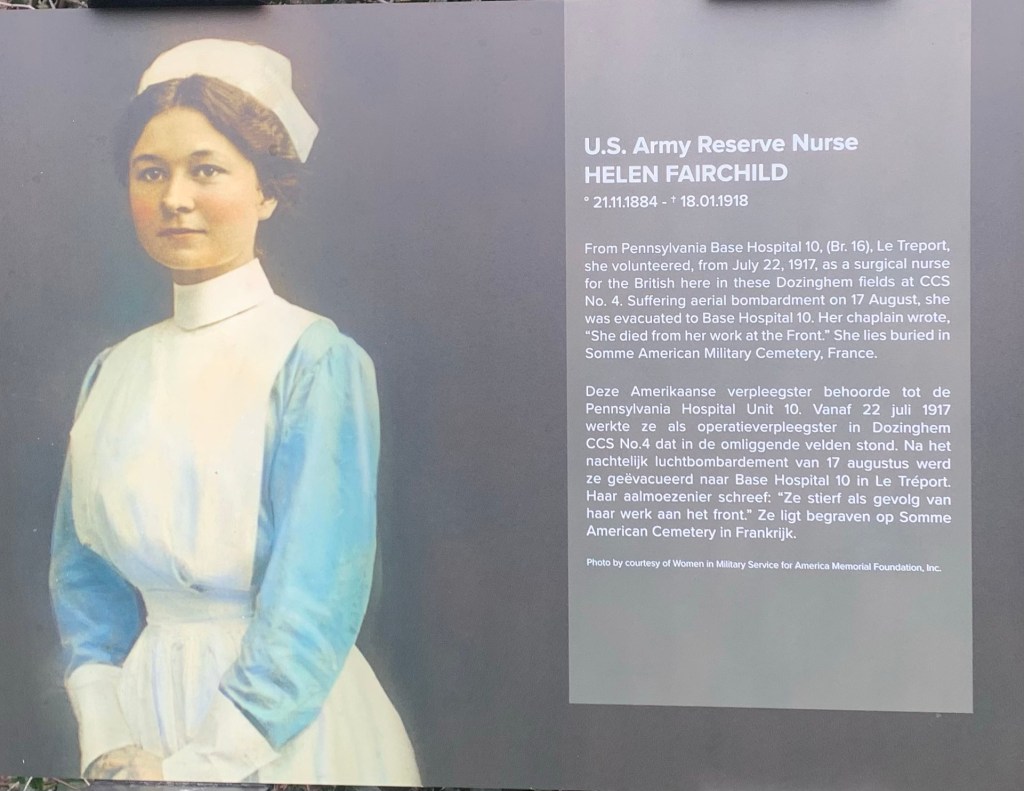
Westvleteren was outside the front held by Commonwealth forces in Belgium during the First World War, but in July 1917, in readiness for the forthcoming offensive, groups of casualty clearing stations were placed at three positions locally, one of them being Dozinghem, a name given by the troops.
Surrounded by soldiers and all the violence of war is not exactly the kind of life that a trappist monk should lead.”. (letter from Brother Victor to Father Ludovicus, date unknown)
During the First World War, the Abbey of Westvleteren was in the part of Belgium unoccupied by the Germans, some 15 kilometres behind the front lines. Early in the war, this made it ideal as a camp for the different Allied armies.
From November 1914 to June 1915 the monks shared the abbey with French soldiers. From June 1915 onwards, the British took over from the French at the abbey. They immediately imposed strict rules, including a curfew. Even the abbot needed to ask their permission to be outdoors after 8 pm in the evening..
In the corridor where the office of the general staff is located, two typed notices have been fixed to the wall with the text: Kindly make as littlé noise as possible in this passage’! I he is so keen on silence, perhaps His Excellency the General is planning to become a trappist monk!” (the diary of Brother Victor, 19 June 1916)
On 6 July 1917, the troops in the abbey received a visit from the British king, George V.


 Safe Return Doubtful
Leave a comment