translated from the Spanish (Argentina) by Lisa Dillman
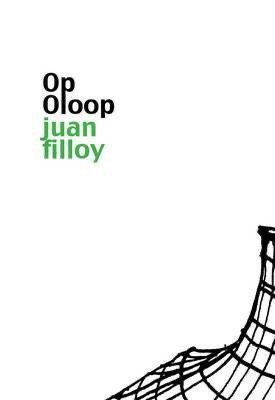
Optimus ‘Op’ Oloop is a man bound by routine. Locked into patterns that dictate his every movement his life is carefully timed with a detailed schedule for each day.
This is set in Buenos Aires in between the wars, in the 1930s, with Oloop as a communist, but a successful capitalist businessman. He treats workers poorly, offers unwanted advice about unions and is quick to offer sarcastic criticism. He considers himself an expert on world affairs, all down to the strict regimentation of his life. As a statistician he keeps his nose in ledgers, understanding the world through its use of building materials, condoms, and the reclaimed remains of soldiers lost on the battlefields of the Great War. Though he himself is emotionally damaged by the horrors he saw in an unsuccessful communist uprising in Finland.
But, on the way to an appointment with his finance he is involved in a minor traffic accident and his verbal outburst makes him late. His downfall begins. Undone, the speeches he delivers become morally dubious and when he eventually reaches his appointment he has a head injury, caused by an incident with the Finnish Ambassador.
Though it plays with the politics of the day, an economically collapsed society, the overall feel to the book is one of humour, with plenty of bad language, toilet humour, and allusions to sex.
Many episodes from the piece stand-out, though as a whole, the novel doesn’t quite hold together. It’s the sort of book I think I would have appreciated more in my younger days.
Filloy himself had a fascinating life, and one that spanned three different centuries. He died at the age of 106 in the year 2000. This was published in 1934. He was an excellent swimmer, a dedicated boxing referee, and a talented caricaturist; he spoke seven languages and practiced as a judge in the small town of Río Cuarto, where he spent most of his life. He was also a world champion palindromist, and searched the entire dictionary for his books, coining new words, and using only seven letters in the titles of all his works, though unfortunately at present, only one other, Caterva, a book of six short stories, has been translated into English.
My GoodReads rating 4 / 5




 Safe Return Doubtful
Leave a comment