British Literature published 2024 – non-fiction – conservation
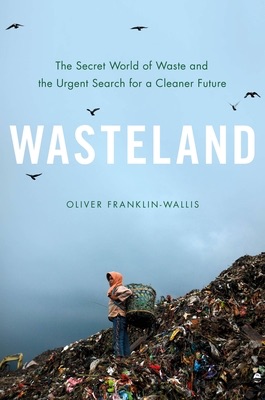
Garbage; the book’s subject, and absolutely not a word to describe its content, which is refreshing, hopeful and an engrossing read.
Franklin-Wallis chronicles has global trek through sewer systems, toxic chemical waste sites, recycling plants and household waste, in this very through account. I went into it hoping to learn something, and was rewarded by being entertained also.
He demonstrates how many solutions seem to generate further problems, for example the use of fabric tote bags instead of plastic, now found to have a greater global footprint than those they replaced.
He addresses the issue of wealthy countries sending their waste to poorer countries, for them to be simply burned or thrown into the ocean in a different place.
There are many of this sort of conservation book these days, all with excellent research, but not all of them are as readable as this. This stands out in its field as to back up the author’s years of experience and knowledge, it is excellently written.
This was shortlisted for the Wainwright Conservation Prize, from which I have now read three, and it is the best of them by some way. (The others being [book:Fire Weather: A True Story from a Hotter World|61966364] and [book:The Blue Machine: How the Ocean Works|123979539], the eventual winner).
Here’s a clip from towards the end of the book..
Eventually, the conclusion that I come to is laughably simple: buy less stuff. I recognise that this is not the most original idea, but there’s something liberating in it. It feels radical, in a small way, in a world of fast fashion and Amazon Prime, to actively consume less. (It wasn’t until after I began my research that I discovered that the three Rs of waste reduction – Reduce, Reuse, Recycle – are not just a catchy slogan, but are actually arranged in order of effectiveness.) It’s only when I stop buying things absent-mindedly that I start to suddenly see and feel the relentless bombardment of advertising that I’m exposed to every day – on social media, on TV, going to work. Buying and living with less is one of the oldest philosophical ideas – asceticism being practised in various forms by ancient religions from Christianity to Buddhism. I don’t mean living with less in the minimalist, Marie Kondo, what-sparks-joy sense (Kondo, despite being a big advocate of throwing things away, pays almost zero attention to the fate of those things once you do). Rather, I am interested in creating less waste both downstream of me – what I throw away – and also upstream, in the vast unseen industrial waste created before products ever make it to me. It’s an idea that feels strangely fitting for our present moment. We have so much stuff that sometimes it can feel that we are drowning in it. A 2006 study of homeowners in Los Angeles, California, found that 90 per cent of garage space is now used to store stuff, rather than cars.11 In the UK, 53 per cent of drivers, myself among them, never put their cars in their garage because they are full of accumulated things, 12 most of which we rarely if ever actually use. I once interviewed a man who ran a house clearance business. As he put it: ‘People never die wishing they’d bought more shit.’
My GoodReads score 5 / 5




 Safe Return Doubtful
Leave a comment