
I’ve had two superb days on the banks of the River Côa in the Reserva Natural da Serra da Malcata, up at 800 metres above sea level and in excellent weather. Yesterday was warmer, up at around 16C, but with some cloud, and today the cloud has cleared, but a little bit cooler, around 12C in early afternoon, and will be just above zero tonight, but great conditions for wandering the hills.

Also, a bonus, is that the sun is high enough in the sky to provide a big enough power yield from solar to meet my consumption, which, with all the European Rugby, has been a bit more than it usually would be.

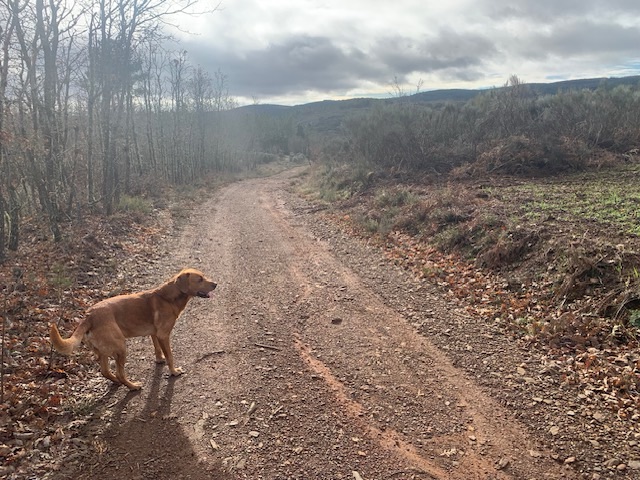
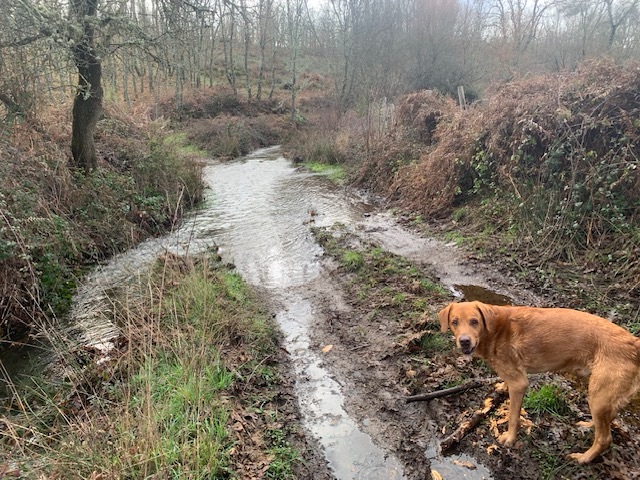
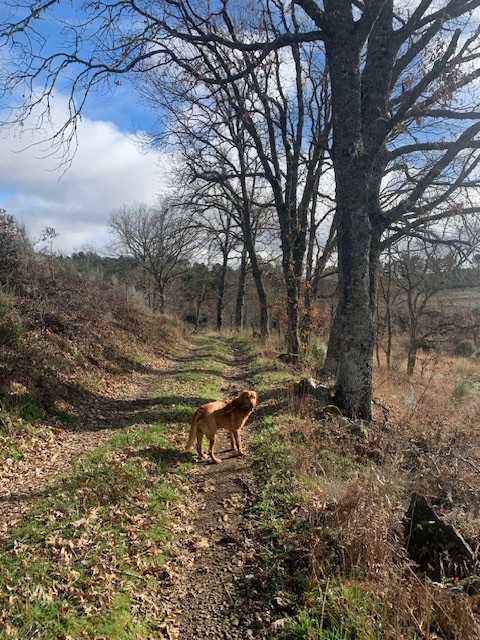
I’ve been on the GR45 each morning, about ten miles each day, yesterday heading upstream to the village of Vale de Espinho finding a couple of loop paths.

Esphino has a bullring, which is still used, and attracts a lot of visitors each summer. This is a particular type of event, found only in this area.

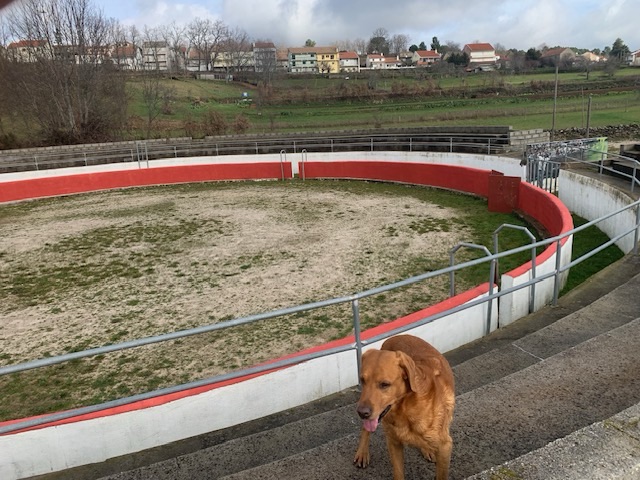
The Capeia Arraiana is a bullfighting event specific to a few Ribacôa communities (this valley). These communities were not yet part of Portugal when the River Coa delimited the border between Portugal and León. They became Portuguese in 1297, when the current Portuguese eastern border was established by the Treaty of Alcañices.
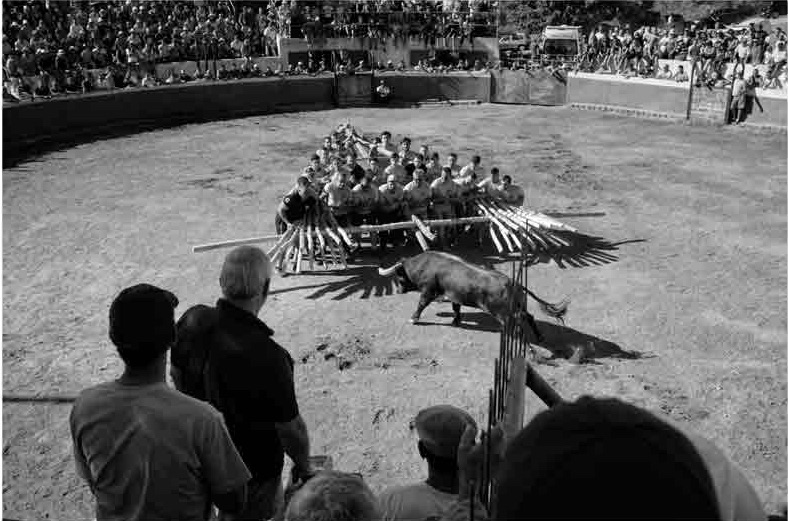
What is unique about the Capeia Arraiana bullfighting, as practiced in these raia communities, is the use of a Forcão to engage the bull.
The Forcão is a massive triangular wood apparatus, weighing approximately 300 Kg, built from purposefully cut oak logs. From its wide front protrude several prongs, held in place by a long transverse pine log that sticks out on each side (the galhas), like an extra long horizontal line on a capital letter A. Through the middle of the triangle, a central oak beam, extends beyond the vertex of the A. This ‘tail’ (the rabicho) acts as a helm and controls the maneuvering of the forcão. The length of the galhas, and the size of the area in which the capeia is held, account for slight variations in the dimensions of the triangular structure of the apparatus.

The forcão is held by a team of thirty men. One or two men hold the rabicho. From this control position, the rabicheiro, or rabiador, shouts directions to the team. He directs the rotation of the forcão to always face the bull. He also raises or lowers the rabicho to help the team. First, to attract the animal’s attention, the men shout while tilting the forcão up and down. Then they will continue tilting it up or down, to prevent the bull from either jumping over or sliding under the prongs. Ultimately, they want to lock the bull’s horns in the prongs of the apparatus. Once in this locked position, depending on the relative skill and strength of the bull versus the Forcãoteam, the latter will try to push forward and maneuver the forcão to force the animal to step back, or the bull will vigorously charge forward and force the team to adopt a controlled retreat. Either outcome represents a success for the capeia team.
Unlike other bullfighting events, in this game of strength and skill between men and bulls, the animals are never stabbed and exit the Capeia with no visible wounds or signs of bleeding.
The GR45 is the Côa Valley Grand Route, 222 km of marked trail, running from the Côa River’s headwaters to its mouth. It can be travelled on foot, horseback or MTB.
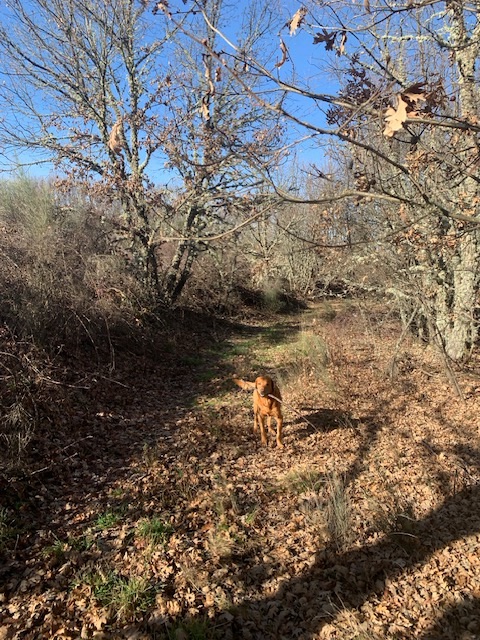
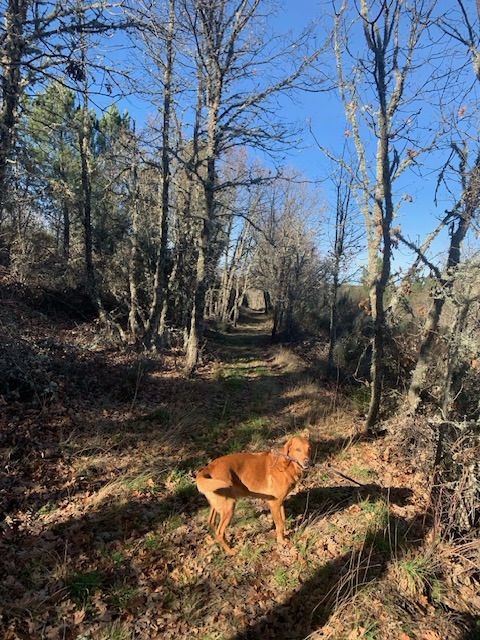

This morning I headed in the opposite direction, which though downstream, heads up to the peak of Alto da Machoca, at 1124 metres, with a watchtower a few hundred metres from the summit.
At the tower I met a mountain bike rider, the only person I have seen since arriving here on Friday afternoon. We chatted for a while, and he told me he worked at the tower, as a fire lookout ranger, each summer.
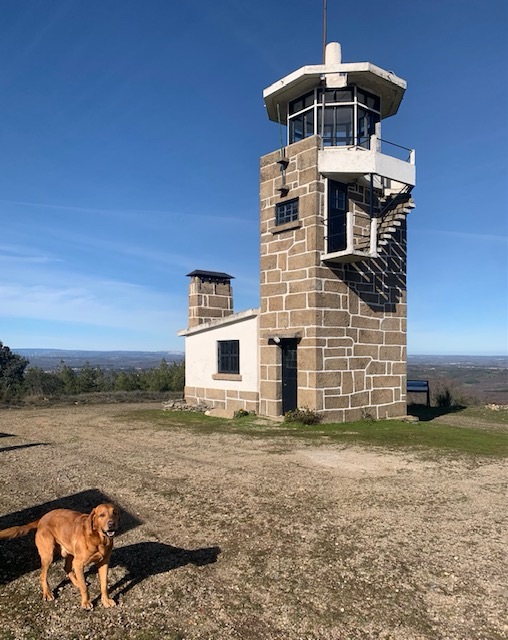
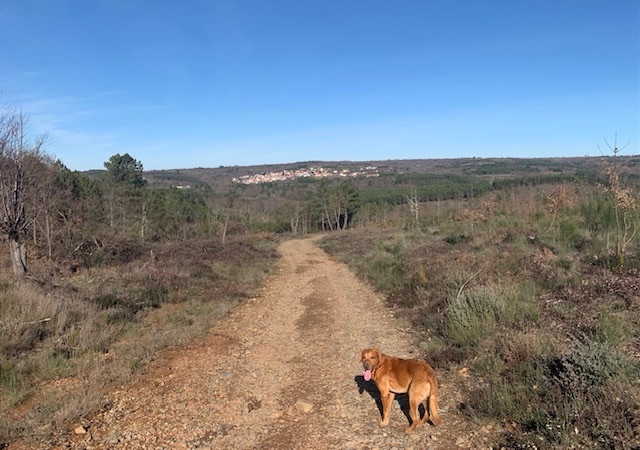
Each day Roja and I were out for about three and a half hours. Today was more difficult for Roja as we weren’t by the river, and there was no water, and I wasn’t carrying any. It’s incredible that the area can be so dry at this time of year. This weather, clear skies and cold nights, is due to stay around all of next week.


 Safe Return Doubtful
Leave a comment