translated from the Korean by E. Yaewon and Paige Aniyah Morris
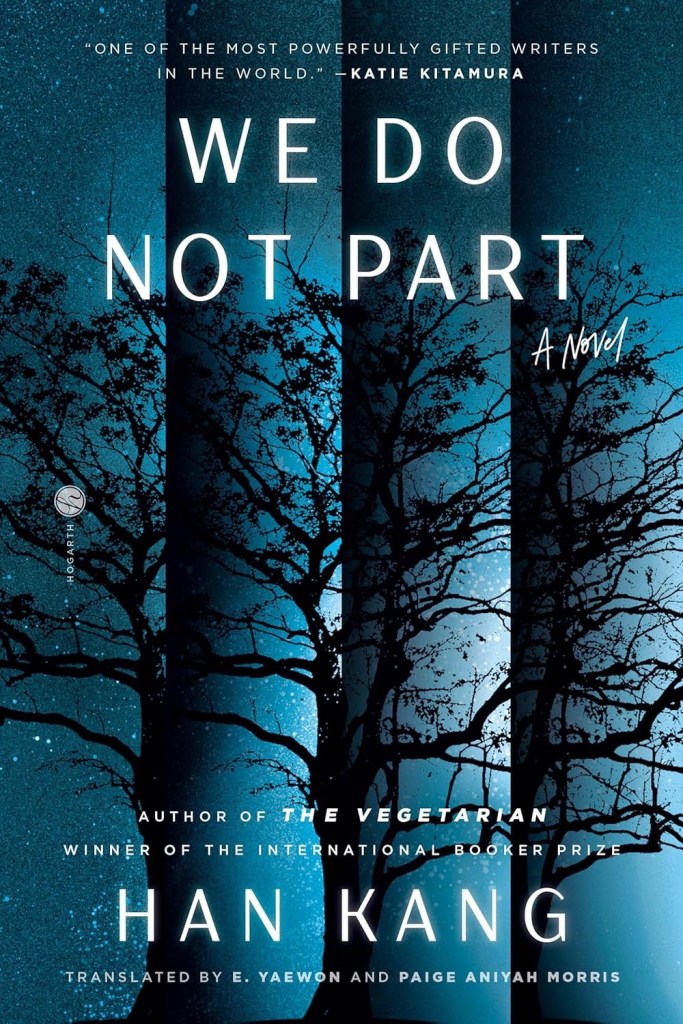
Kyungha, a writer suffering from migraines and stomach aches, receives an urgent communication from her friend, Inseon, who recently left her career as a documentary film maker to become a woodworker. Inseon has been hospitalised due to an injury at work, and asks Kyungha if she will go to her house on Jeju Island to look after her pet birds. On route, a snowstorm slows Kyungha’s travel, but her eventual arrival brings her face to face with a dark and often forgotten period of Korean history.
I’ve read one of Kang’s books before, The Vegetarian, and enjoyed it, but this is a level up from that. Her writing suits a darker theme, and the wilds of Jeju in the height of winter are vividly described.
As the snow lands on the wet asphalt, each flake seems to falter for a moment. Then, like a trailing sentence at the close of a conversation, like the dying fall of a final cadence, like fingertips cautiously retreating before ever landing on a shoulder, the flakes sink into the slick blackness and are soon gone.
Kyungha stumbles and finds herself buried waist deep in the snow, just as the past has been buried. The fierceness of the snowstorm symbolising the brutality of the events that occurred on the island previously. Most striking though, is the contrast between the beauty of the descriptions of the landscape and the horrific accounts of what happened on the same land 75 years before.
My GoodReads score 5 / 5

 Safe Return Doubtful
Leave a comment