Three days of eighty mile per hour winds and torrential, almost sideways, rain here. That mustn’t be interpreted as a moan in anyway, as it’s nothing out of the ordinary at this time of year. There are very few visitors currently for a reason. Though it has been testing at times, the weather hasn’t changed my plans. Since Sunday I’ve been on a very exposed bit of coast at Saksun, and with wind gusts above a hundred miles per hour last night, the van rocked around throughout the night. There’s a lull of sometimes a few minutes between gusts, and they arrive gradually, to a crescendo of noise as well as force.
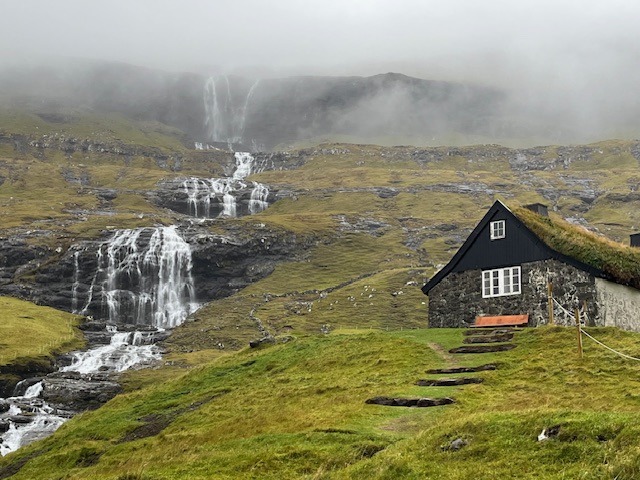
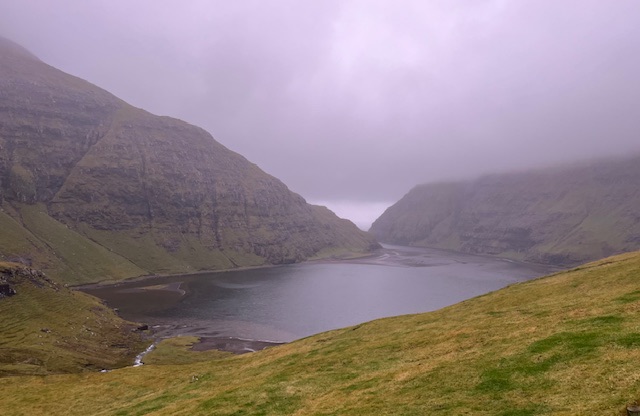
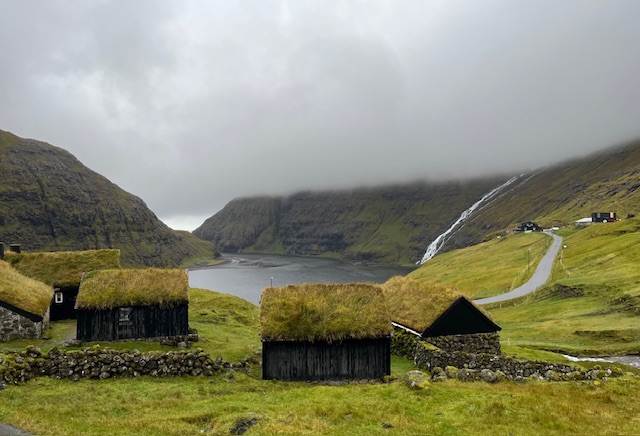
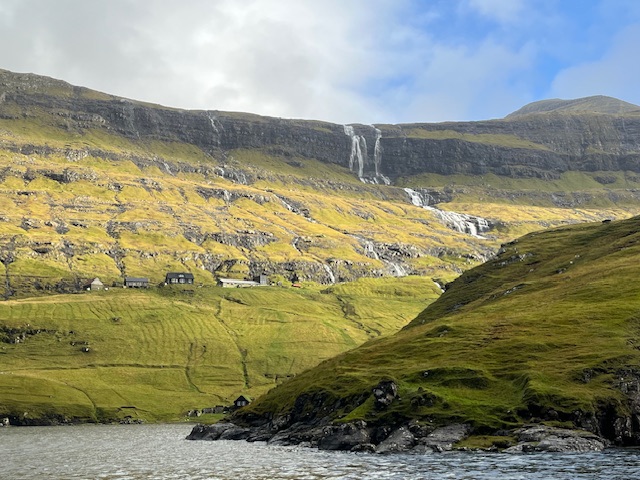
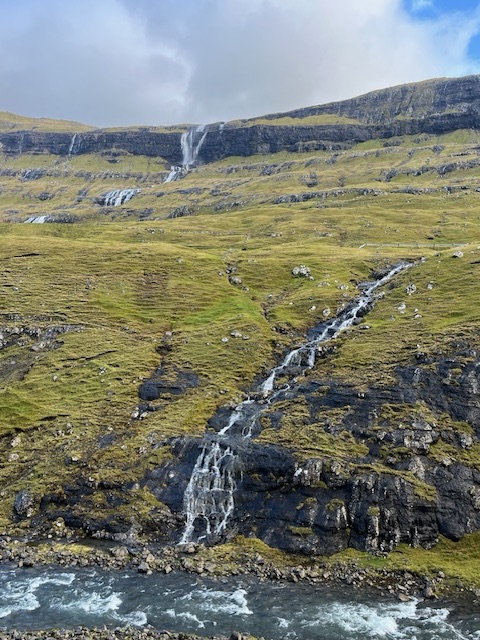
The tiny community of Saksun has reintroduced farming in the last few years, but in tandem with tourism. The heritage farm owners at Dúvugarðar offer interaction with the horses and sheep, several self-catering traditional grass-roofed cottages, guided tours, a museum, and in the short season, a cafe. Steep mountains and a curtain of waterfalls surround its lagoon for a magnificent setting. In wild weather it is at its best.
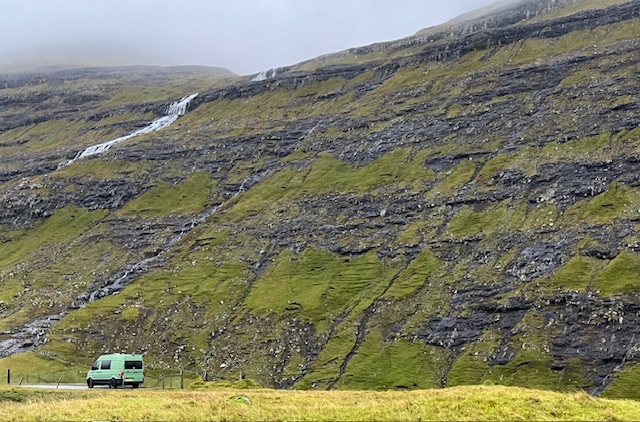
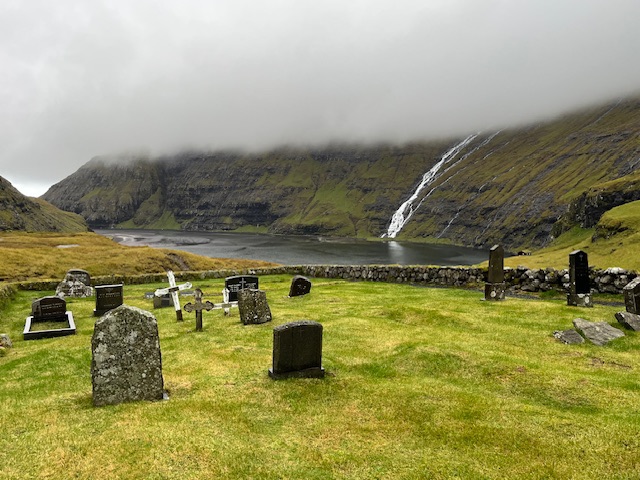
There is a trail across the mountain that each August provides the location for the Islands only Ultra run, the Útiliv mountain adventure festival, but in the weather of the last few days this was inaccessible as the rivers and streams were so high.
There are 340 recognised mountains in the Faroe Islands and they are all reachable, though some require climbing skills. On the island of Vágoy it is hoped to hold a skyrunning race along the 130 kilometres that link the islands 41 mountains; skyrunning is an extreme mountain sport involving high-altitude running on technical mountain terrain.

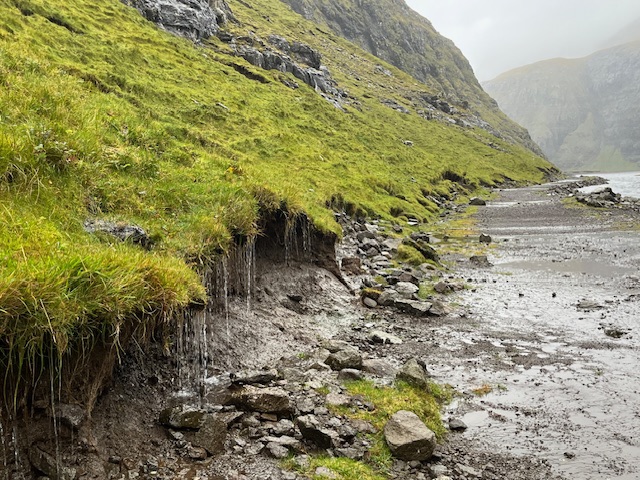
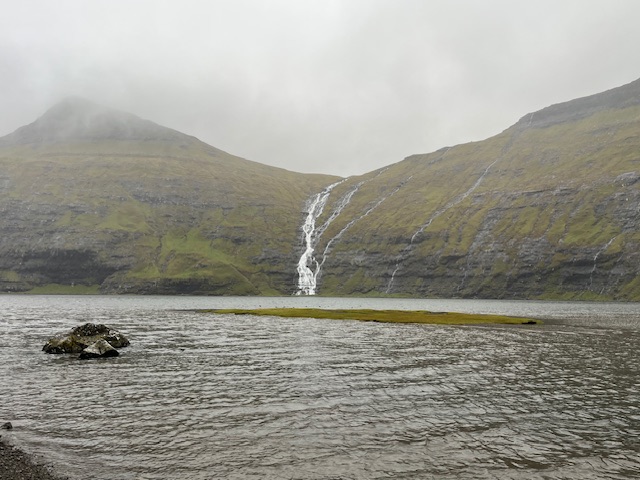
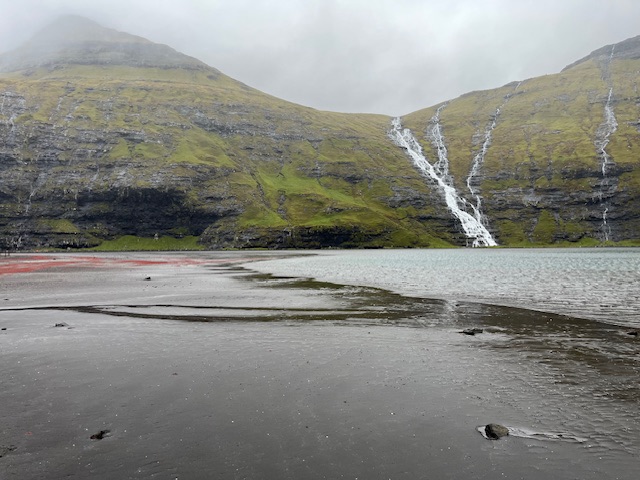
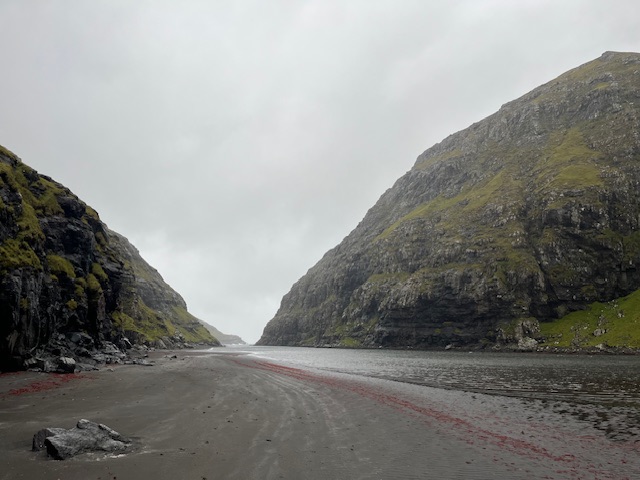
Another spectacular trail leads around the cliffs and down the river to a black sanded beach. I accessed this yesterday at low tide, and went down again today, in slightly better weather, but the tide was too high to get very far.
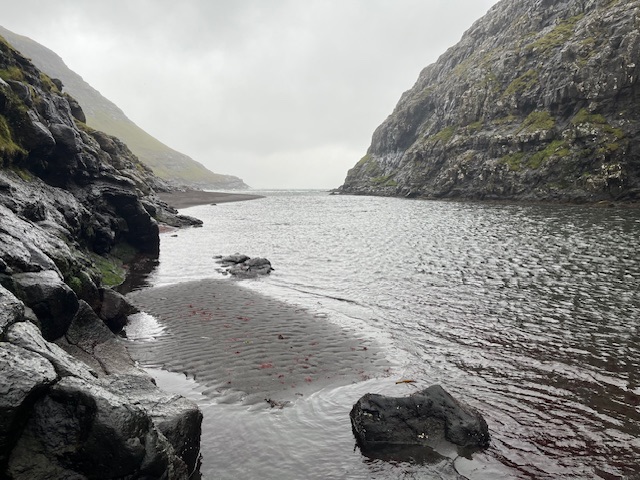

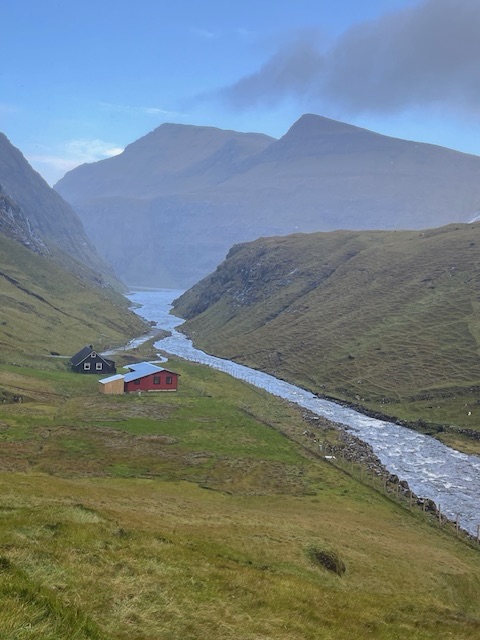
I stayed two nights in the car park by the Heritage Farm, and was made very welcome by its owners. A guy came over and chatted to me on Sunday evening just as it was going dark. He explained that having the occasional van visiting is fine, but in the six weeks of the season, they are regularly receiving more than 30 each day, and motorhomes rather than campervans. The road to Saksun is single track and eight kilometres in length, with passing places only every 500 metres.

Nóa and his wife Fríða moved here with their family (two children under ten years old) six years ago, and with a government grant have transformed the place into one of the most thriving tourist ventures on the island of Streymoy. They are activists against whaling, and asked what I thought about it. Fortunately, I had read something about it only a few days ago.
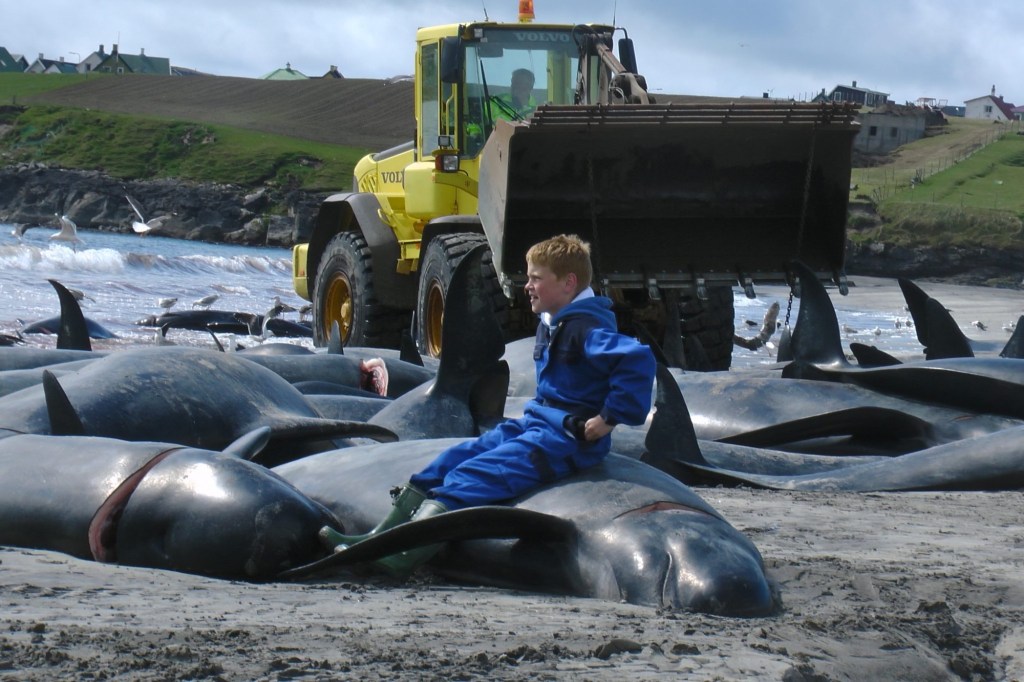
The grindadráp is a tradition of killing pilot whales and sometimes other dolphins dating back to 800 BC. Until relatively recently, pilot whale meat was an important source of food, but there is no longer a need for whale meat to meet nutritional needs as it is now contaminated by toxins and unfit for consumption. Family groups are driven to shore. Blunt metal hooks are sunk into their blowholes and they are dragged up the beach where they are often killed in a very basic way, though it is argued, traditional way, with a spinal lance.
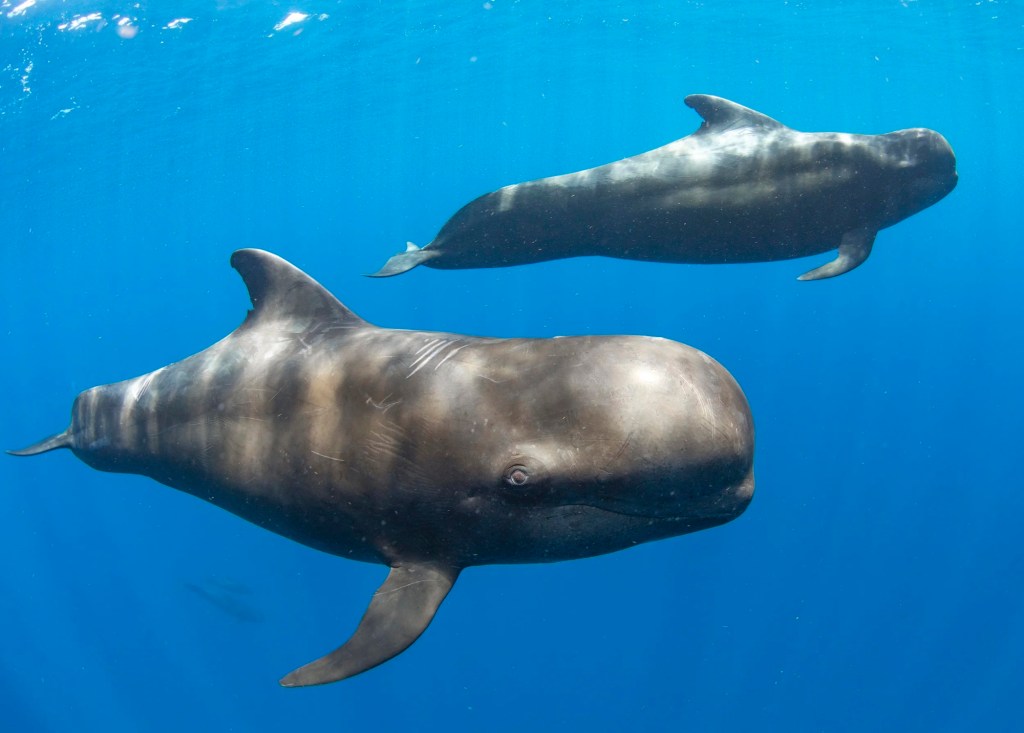
83% of Faroese people are in favour of the hunt, although 70% think the killing of other dolphin species should stop. As cows, pigs and chickens are seen as ‘food animals’, many Faroese people view whales in the same way. Pilot whales, who live long, wild lives in the ocean, are compared to ‘free range’ meat, and so hunting and eating them is viewed as more sustainable and natural than factory farming. In recent years only, there is a greater awareness of the dangers of eating these whales, due to their meat containing heavy metals such as mercury. If change comes, it seems it must come from the Faroese people themselves. Many activists against the grindadráp make their case continually.
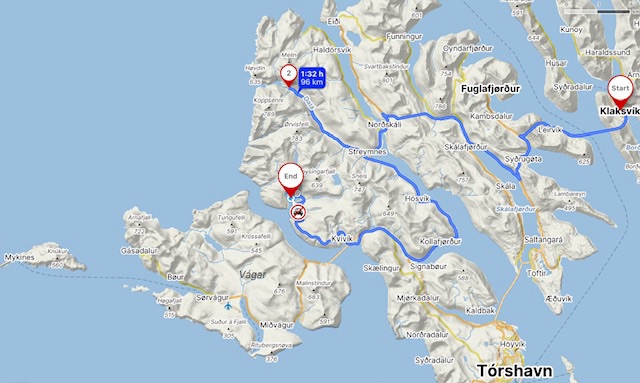
I’ve moved down the west coast of Streymoy to the town of Vestmanna where the wind is less furious. The town used to be the ferry port to the island of Vágar, but since 2005 there has been an undersea tunnel. Surrounded by mountains, it is, as most Faroese towns are, very picturesque. And, on days of wild wind like today, with a south facing harbour, it is relatively sheltered.


 Safe Return Doubtful
Leave a comment