The Norröna ferry was much busier than I expected, though there were hardly any other vehicles boarding at Torshavn. It’s the schools midterm break in the Faroes and the four day break, taking the ferry to Iceland, a 20 hour crossing, staying a day at Seyðisfjörður, then returning, was a popular option.
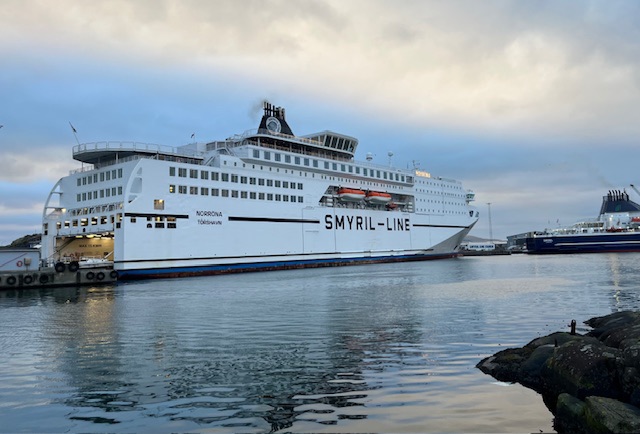
I read for a few hours in the gar at the top of the ship, with its excellent view, then retreated to my cabin when it got busy. Once out into the ocean, despite the calm conditions on land, the captain had warned of three metre waves. Such conditions don’t really bother me, and it had been rougher on the way over, but I know many people who wouldn’t enjoy it.
Arrival into Seyðisfjörður was on time at 9 am (Iceland is currently an hour behind the UK), and for the last hour, the trip down the fjord was magnificent as the sun rose above the jagged peaks.
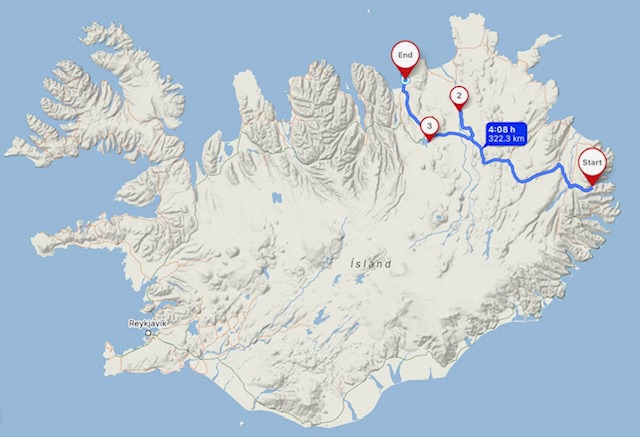
I drove to the first town, Egilsstaðir, and stocked up at the supermarket as well as with water, and then on for a couple of hours to the waterfalls at Dettifoss. The weather is excellent at the moment, almost clear skies and a maximum of about 8C, though it does seem that it will deteriorate from Friday; I was keen to make to most of it and get in some hiking.
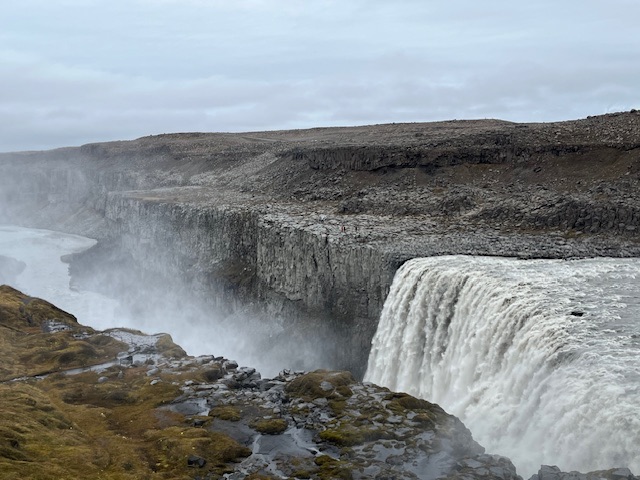
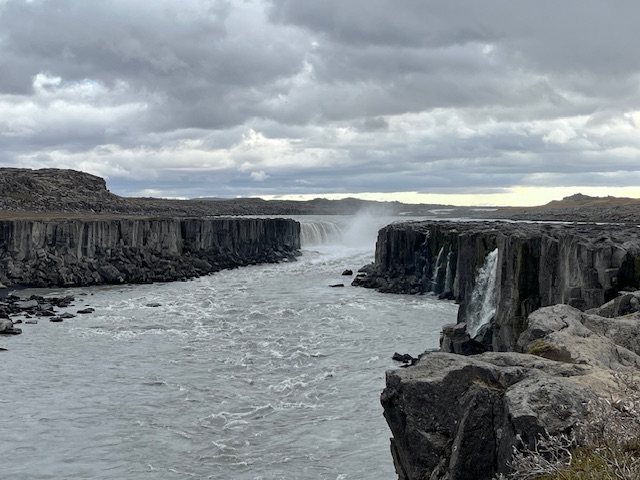
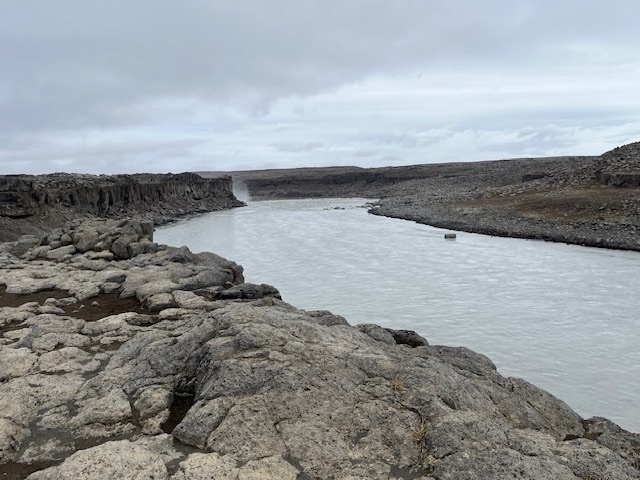
There are two waterfalls close to each other here on the Jökulsá á Fjöllum river.
The falls at Dettifoss are 100 metres (330 ft) wide and have a drop of 44 metres (144 ft) down to the canyon.
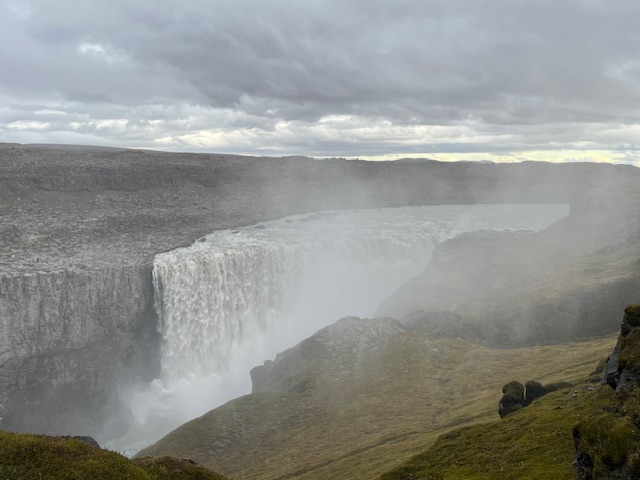
It is the second largest waterfall in Iceland in terms of volume discharge.
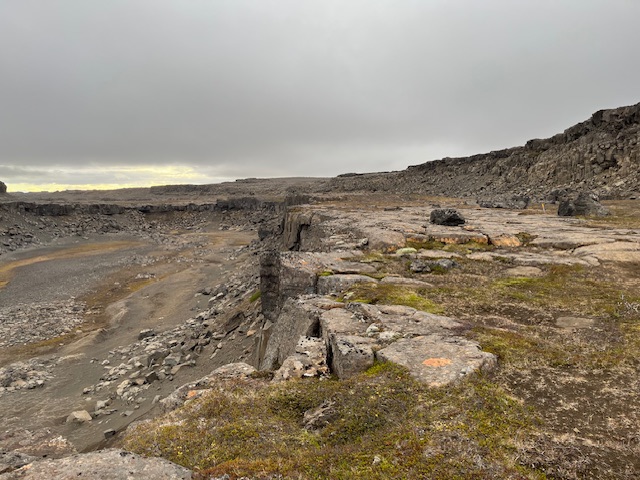

Half a kilometre upstream are the Selfoss falls. There’s still quite a lot of visitors around; several coaches of Chinese and German tourists arrived while I was there, and there were a few rental campervans, but nothing like it would be in the summer season.
It was easy to escape the tourists though. They took on a short circuit to the falls of a couple of kilometres, but there is a longer, ten kilometre circuit, empty of people, that appealed to me. There were a couple of steep rocky sections, but it was good to be out for a couple of hours after the ferry.
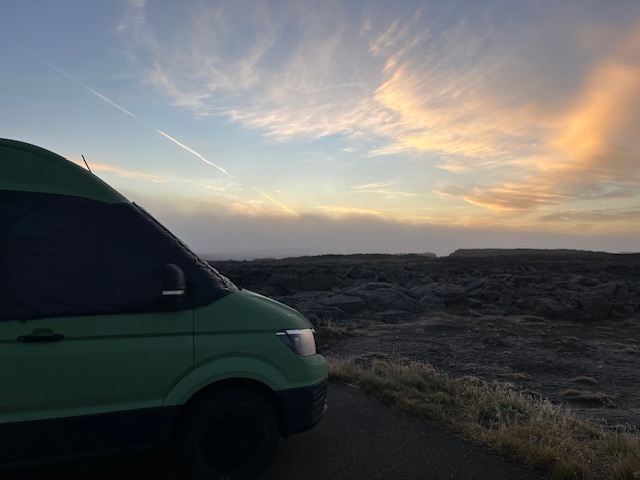
It was 330 metres above sea level here, but still a good place to spend the night. I had considered going down to the coast, but there is another hike, relatively close by, that I want to do tomorrow, so here was fine. One other van, French people, stayed next to me.
It was a cold night, dropping to minus five degrees, and the Aurora Borealis was visible, as I took a number one in the early hours, but only as a broad white streak, a phenomenon known as continuum emission.
I drove fifty kilometres to Mývatn lake this morning before breakfast, giving the van a chance to warm up before taking breakfast. Mývatn is a shallow lake situated in an area of active volcanism that has a unique ecosystem that provide a habitat for a variety of waterbirds, though many have left for the winter. It’s still a good time to visit though, as with the warmer weather come black flies also. I was keen to hike a circuit in the Dimmuborgir Lava Fields and up the rim of the Hverfjall volcano.
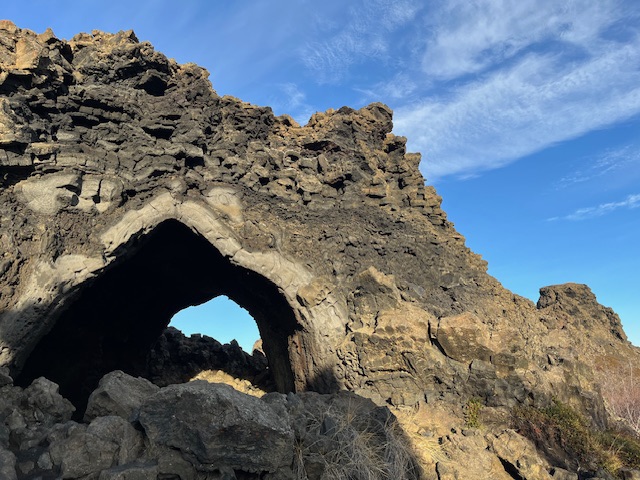
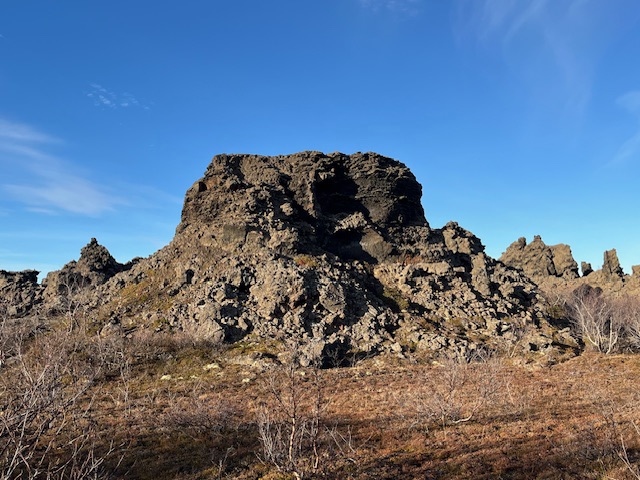
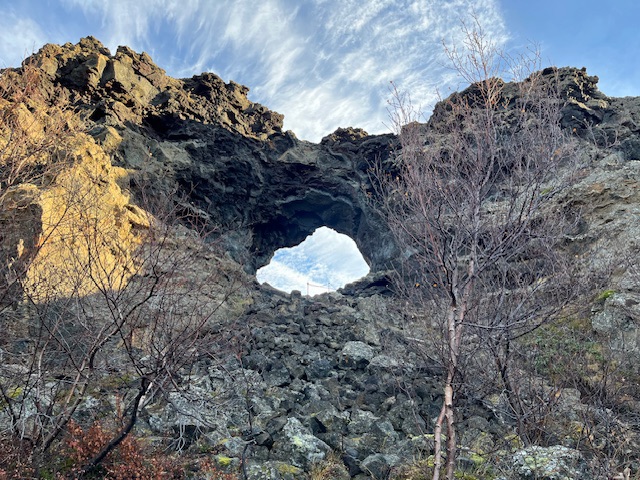
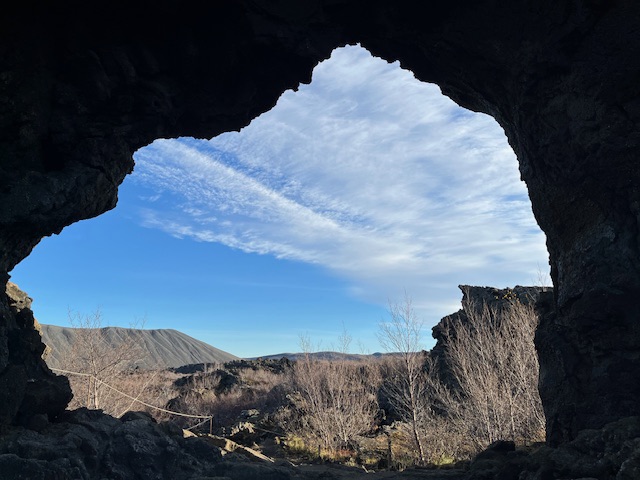
The Dimmuborgir area consists of a massive, collapsed lava tube formed by a lava lake flowing in from a large eruption in the Þrengslaborgir and Lúdentsborgir crater row to the East, about 2300 years ago.
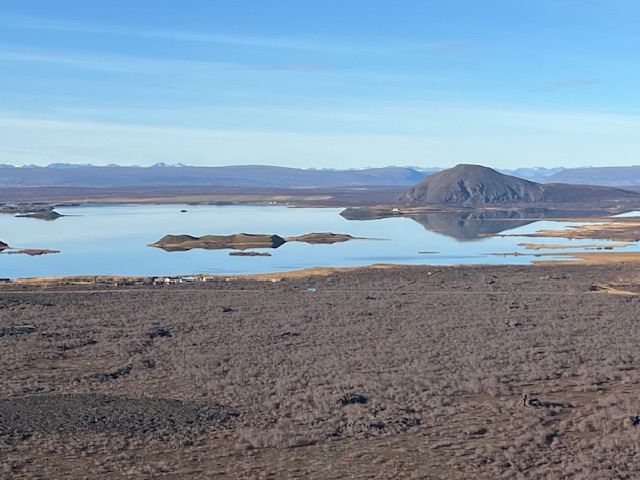
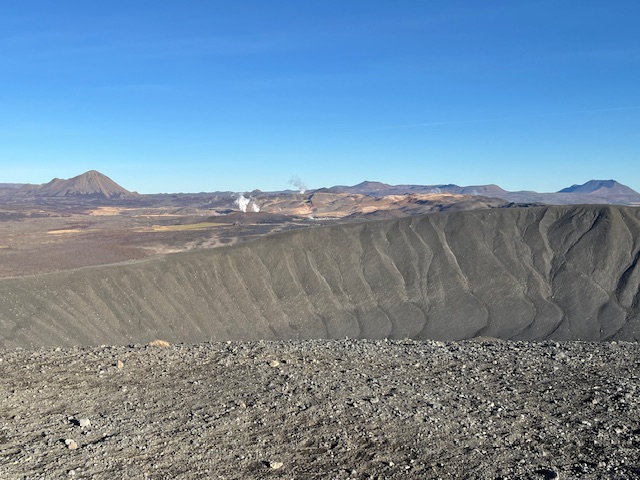
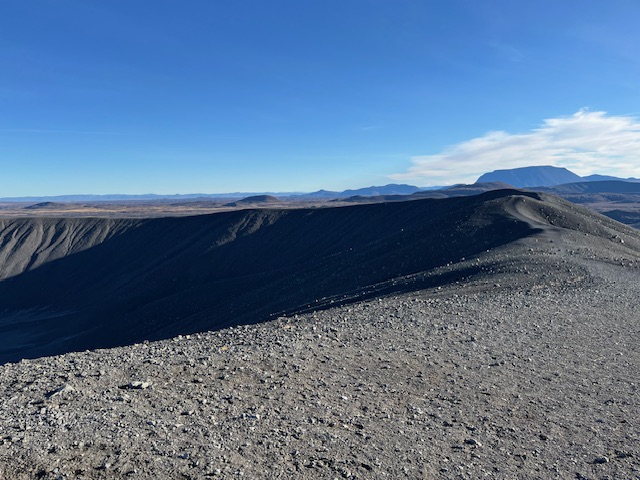
Hverfjell is a volcano with a wide crater of about a kilometre, known as a tuff ring, that erupted around 2500 BC. The highest point on the rim is 578 metres, meaning a steep ascent for me of about 250 metres.
It was a fine day, and though still cold at 4C at 10 am, excellent conditions to be out in. There were few people around when I left, but returning at 1:30 pm there were the coaches as there had been yesterday at the waterfalls, and plenty of rental cars; just the odd other touring van.
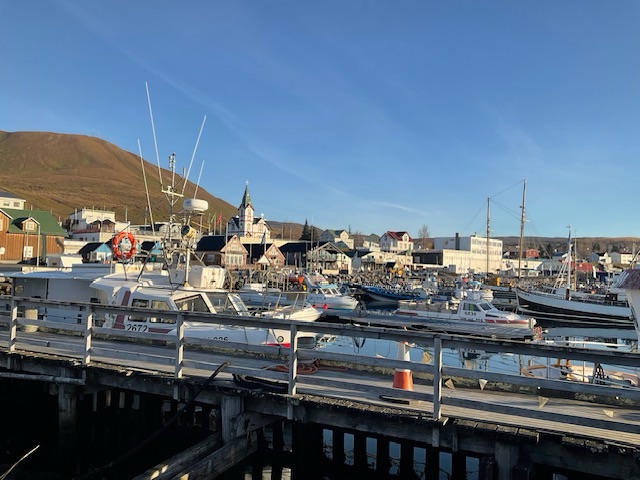
Later in the afternoon I moved down to the Husavik, about fifty kilometres to the north, on the Arctic Ocean coast. More on that in the next post..

 Safe Return Doubtful
Leave a comment