
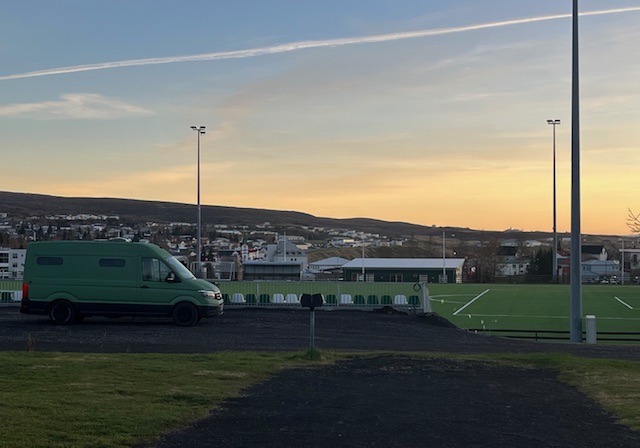
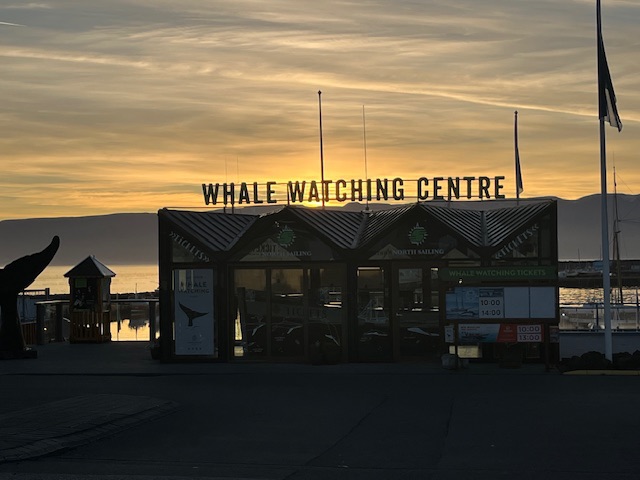
I stayed two nights at Húsavík. The campsite, next to the sports fields, was closed, but it was still possible to stay there; better really, no cost, and no facilities, which I wouldn’t have needed anyway. At this time of year the town looked very welcoming. Tourists still arrive, off buses and in their rental cars, mainly for a whale-watching boat trip. There’s two trips a day, to see humpbacks and minkes , and puffins on the cliffs, though the puffins have gone now, they become solitary in the winter, and spend their time on the ocean, and that can be up to eight months a year.
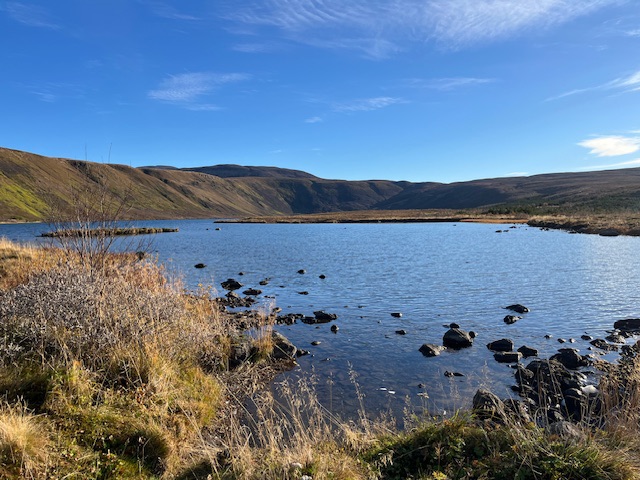
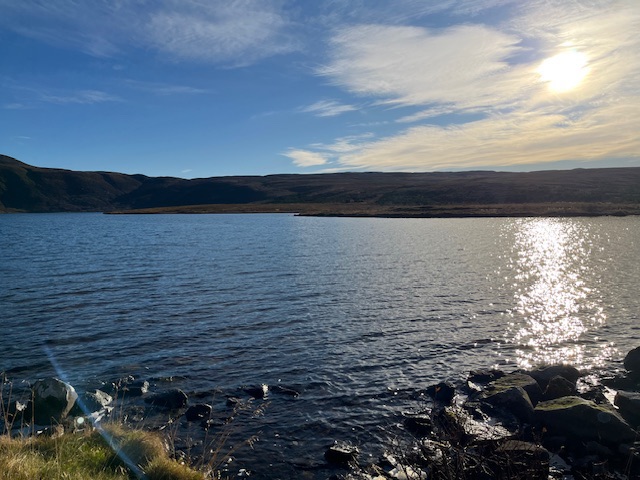
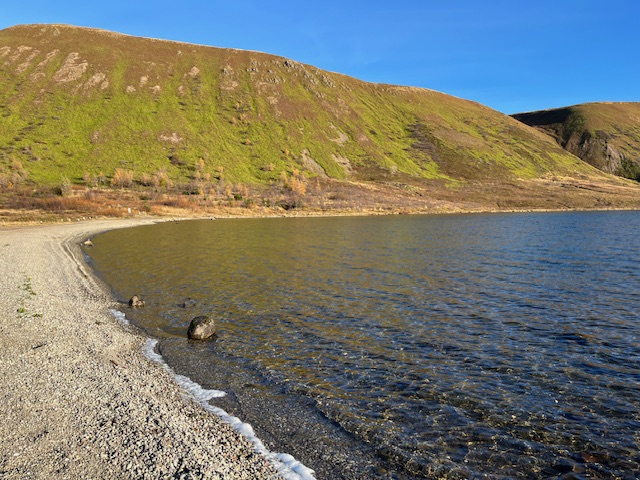
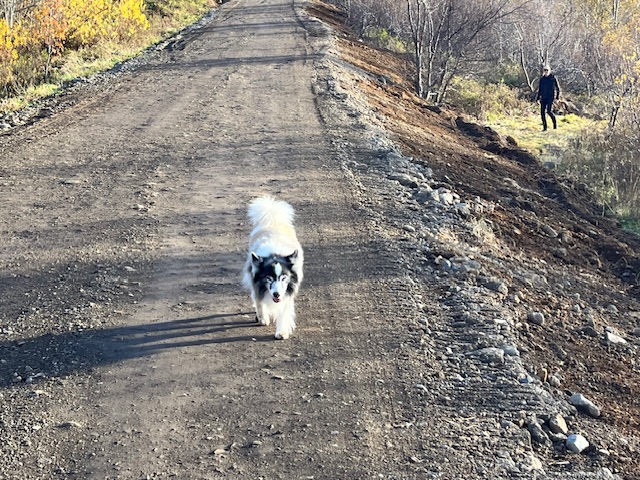
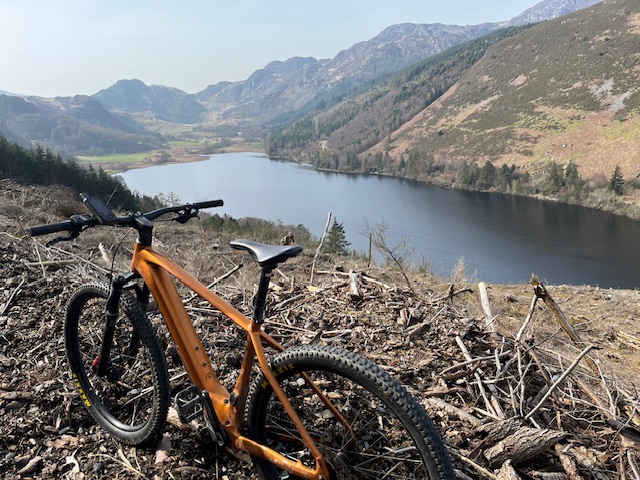
There’s a lake a few kilometres from town, surrounded by mountains, and I walked up there on Friday morning. Almost immediately I met a couple with an Icelandic sheepdog, and we walked together most of the way. They told me of the excellent summer they had just had, and indeed, were still having, as there was no snow on the mountains yet, and hardly any rain, but that was about to change. Their sheepdog was sixteen years old, and though some of his mental faculties were lessening, he was in good health. Dogs live longer in Iceland, because so few other animals, especially dogs, visit, disease is less frequent, and what there is, is more manageable.

From Húsavík I followed the fjord coastline to Akureyri, the counrty’s second city, with a population of 20,000. It’s a fishing town primarily, and gets a warmer climate than other northern towns due to its situation on the base of the fjord. It doesn’t get very much sunshine hours, lots of cloud. I wanted to use the swimming pool, which I have been to before, in 1998 and 2004. There is something special about being in an outdoor pool in two degrees centigrade. There’s a collection of hot pools of different temperatures and steam rooms as well. There are few things that are cheaper in Iceland than in the rest of Europe, but entry to swimming pools is one of them, the equivalent of £5.

I drove along the fjord to a historical site to spend the night, and it being a Saturday, to watch the sport. The driving is like nowhere else I have been. The main ring road is sealed and good quality, though fifty miles per hour is about as fast as is possible. The scenery is always magnificent. One of the most striking things is the amount of horses that are farmed. Icelandic horses are smaller than other breeds, but tough and live long lives, partly for the reason I mentioned above for dogs. Horses born overseas are not allowed into the country. They are used for sheep herding by some farmers still, but the majority are used for leisure riding, tourism, and some are exported overseas.
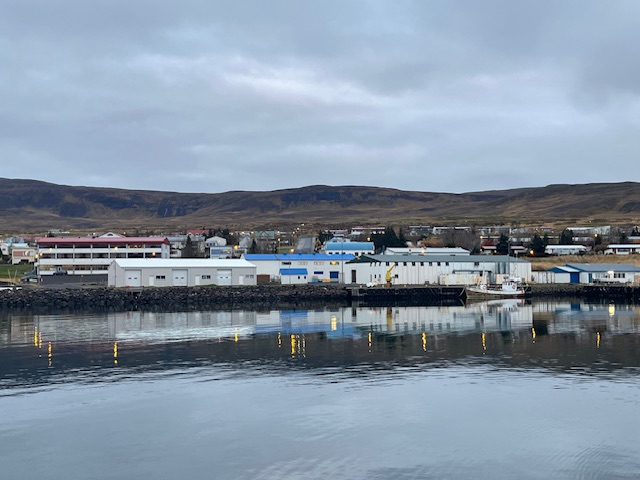
From Akureyri, with the weather now changing and becoming distinctly wintery, I moved around the ring road stopping at Hvammstangi. I arrived mid afternoon on Sunday in time for the afternoon Prem rugby, and then a couple of hours out on foot.

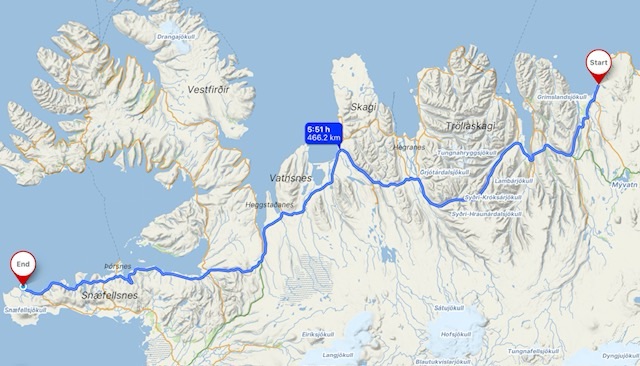
This morning (Monday) snow was forecast for most of the day. I continued anti-clockwise to the Snæfellnes peninsula. Though the snow never properly arrived, the wind was up for the first time I’ve been in Iceland, and a sleety drizzle came with it; the wind at thirty miles per hour with a temperature just above zero, making it feel like a lot less.
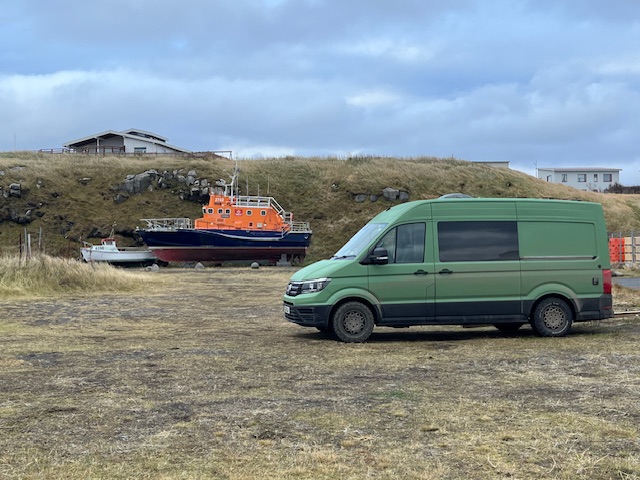
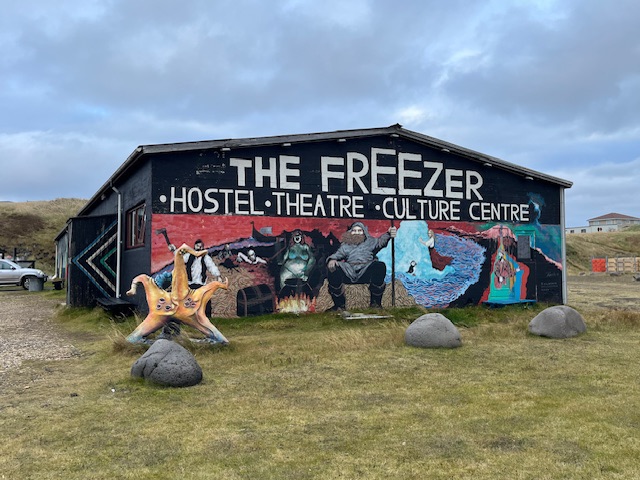
I’ve taken refuge at a renovated fish factory in the village of Rif, almost at the tip of the peninsula.
At our place, Icelandic arts, culture and local hospitality come together to create unforgettable memories for those seeking a unique Icelandic experience.
They have a place for campervans, but it is their lounge which is the real appeal for me, on a wild afternoon outside.
It doesn’t take long to realise that Iceland isn’t a great country for campervans hoping to stay wild. It’s easier at this time of year, but for the summer months, it is strictly forbidden and fines are issued. The large percentage of vans and motorhomes on the road, 95% or more, are rentals. Many of the rental vans are of basic quality, dark and unwelcoming inside, and cramped on space, converted cheaply, and with basic materials. The people who rent them are not van owners, for many it’s their first experience. Consequently they lack the etiquette that is taken for granted in other countries; privacy when parking up, noise, disposal of waste, social interactions are very different, and really don’t exist. This gives vans a bad name amongst the local communities. In those summer months there are plenty of campsites, but most of them have closed now. Fortunately my van does not look like a rental, rentals have the company name on them, and so it’s possible to stay at marinas and suchlike if sensitive to the locals. Almost all car parks have signs forbidding overnight stays.
I’ve altered my plan slightly. I had thought to go out to the West Fjords, but the weather there is even wilder, and there will be snow on many of those roads today, blizzard like conditions for the next couple of days. From here I’ll continue anti-clockwise, passing through Reykjavik late this week, which is about the halfway point in terms of distance and in my time here. And from there along the south coast.

 Safe Return Doubtful
Leave a comment