The Snæfellsnes peninsula in Western Iceland known for its dramatic landscapes. I’m currently reading the travel journals of William Morris, an English writer, poet and artist who travelled here in 1871 and 1873. He describes the landscape as ‘Most Unimaginably Strange’. At the age of 40 his marriage was struggling, and he felt a break from his family might improve the relationship. Also, he was greatly influenced in coming here by a language teacher from his University days, who was Icelandic. I’ll refer to his journals more in the next few posts, as chiefly he wrote about southern Iceland.
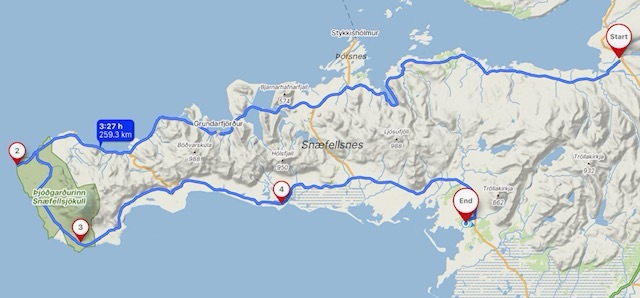
I arrived into the north of the peninsula and headed directly for its National Park and the mountains on which its glaciers has formed. The main volcano of the range was famously the setting for Jules Verne’s Journey To The Centre Of The Earth. Heading to the point of the peninsula the last town of any size is Ólafsvík, but these communities exist for fishing and tourism; they are wild and weathered places at the mercy of strong winds and cold and long winters. The summer season lasts for about six weeks but the tourists still come, by coach or in rental vehicles. When the snow settles for the winter in a few weeks the roads can stay closed for a few days, and driving on them is only for properly equipped vehicles.
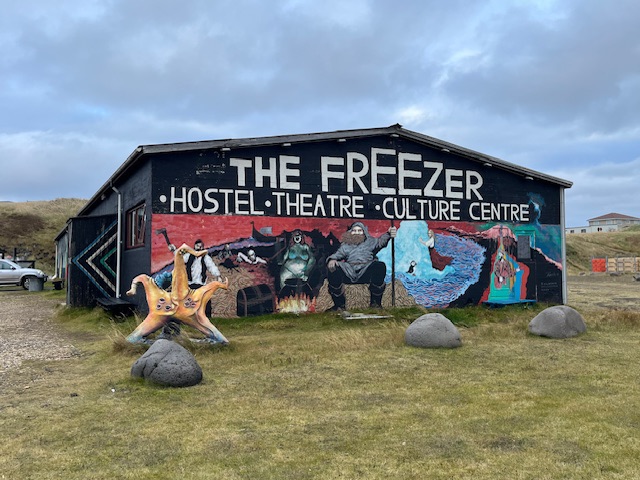
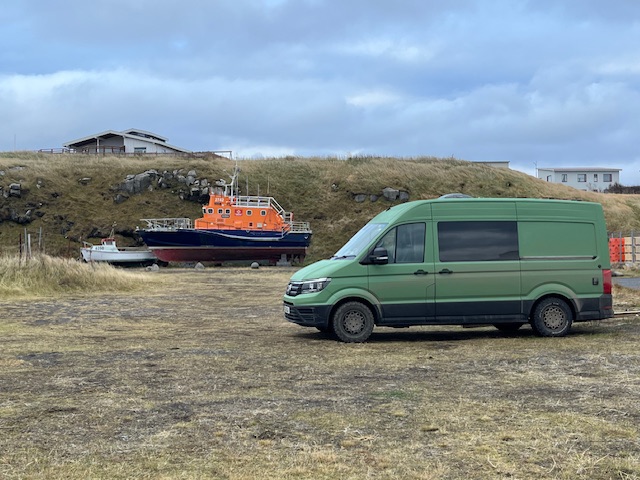
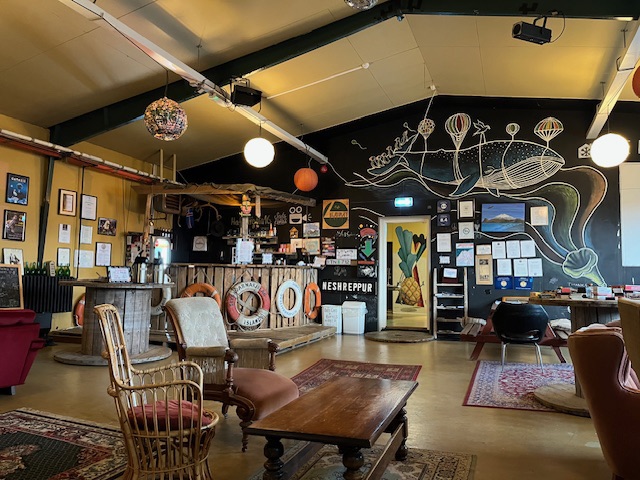
It was late in the afternoon when I arrived, and I headed for the Freezer Culture Centre in the fishing village of Rif. The Centre is a renovated fishing factory that offers culture to the locals of the peninsula (cinema, dance, music and drama) as well as a place to stay for visitors, in dorm rooms, private rooms, and a parking space for campers. Its decor is striking, and it’s a really friendly place, great for meeting a few other van people, although as I’ve said previously, very few of these are van owners, almost all are rentals, and therefore conversation is different, not so much of where one is headed to next and where one has been. Most people are on 7 day rentals and trying to take on the whole ring road and it’s key sights at breakneck speed, arriving late and leaving early.
I spent the afternoon catching up on business on the luxurious sofas of the common room, and chatted to a couple from New Zealand before heading back to the van. The woman had attended Queens High School in Dunedin in 1995, the same year I taught at Kings High School, its twin boys school.
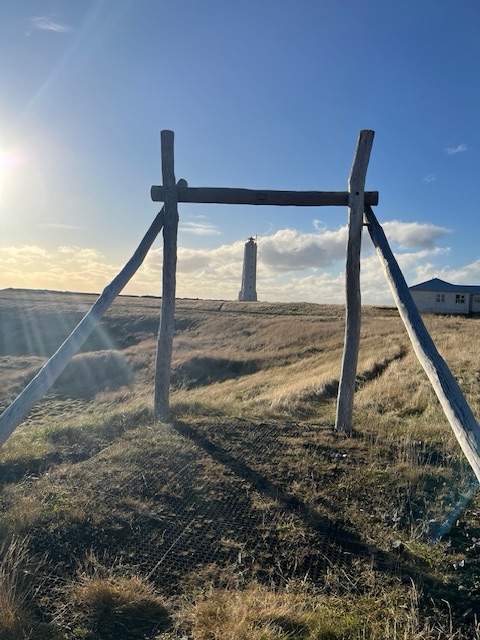
The following morning I checked into the Vistor’s Information Centre, but ended up with a social chat rather than gathering any information. She was of Polish origin and wanted to tell me all about her trip to Kraków later this week. She did tell though, that the area has strong Polish links, and many settlers here in the last twenty years from southern Poland. Iceland has actively tried to gain population in the last thirty years, and Poland has been one of its great successes. The lady did seem very safety orientated though. She advised that in such winds as today, 50 mph or so, I should avoid the cape, or the point, on which there are two lighthouses. I proceeded with caution, but it fine.
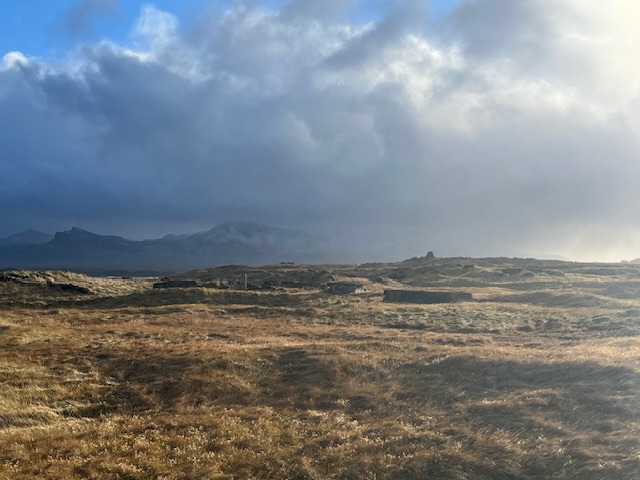
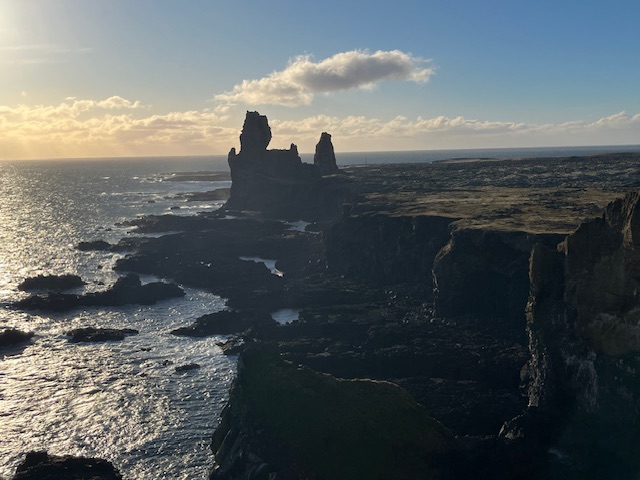
On the rough track out there I first visited Skarðsvík beach, then, as the track was rough and I wanted some exercise, I continued to the lighthouses on foot. It was wild, but manageable. After all, it wouldn’t seem right to visit such places on a calm day.
Öndverðarnes Cape – the Westernmost Point on the Snæfellsnes Peninsula
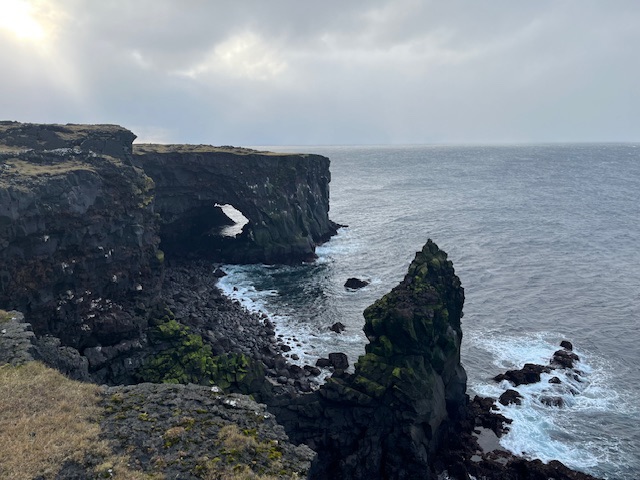

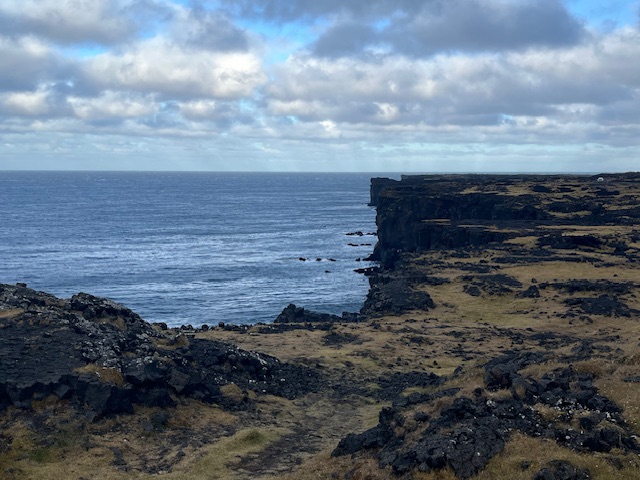
There are stop-off places all around the peninsula road, to sights that are best seen on foot, though some require an hour or so out, and put most people off.
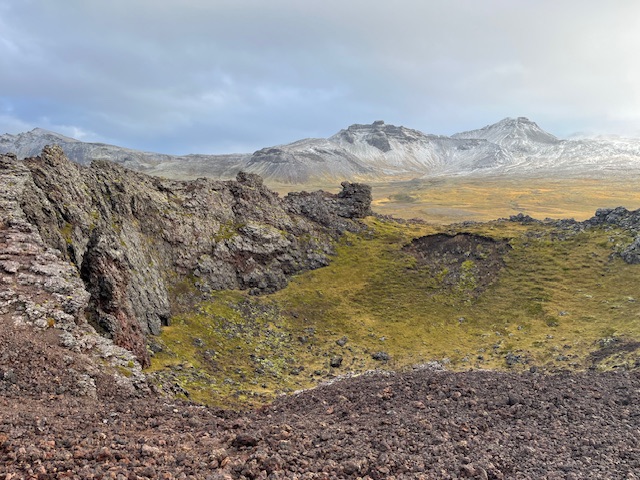
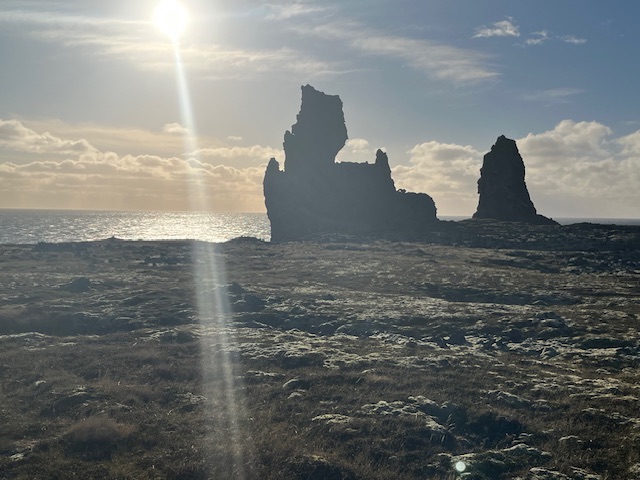

I was aiming for Arnarstapi on the south side of the peninsula to stay the night.
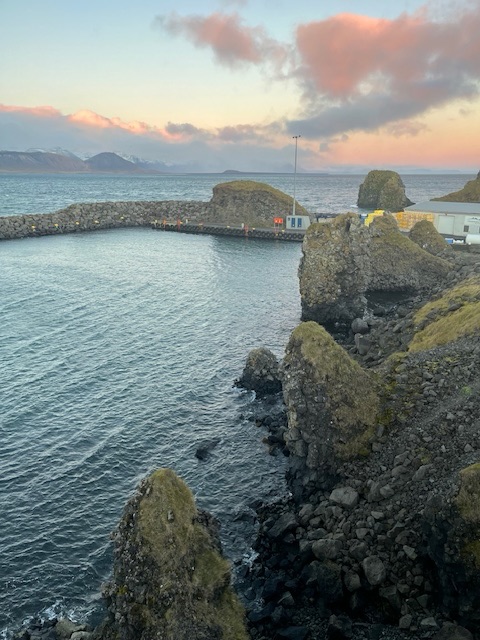
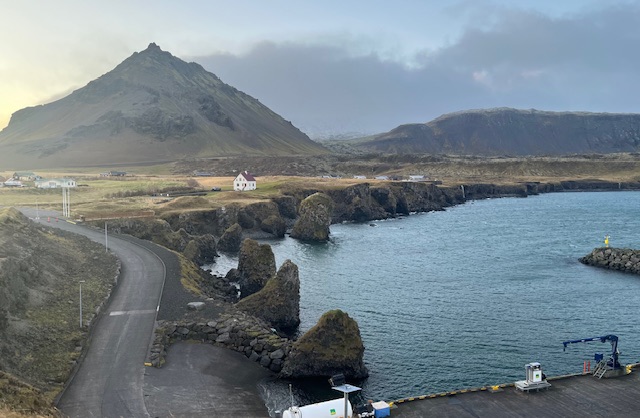
There is a campsite there, but it is closed for the season. There are so few vans prepared to stay without facilities that it is no problem to find a place. I sought one out of the wind, but that’s was impossible. Down at the sea was too wild, so I settled close to the hotel and met a Latvian guy in a rented Caddy who was about to head off, and I reassured him it would be no problem to stay. Caddy’s are great vehicles and I’ve seen some attractive conversions, but they are hard going in this weather. Also, his rental had hardly been renovated.. it had the thinnest of mattresses in the back, a portable cooking stove for outdoor cooking, and a small cooler box. No toilet or water container. A very basic leisure battery that was powered only by the engine, and used just for lights, to recharge devices and to start the diesel heater. He was a young guy, who was eating cold food most of the time. Some campsites have kitchens, but most are closed now. There’s very few residents in this village at this time of year, most places have closed, and no one was to bother about the occasional campervan staying overnight.
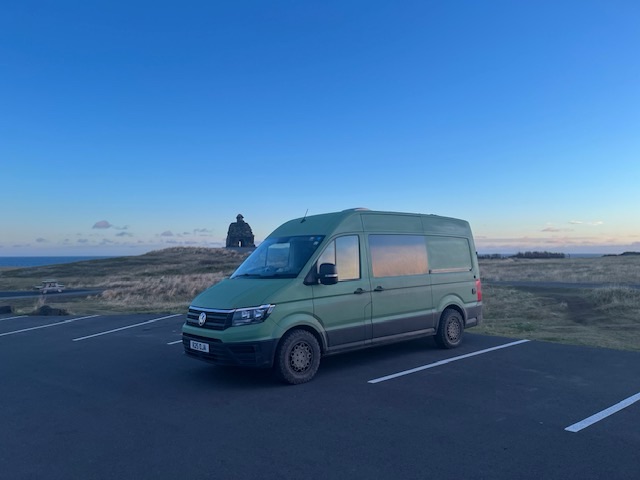
The Hotel was still open though, and I took an expensive coffee there in the morning, though it was worth it as a warm place with a fine view, perfect for an hour’s reading. Overnight the temperature had got down to minus 3, but with the wind feeling considerably cooler than that. There had been snow flurries overnight also, and some had settled, but the sun was shining this morning, and the views were excellent.
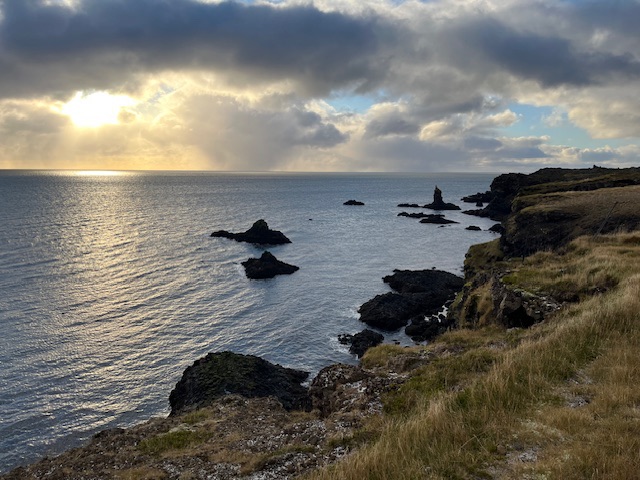
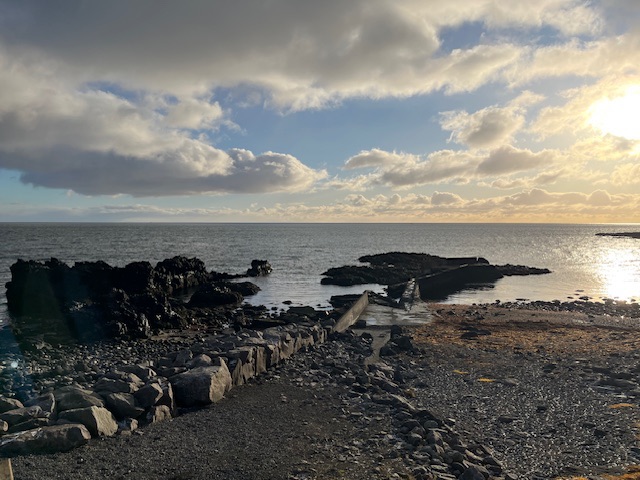
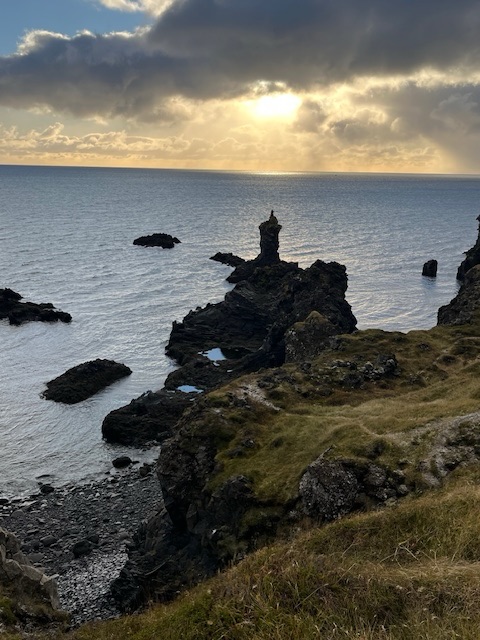
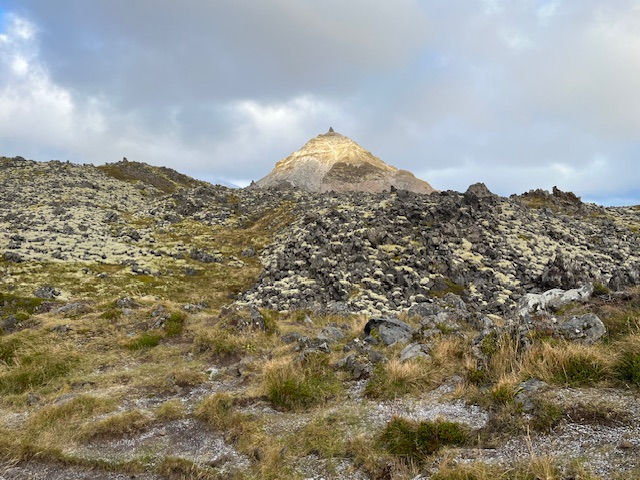
There’s a coastal cliff walk here of about 10 kilometres as a round trip, which was the reason I had stayed, and it was an ideal morning for that.

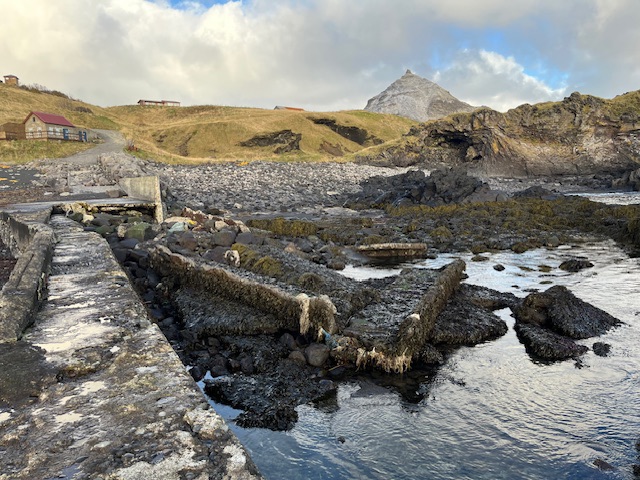
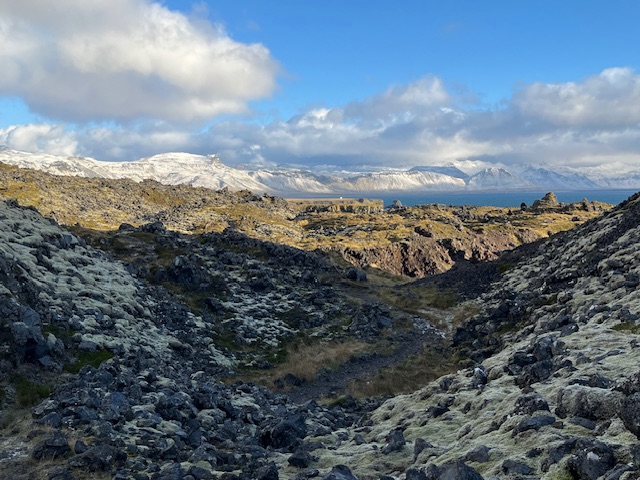

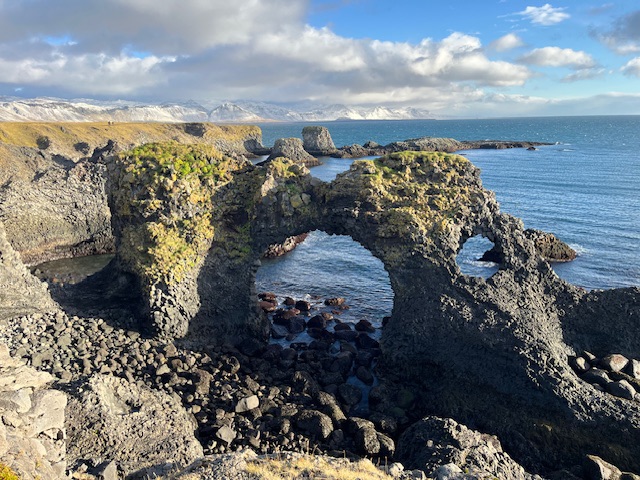
This afternoon I have continued along the southern coast of Snæfellsnes, left it, and am based for the night at Snorrastaðir farm, which offers a place for vans, and a warm lounge, for a reduced over 60s price of the equivalent of £10.. a real bargain, considering the Freezer Hostel was £35. Many places here and in the Faroes over reduced prices for over 60s. I’m all for it…

 Safe Return Doubtful
Leave a comment