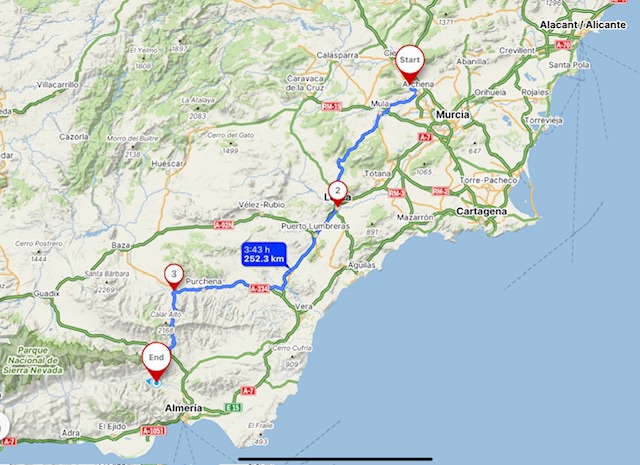
From Ojós in the Segura valley in Murcia I headed south trying to time my arrival in Almeria for Monday, the day of my ferry to Melilla and then onto Morocco. I expect to be back in Spain in a couple of months and will, during my time in Africa, try to calculate how many Schengen days of my ninety I have left. I think it’s about 35, which I will use for a slow return to the UK.
I’m aware that on this route I have intentionally kept close to the coast, the temperature further inland at a higher elevation is a few degrees cooler, and in some places there has been snow. I hadn’t reckoned though on the population density being as high as it is, and it’s difficult to find any places that I would call wild, relatively undisturbed by people.
However, at this time of year the midweek at least is pretty quiet.
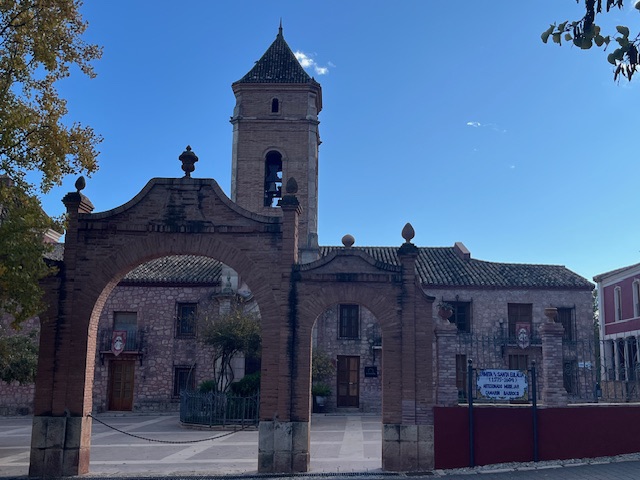
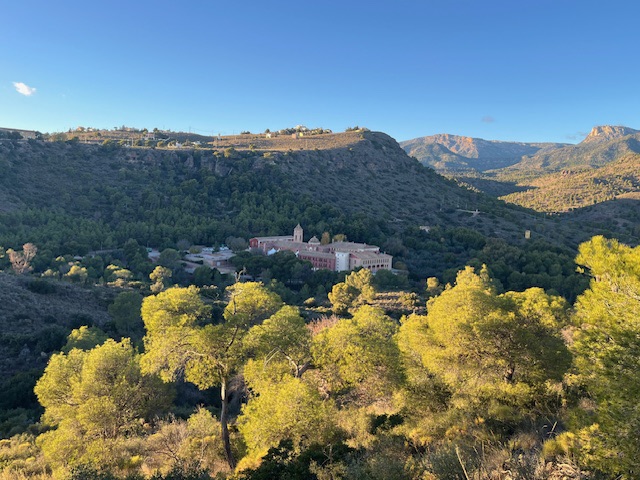
On Tuesday I stopped at the Sierra Espuña, a range of mountains with an elevation of about 1000 metres a hundred kilometres or so southwest of Murcia. I stayed in the carpark of the Santa Eulalia monastery and met a Canadian couple in a motorhome they had exchanged for their own in Vancouver for three months. We were the only people in the vast carpark for the 36 hours I was there, apart from a team of about 20 gardeners who wandered around doing seemingly nothing. I had tea with the Canadians and invited them for coffee the following morning and traded stories from the road. They were recently retired, the woman had worked as a producer of children’s television programmes, and the guy had been a postman. They had been away for ten weeks already, and were headed to Madrid to finish their three months. I was particularly interested in chatting with them, as I have tentative plans for a bike trip that way sometime soon..
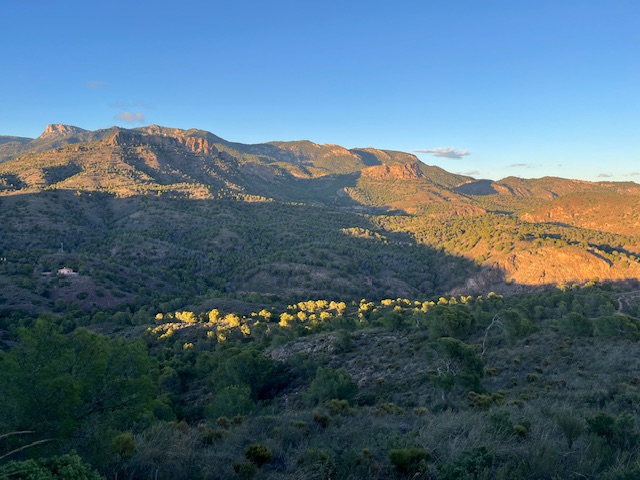

I found a good hiking circuit around some of the trails local to where we were on a cold morning with clear skies that didn’t get above 8C.
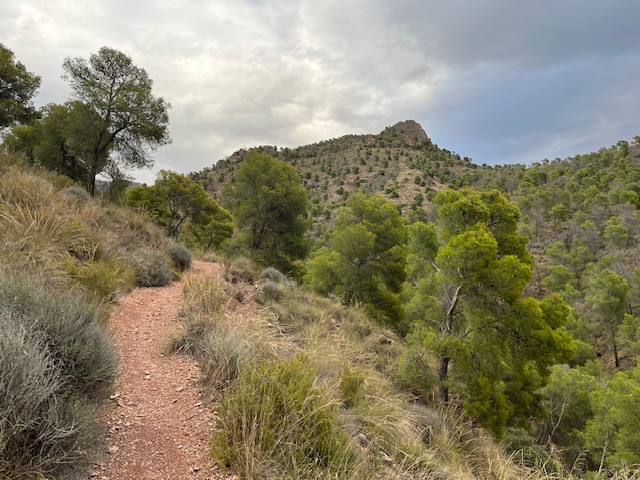
On Wednesday I continued further south to a via verde (Greenway) I had spotted on the north side of the Sierra de Los Filabres mountains and the town of Serón. This is the province of Andalucia now, and to the west are the high mountains of the Sierra Nevada, though the weather wasn’t good enough to afford a view, it was partly cloudy and extremely windy, with a warning for gales above 50 miles per hour. It made driving difficult. In such dry conditions things, like bushes and branches and rubbish, blow across the road frequently. At Serón at least it was more sheltered; I was at the old station and managed to get in behind the station house wall.
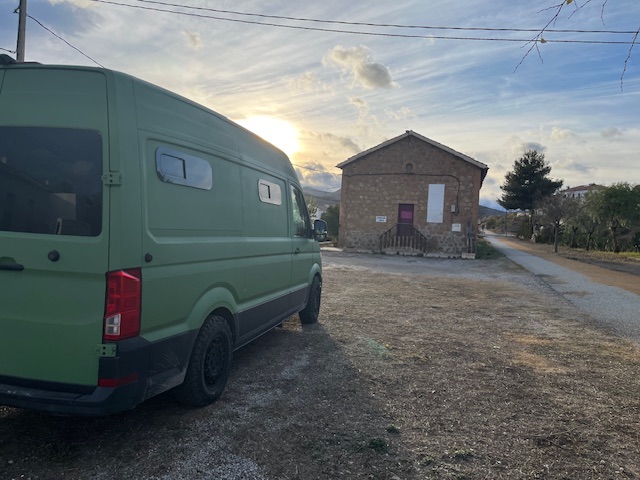
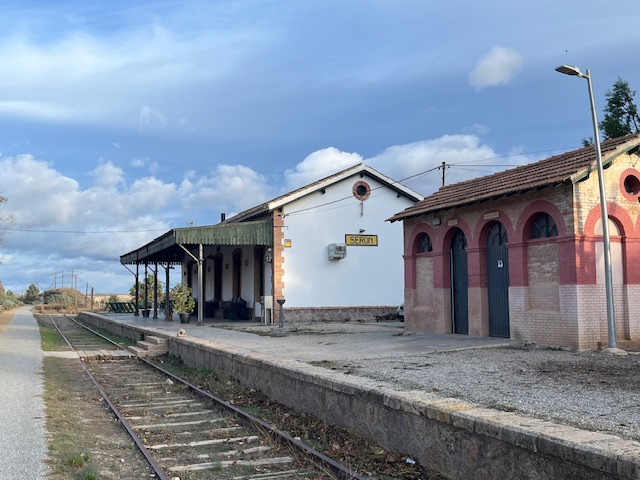
The wind was too much to do any cycling, and on Thursday I moved on south on one of the roads that cross the mountains, going up to a pass at 2200 metres.
On the southern side of the mountains the weather is usually a lot different, and was today, with a climb in temperature of ten degrees to 18C, and less wind, which cleared completely overnight.

This region is Las Alpujarras, a wide area to the south and east of the Sierra Nevada that extends through Granada and Almeria regions of Andalucia and is known for its fertile ground despite it being extremely hot for a lot of the year. It’s not rare here for temperatures to be in the mid 40s for the three summer months. Today, Saturday, here the day is still very warm for the time of year in the middle; at about 2 om it was 22C, but will cool to single figures by 10 pm. The fertility of the land means it excellent wine and fruit grow. Many of the higher Alpujarran villages have lost population over the last decades, but here where I am, in Terque, only thirty kilometres from the coast and Almeria, it is still a very popular and pleasant place to live.
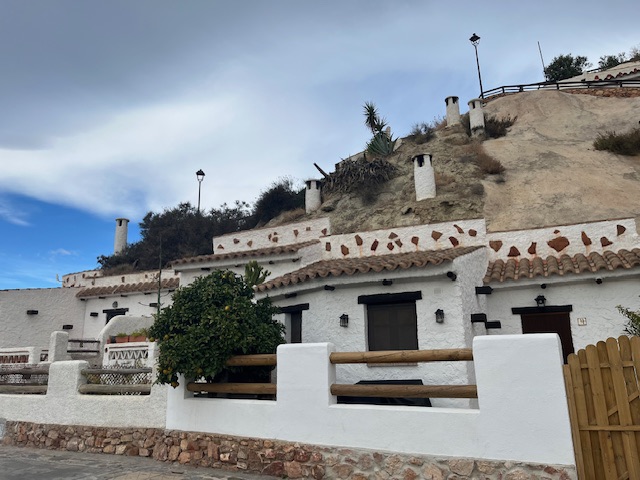
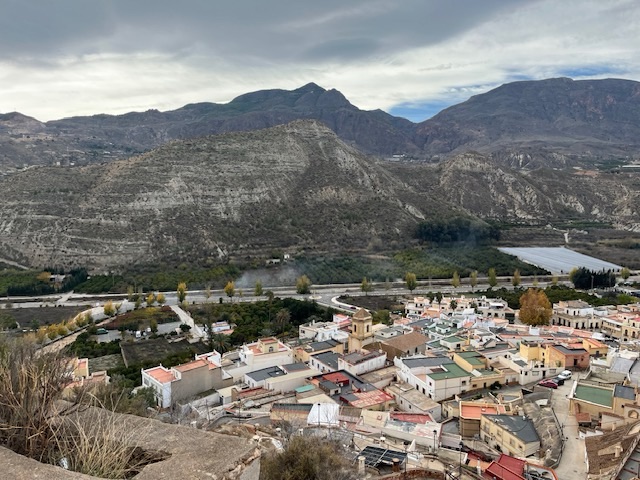
I’m in the town car park for the weekend along with one other campervan, and old VW T2. The Spanish guy who owns it also lives in his van. We have chatted briefly, though he doesn’t speak good English, and my Spanish has regressed from ten low level it already was 14 years ago.. He, Ramon, works online as a software engineer for a company in Santander, but enjoys a warmer climate for the winter months.
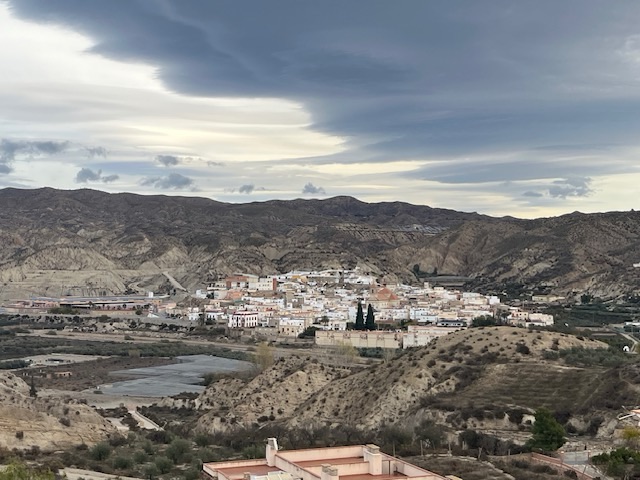
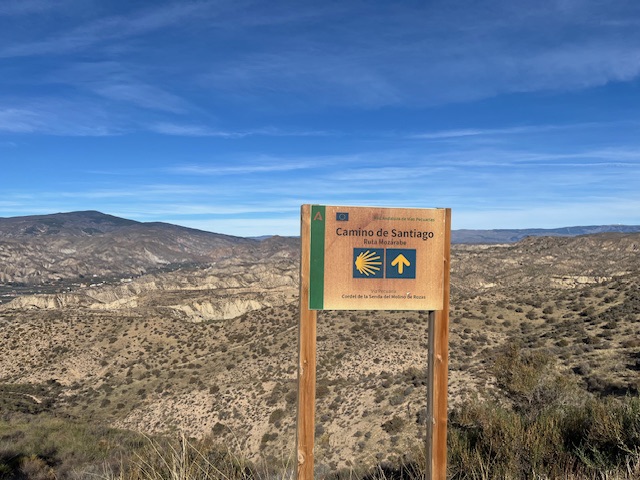
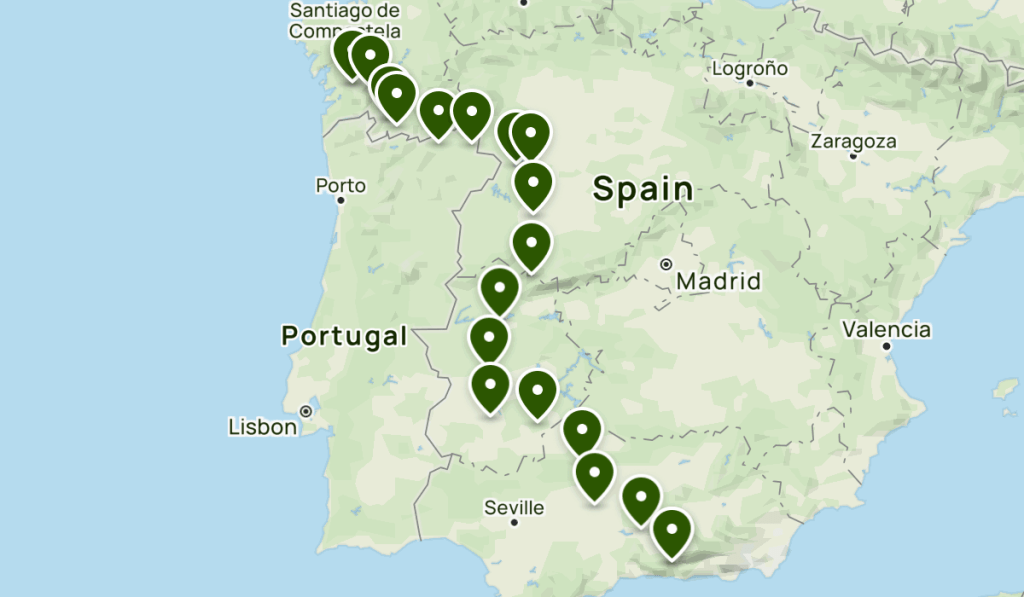
The Camino de Santiago Mozarabe is one of the caminos that connects the south of Spain with the main route
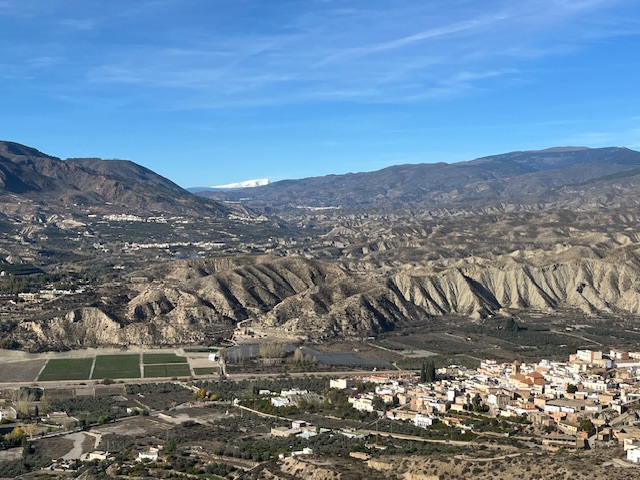
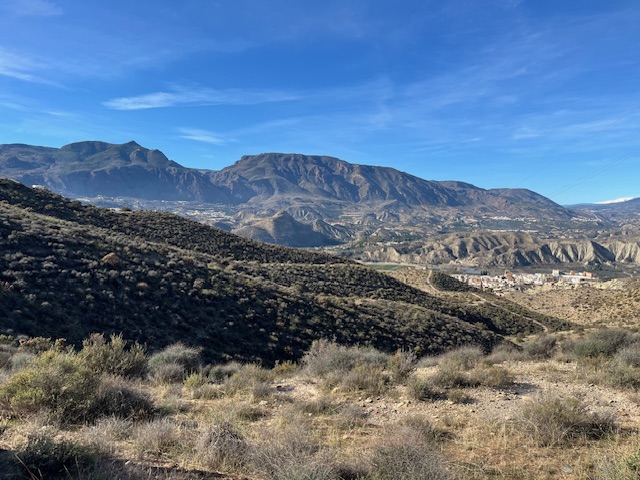
This morning I took on a hiking circuit around the local area that gave some perspective from which to see the typical villages of the Alpujarras dotted around.
On Thursday I filled up with LPG for the first time since leaving the UK ten weeks ago. Morocco doesn’t sell LPG. My tank took just over 7 litres, with a cost of just less than 7 euros. That indicates that in the last ten weeks I have used about a litre every ten days, which makes it quite a well priced way to cook.

 Safe Return Doubtful
Leave a comment