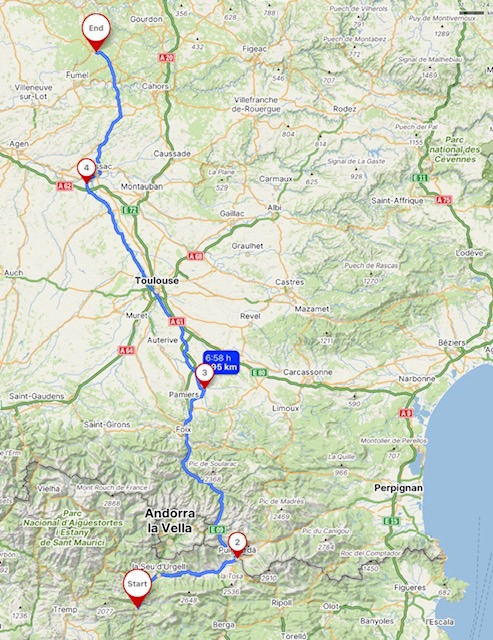
I knew that to head over the Pyrenees would mean a big change in the weather, but the forecast on the southern side in Spain was not good for the next week anyway. On Monday morning I made the journey, heading first of all into Andorra for a stamp in the passport and some whisky without duty on it. The stamp indicates a day in the country for Schengen purposes, and makes it even more difficult for any potential immigration officer to make the calculation of how many days I have been in the region; this course is especially complicated. I obtained that with no problem, just asking the Spanish side for a stamp on my way out. There is a supermarket at Sant Julia just a few kilometres after the border, and there I picked up a couple of litres of Jamesons for the New Ing bar this summer, 15 euros as opposed to 25 pounds , and a bottle of Talisker 10 for myself.
I wrote in the last post that the route through Andorra is closed after a rockfall last weekend, so I retreated south and went the slightly longer way round, through Puigcerdà. There was some snow on the south side of the Pyrenees, and a temperature of about 3C at the border at 1400 metres, but it was warming up, the snow was melting. There was a lot more on the northern side, as usually is the case, and some of the smaller roads were still not cleared and closed. The journey was slow, and with steady rain all afternoon.
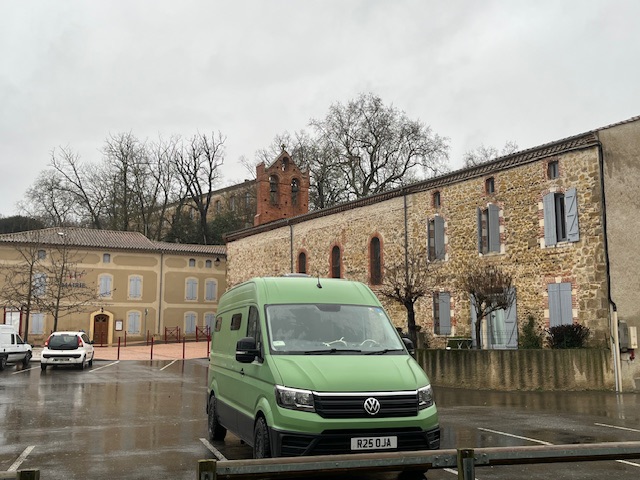
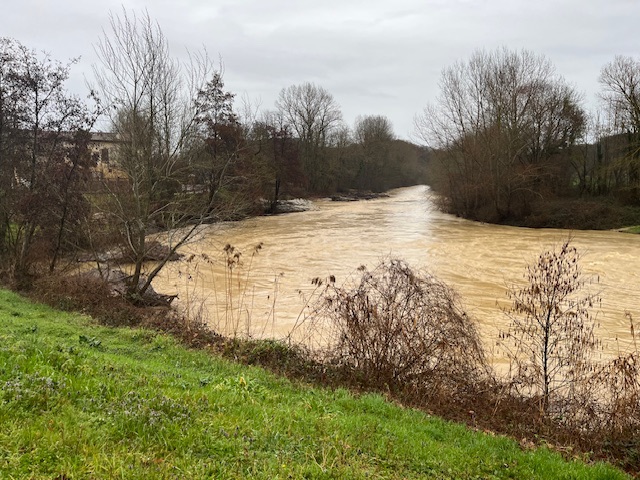
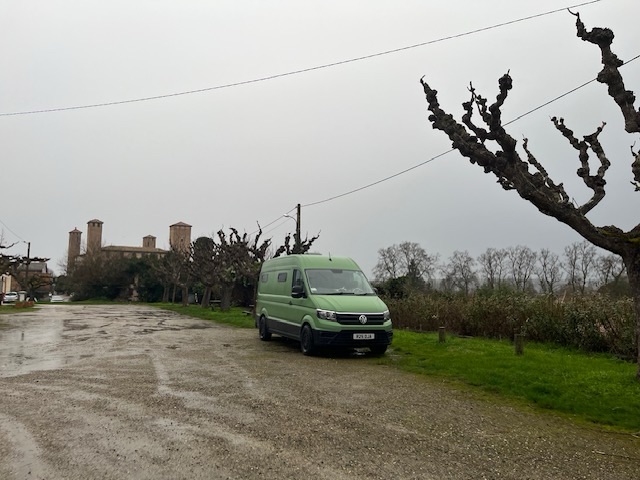
My destination was the village of Gaudiès, in the northern foothills, with Toulouse about 40 kilometres to the north. Gaudiès is on Le Grade Hers river, which in the summer is perfect for bathing, but on this day, with the snowmelt and a day of heavy rain was on severe flood alert. I parked up by the Town Hall and was settled in for the night, cooking dinner when a local knocked at țhe door. He showed me the predicted river levels on a website on his phone. Only once before, in 2020, the river had burst its banks. He showed me pictures. Though it looked very full, it didn’t seem possible it would raise another 3 metres in a few hours and threaten the village. But it was forecast to. On the guy’s suggestion, I moved fifty metres or so back, a couple of metres higher, to close to the old Chateau.
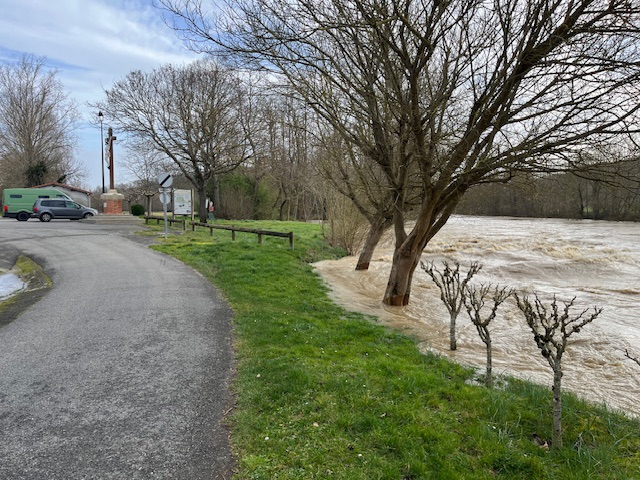
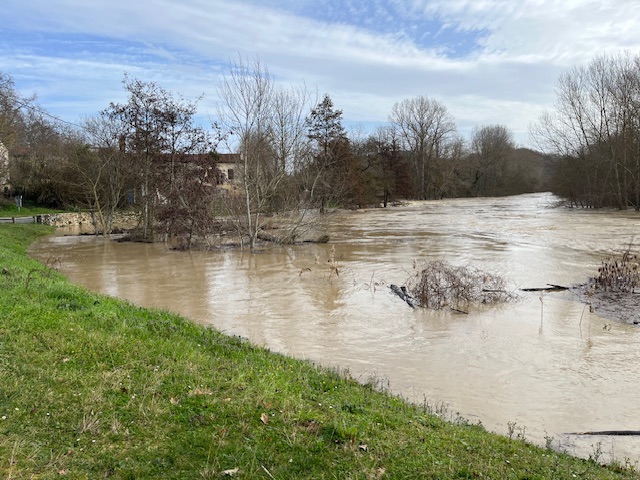
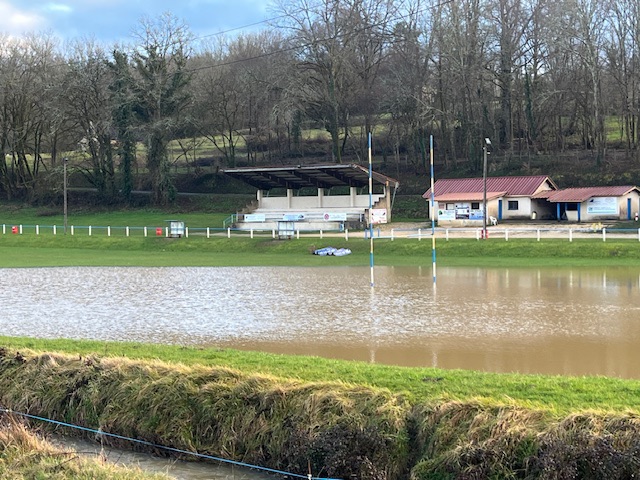
The following morning it had risen to just short of bursting its banks. It rained heavily all night, but had stopped in the morning, though was forecast to be on and off for the next few days. The villagers had taken precautions with sandbags and flood-gates, and moved their vehicles and anything else they could do, to higher ground. After a couple of hours out wandering the banks, I headed off.
I drove for a couple of hours round Toulouse and then up to the Lot region. All of the major rivers here were on severe alert, the Lot, the Tarn and the Garonne. My destination today, Saint-Nicolas-de-la-Grave, is where the Tarn and Garonne meet, an hour or so north of Toulouse. I stayed at the aire in the centre of town, trying to get out to walk around in between the heavy bursts of rain, with mixed success.
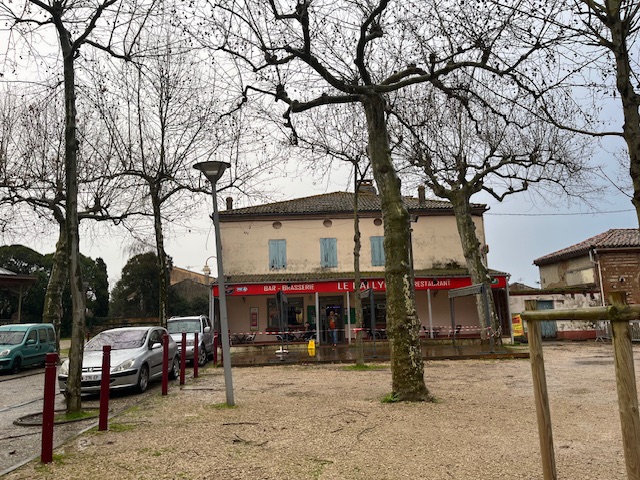
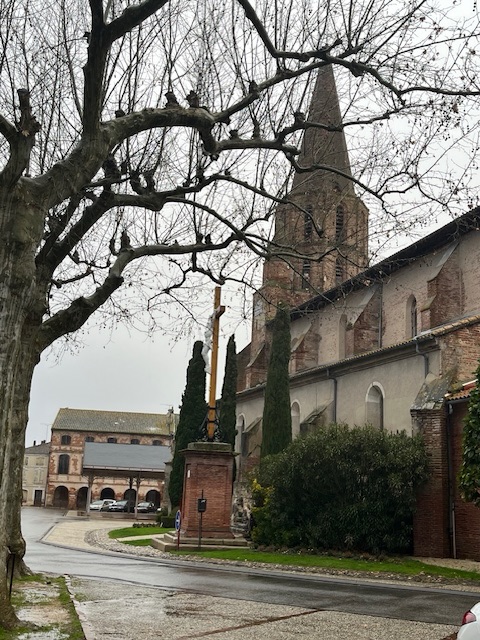
Today, Thursday, the rain has been more showery, but many of the showers are with thunder and heavy. With strong winds also, this was named Storm Nils by the French weather service and will give wild weather throughout tonight also. It’s the fifth storm I’ve caught in the last three weeks.
Today I drove on into the Dordogne region, but slowly, there were several diversions due to flooded roads and trees down. I remember last year when I was in Dordogne, it’s more difficult to find pleasant places to overnight, which is understandable, as the region gets so many visitors in the summer, the sort of quiet village aire is less tolerated by locals, as there are so many motorhomes around for nine months a year.
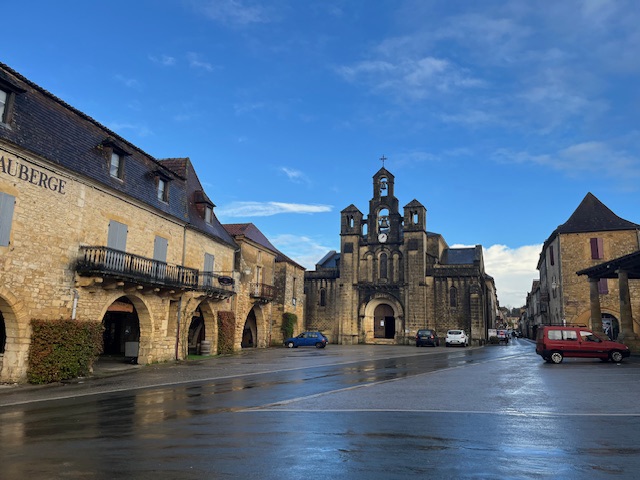
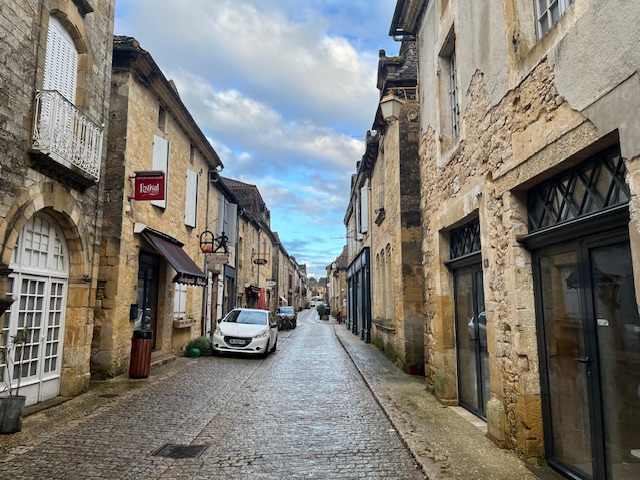
I didn’t drive far, but after looking at places in Fumel and Sauveterre, I drove on and settled at Villefranche-du-Périgord. It’s closer to a road than I would usually tolerate, but with the weather, the roads are much quieter than usual. I’ll endeavour to find somewhere more tranquil for the weekend.

 Safe Return Doubtful
Leave a comment