We set off from the Water Museum just after 9 am. Not long up the path and we met a lonely goat-herd with his trip of animals. We passed the time of day, he in broken English. When he learned of where we were headed he implored us not to go. I thought maybe the path was damaged, but I wanted to see for myself. I’m not one to be denied entrance to seemingly open land by authority, especially a goat-herd.

I never fully discovered the reason for his warning, though I can now guess.
I was headed to the Aimyalon monastery, about 3 kilometres on what turned out to be an easy path. It seemed closed, though a sign on the gate declared it to be open between 9 am and 1 pm each day. After some time I figured out the gate opening mechanism, and Roja and I descended the narrow and slippery spiral steps into the crevice of the cliff where the monastery lay.

There’s one monk based here, and after ten minutes or so of me snooping around, he materialised. He spoke good English, and explained something of the history of the monastery.
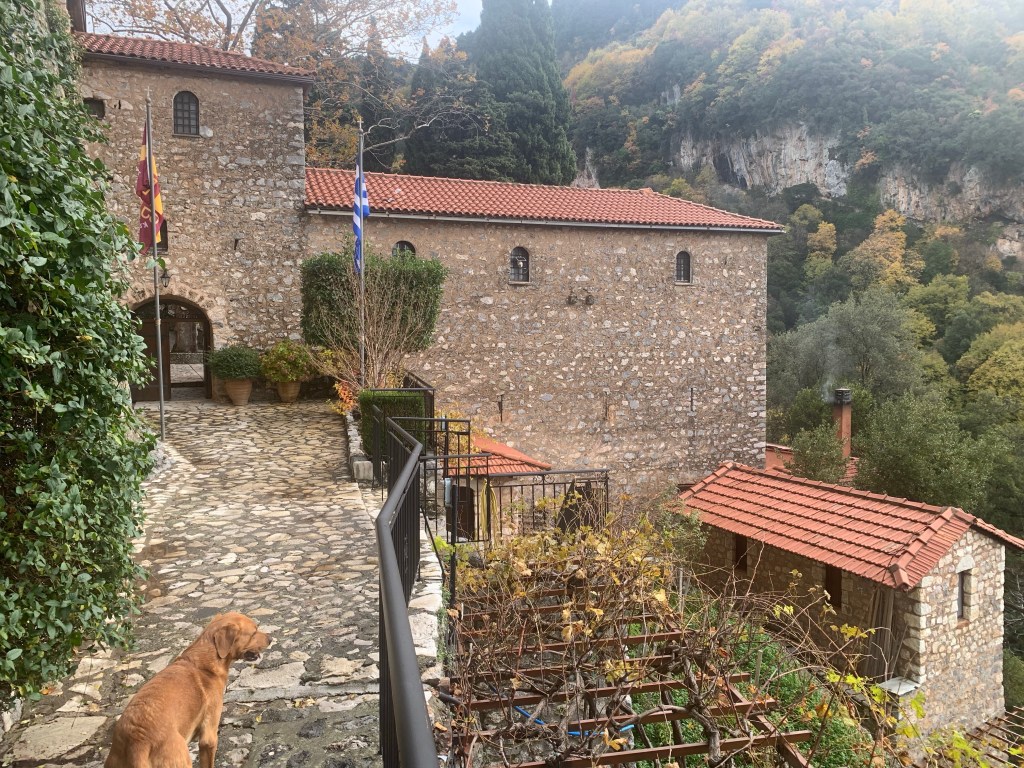
Like several in the area, the monastery is actually two, an old one, and a new one close by. The oldest part was founded in 1608. The monastery played an important role during the Turkish rule and also after the Greek Revolution, by offering significant services to the fighting Greeks, both in the form of financial support and as a spiritual centre. The Monastery knew glorious days, but around the 19th century it slowly started to decline, as a result of various internal conflicts. It has a darker history than its neighbours. A conflict in the early part of the 20th century led to it being abandoned and avoided by local people for more than fifty years. There was an exorcism carried out by two of the monks who lived there at the time, on a third monk, who also did. All three were found dead in the gorge below months later, only discovered once the winter had ended.

The monk I met today told me that the story had been greatly exaggerated over the years, and that I could be assured that the monastery today was a welcoming place, and that time had healed any concern from the local people.
It was a pleasant and informative visit.
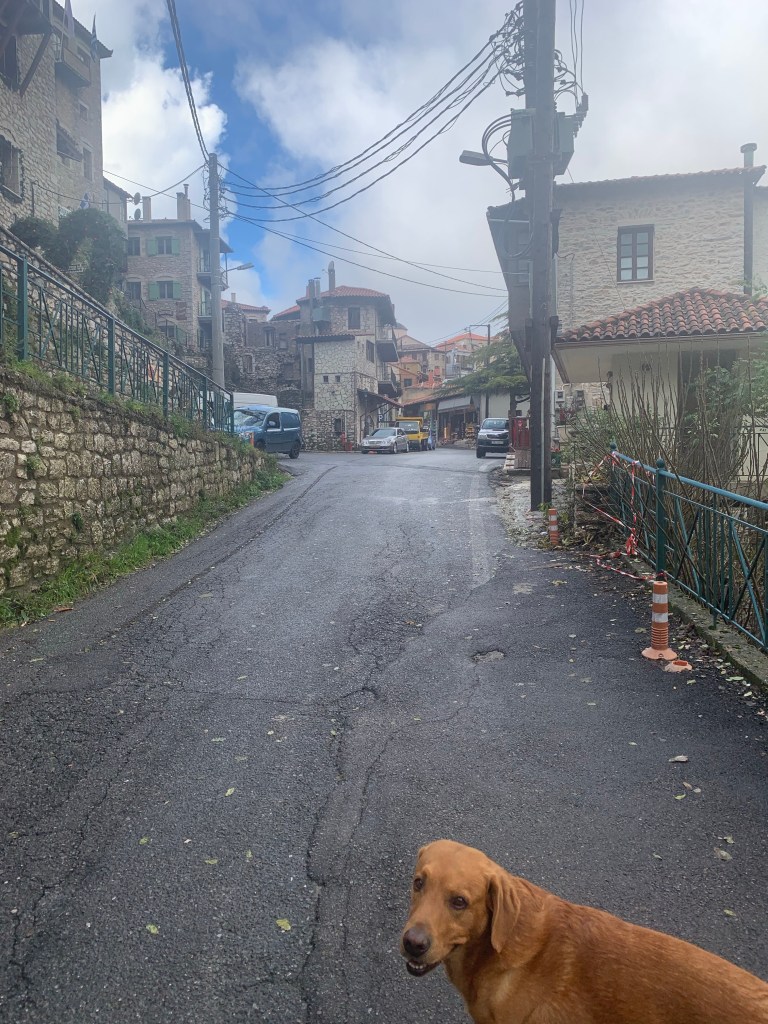
Yesterday we had arrived in Dimitsana from Zigovisti, just a few kilometres, on a cold morning, the temperature didn’t get above 8C all day. Locals expect the snow will come soon, then it will stay here, in these villages above a thousand metres, until March. After a walk around the village I decided the best place to be based was at the Water-Power Museum, a couple of kilometres out of the village.


In the afternoon I visited the museum, which highlights the importance of water power is local historic industry. It houses a flour mill powered by a water wheel, a tannery, and a gunpowder mill. It also has a preserved building from the 19th century for the production of tsipouro, a spirit made from the skin of grapes; not just was the power of the water important for the process, but the quality of the water was also, rather like the Talisker stream on the Isle of Skye. Though I must say, though I a, offered it often here, and do occasionally accept it, I’m not a fan of the tsipouro..
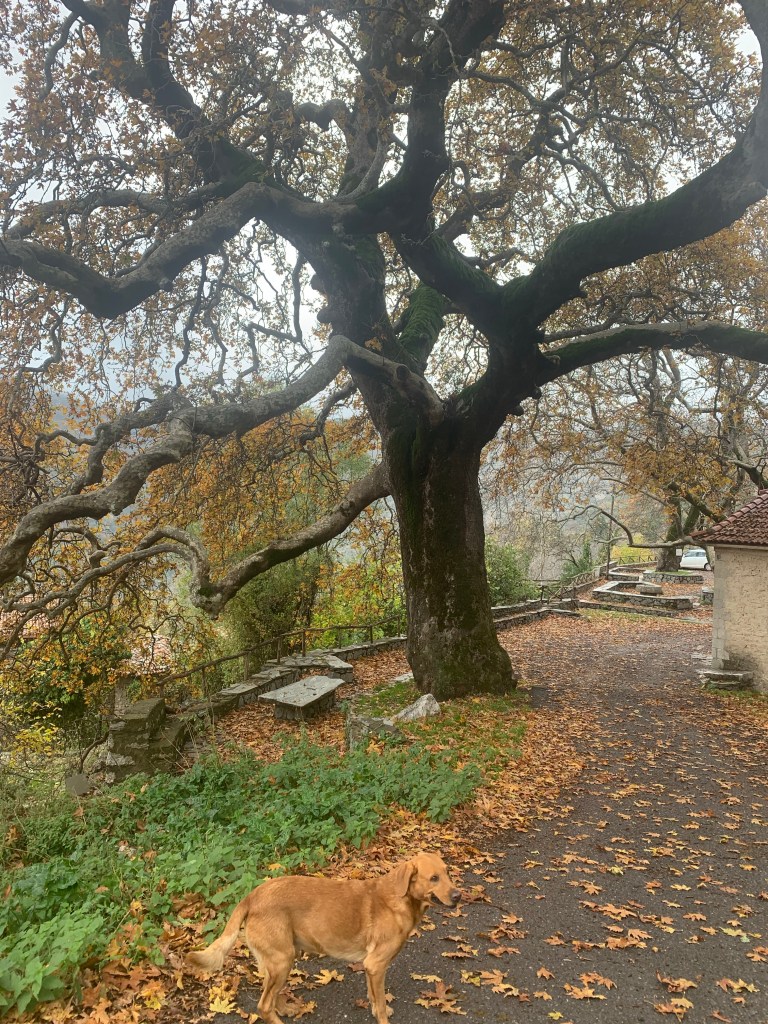
These villages in the midweek are extremely quiet. There’s a few visitors on short breaks from cities like Athens, Sparta, Kalamata, just about enough to keep places open.

In the afternoon another campervan called past, the first I’ve seen for a week. The guy came over and introduced himself, he was a 72 year old Australian guy travelling alone, on route to Turkey where he would meet his wife, travelling in a campervan that he had purchased specially for the year long trip. I’ve met a few people like him from the southern hemisphere, desperate to get some travelling in after their strict 3 year lockdown, and have purchased a van with the idea of selling it on after their year. In all the cases though, they have been disappointed by their vehicle. In this guy’s case, he was wild camping all the time, and, amongst his problems, he had no way to know how much solar power he had left at any one time, which makes things very difficult. He sat in my van for a cup of tea and admired it.. though he didn’t stay for the night, moving on in the direction of Athens.
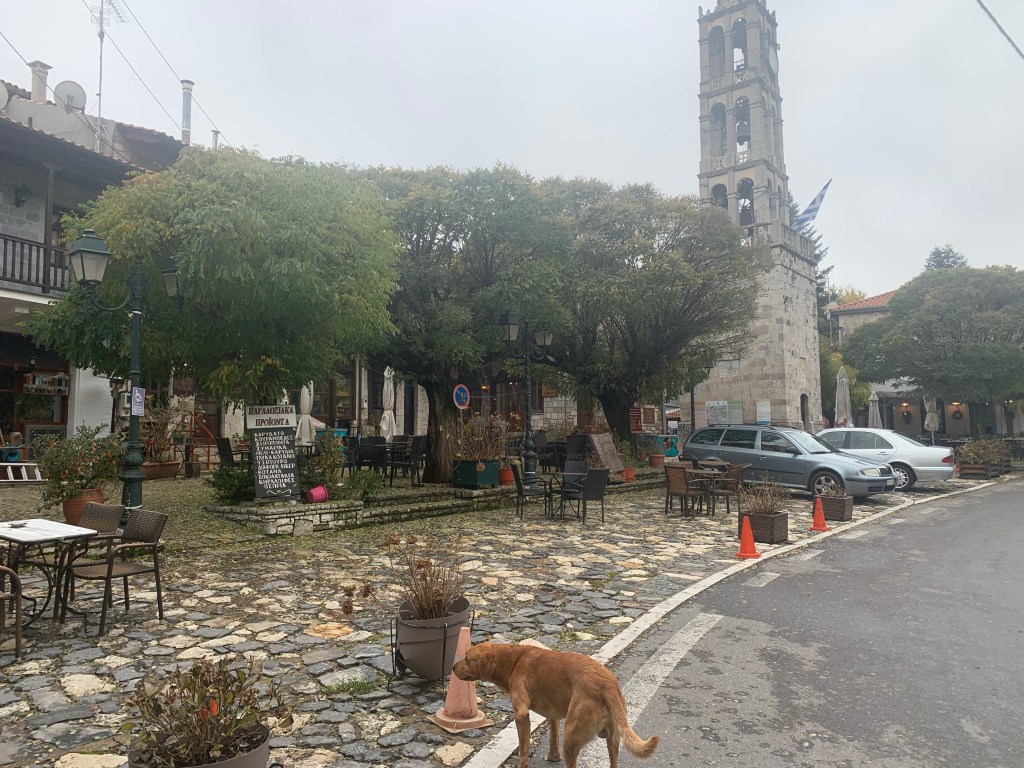
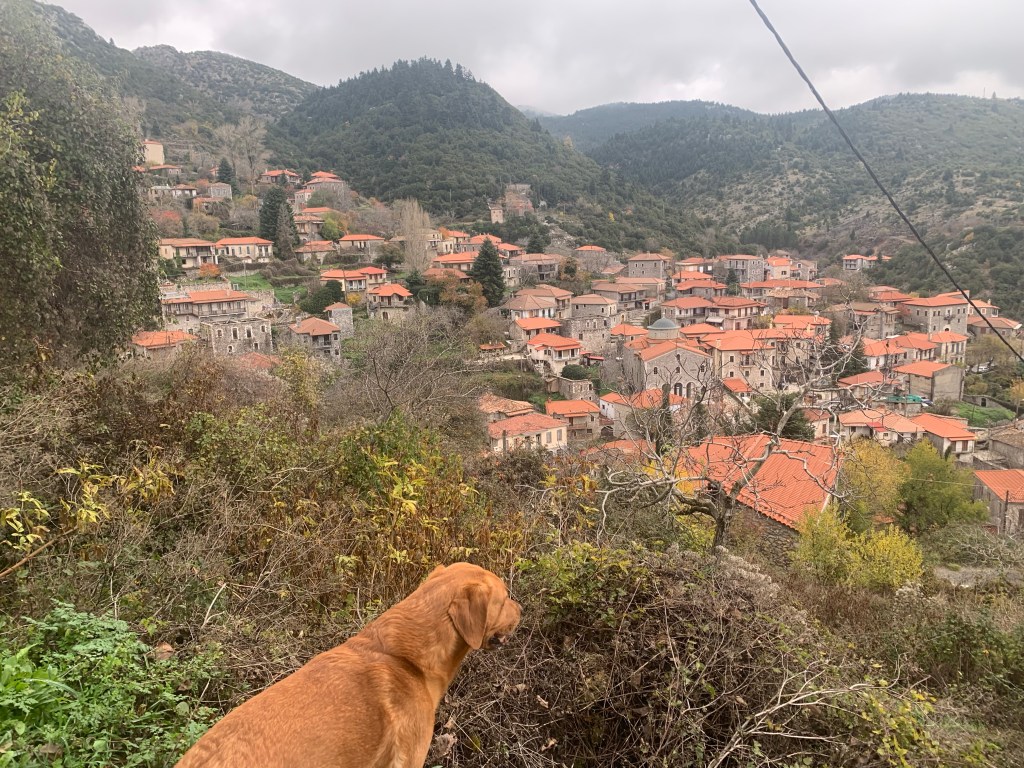
Today, after visiting the monastery, we moved onto to the final village, or the first, on the Mainalon Trail, Stemnitsa. There is a cafe and a couple of tavernas open, but it is as quiet, maybe even quieter, than the other villages, but similar to all in architecture, with its terracotta roofs, and situated on the sheltered side of the mountain with a mix of old and new houses, and a population at this time of the year of about 3% of what it is in summer. These villages I have been in over the last week are part of a district of Arcadia called Gorsynia, they are rich in history, dating back to the tenth century. The tourist businesses that are open just wait for the weekend, or more specifically, Saturday. Friday and Sunday are much quieter. Looking back at the photos, they all look remarkably similar.

We walked a circuit of the village on arrival, as I have done with all of the Gorsynia villages, and then, with it being a Thursday, a treat for Roja, a walk in for a beer in the early evening..

I plan to be in the area for another week or so. It’s getting colder, and I was attracted by an offer I received in a cafe a few days ago, from the landlord, who had a friend who was keen to rent his small house. It’s a few kilometres lower, and to the south, but will enable me to get some power into the van batteries, and give everything, including myself, a good clean.





Leave a Reply