translated from the Norwegian by Don Bartlett and Don Shaw
This wonderful series of books, this the third of four, has been so inspirational to me, that I am departing next week for several months travelling to several of the less populated Norwegian islands like Barrøy.
Though Barrøy is a fictional island, its neighbours and ports on the mainland coast, are not. It is situated a few hundred kilometres south of the Lofoten islands, within the Arctic Circle.
Norway has, by some way, the most islands of any country in the world, with 320,249, 239,057 of which are considered proper islands, with the rest being islets – 65,000 more than the country in second place, its neighbour Sweden. 64 of them are inhabited currently, but historically, more than 1,200 were inhabited at some stage.
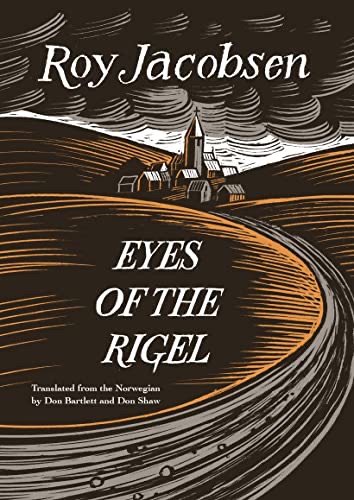
The Barrøy family have survived World War Two, and Ingrid, the protagonist of the books, has had a daughter with Alexander, a Russian sailor shipwrecked off the coast of the island, who then left to return to Russia, a hazardous journey through Norway and Sweden helped by the Resistance. 18 months later, Ingrid and her daughter Kara, leave the only home they have ever known, and follow Alexander’s footsteps, across wild country.
The Norway of 1946 is a country looking for ‘a new start in life’, as Jacobsen puts it. The Occupation in Norway had been different to elsewhere in Europe, as in many places it had been, controversially, with cooperation. People were mentally scarred, and are represented by Ingrid, and her innocence, the security of her life on the island. She needs to follow Alexander, understand his reasons, spend time where he spent his nights, and ultimately, to try and find out whether or not he is alive.
There is such contrast between the peaceful life of a tiny remote island and the war, and again between the wilderness of mountains and lakes through which Alexander travelled, and the war, that it is difficult to comprehend. Jacobsen sheds some light.
Certain passages stand out, not least Ingrid’s visit to the ‘Sonderlager Mysen’ concentration camp, where Alexander was held before his return to Russia. In the war, its occupants were Jews and other minorities, held in the most dreadful conditions; the Russians held in it in 1946 were treated much better.
Jacobsen’s great skill is that he is a master of the understatement, and a gentle pace of writing that is so appropriate when writing about the island. That style, suits Ingrid’s journey away into the mountains less, but it is still compelling. I would suggest that the first two books of the series are better, but only because I enjoyed reading about the sailed life so much.
I have the fourth book left to read, Just a Mother, and will read it on such an island as Barrøy, in a few weeks time.
My GoodReads score 4 / 5

 Safe Return Doubtful
Leave a comment