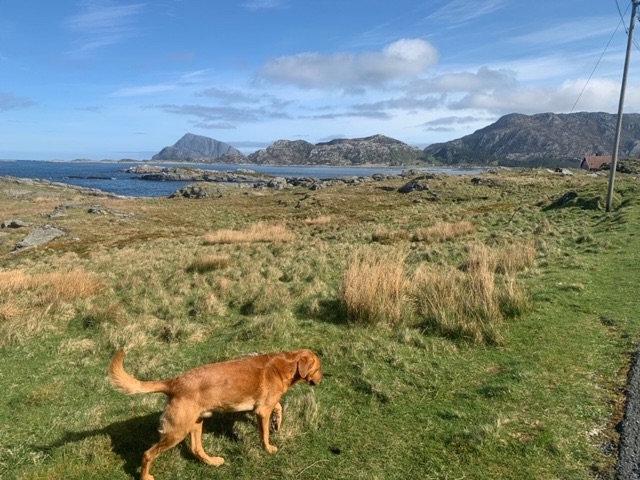
After the weekend on Fedje I was unsure where to head, other than north. My original plans had been to go the the island Sula, and Ytre Sula, at its southern end. I also had a recommendation of the island of Atløyna, but on closer inspection, these islands have quite large residential populations, being closer to the mainland and accessible to bigger towns and cities.

Perusing various websites I came across the islands in the archipelago off the coast of Florø. These are further from the mainland, have considerably less inhabitants, and are consequently served far less regularly by ferries. Those that are uninhabited are so because they are shear lumps of rock, or in some cases, because life there just became too tough. Several have derelict houses visible from the boat.
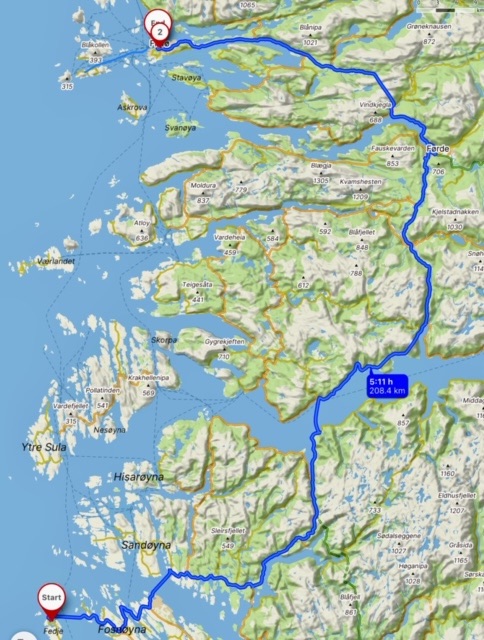
Florø was a three hour drive, but only a hundred kilometres, the journey taking that time because it has three ferry crossings across fjords.
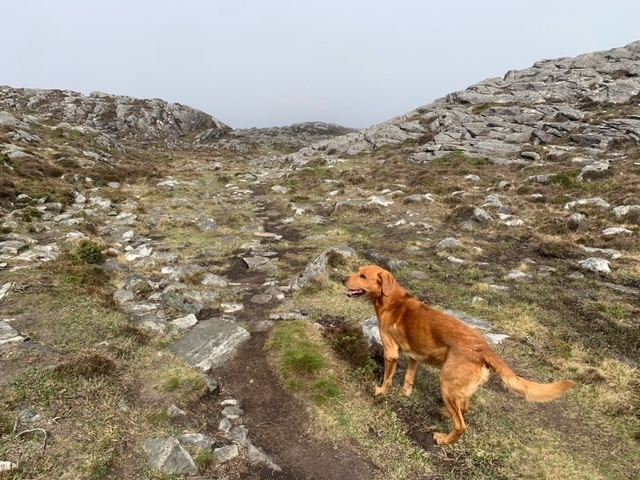
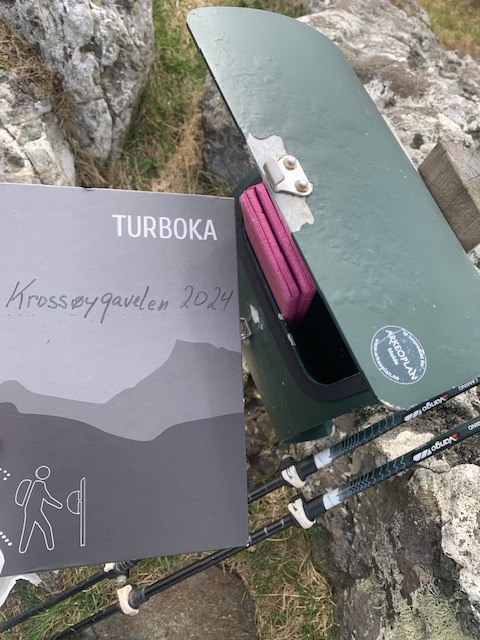
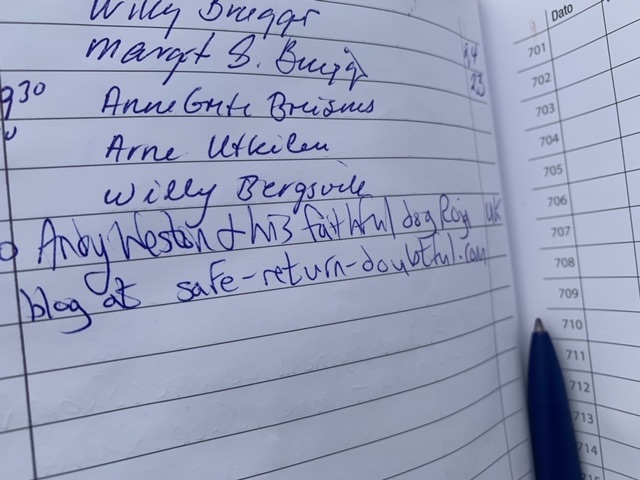
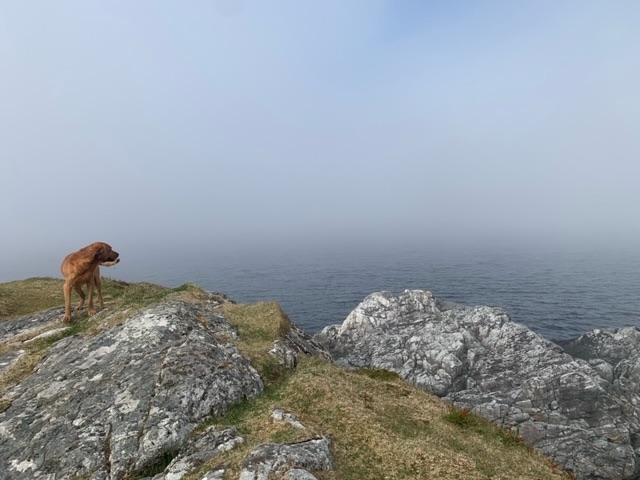
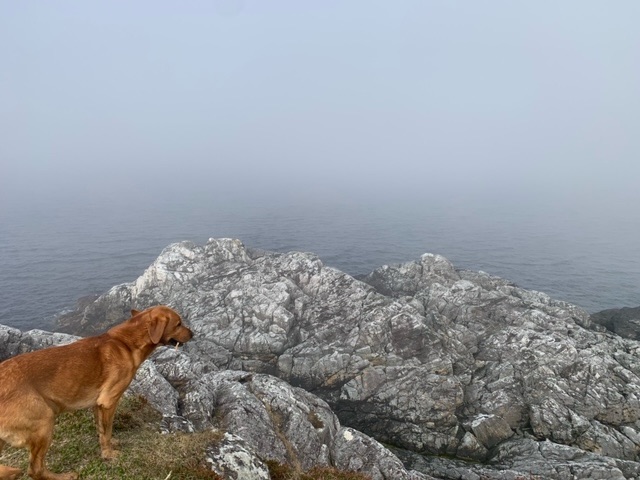
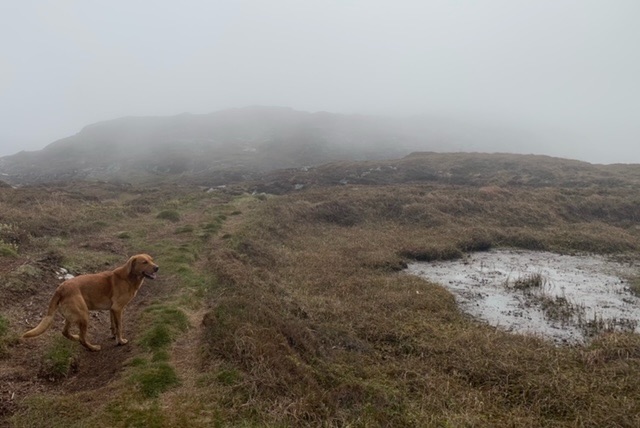
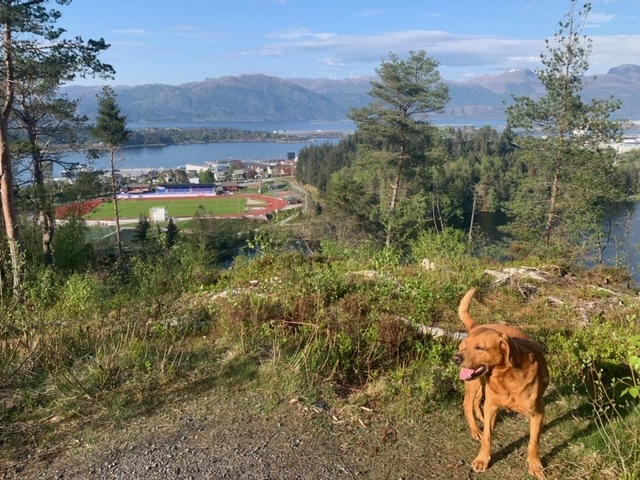
Having decided to head to Florø, we took the 9:30 am ferry back to the mainland from Fedje on a misty morning, with the mist creeping in and out, though never lifting to let the sun through all together. Just back in the mainland, and considering the three hours in the van to come, I headed out on a small peninsula to the north, formed by a series of bridges over small islands, that culminated with the island of Krossøy. Here, is a 3 kilometre hike out to a cliff top viewpoint. It was an enjoyable ninety minutes out on an atmospheric morning with the mist around.
Entertained by the Leading interview with Nancy Pelosi on The Rest is Politics (which I can recommend..), we headed north. At the gaps provided by the ferries, I tried to contact the ferry company that operated out of Florø, but for a long time drew a blank. Most ferries are operated by Fjord1 and easy to find timetables and prices for, but not these. Eventually I discovered the reason, which was that the ferry that serves the route had recently been purchased by another, smaller company, and as yet, there was no online information for it. I made several telephone calls, and managed to get booked on the 8 pm crossing, though the guy, who was actually on his cell phone and on the ferry at the time, told me he couldn’t guarantee space. When I arrived at the quay, I was one of just two vehicles on the ferry, which would take about six vehicles.
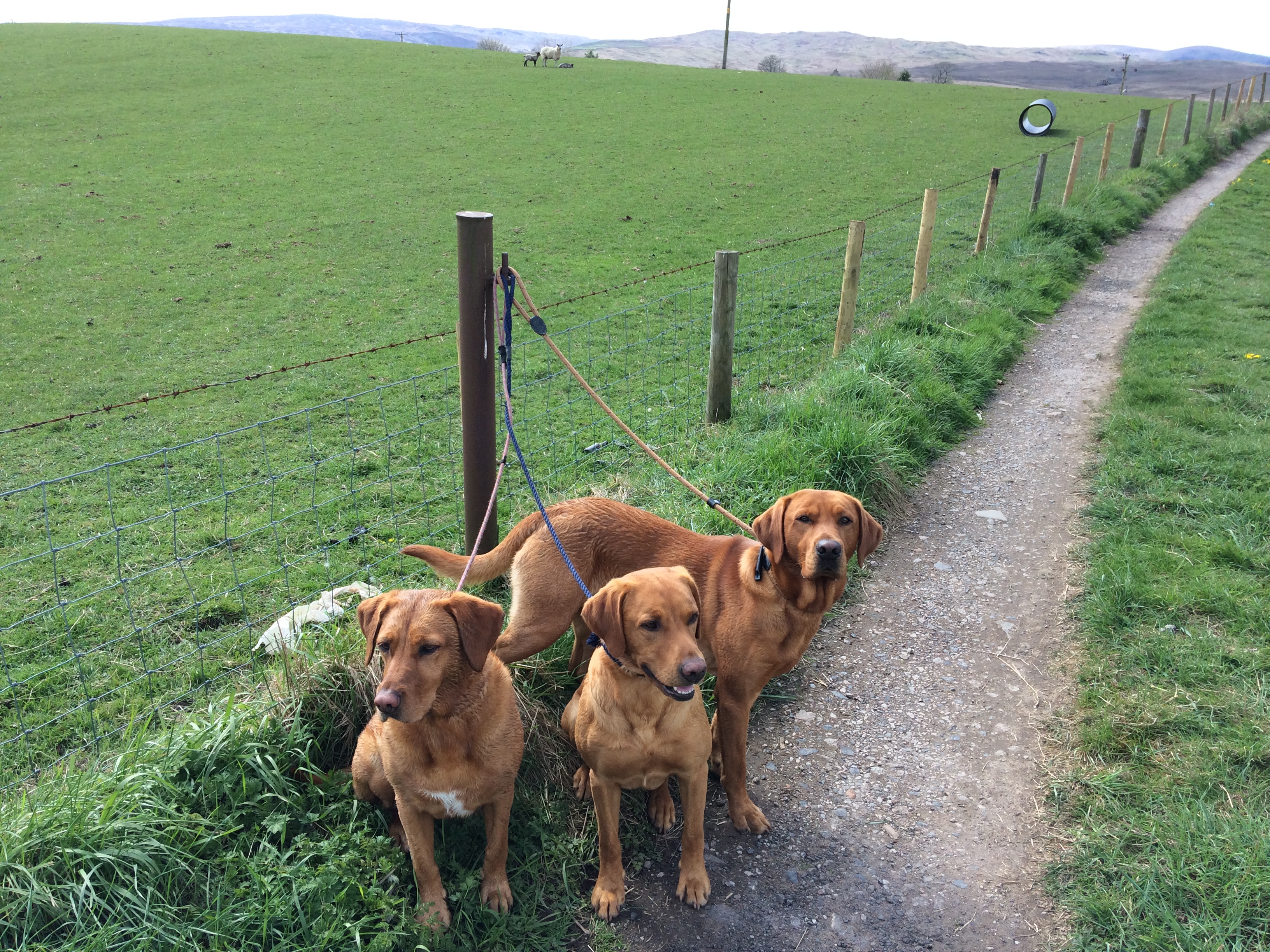
While we were waiting a woman parked next to me, and immediately came over and gave Roja a biscuit and made a fuss of him. It turned out that she lived on Reksta, where I was also headed, and was dog-sitting for a Rottweiler who she was expecting. She hadn’t checked the breed, and had assumed Roja was the dog that was expecting her. The Rottweiler, a very placid older female dog, eventually arrived, and on the hour long crossing, the woman and I spoke further, and I was able to pick up some information about the island.
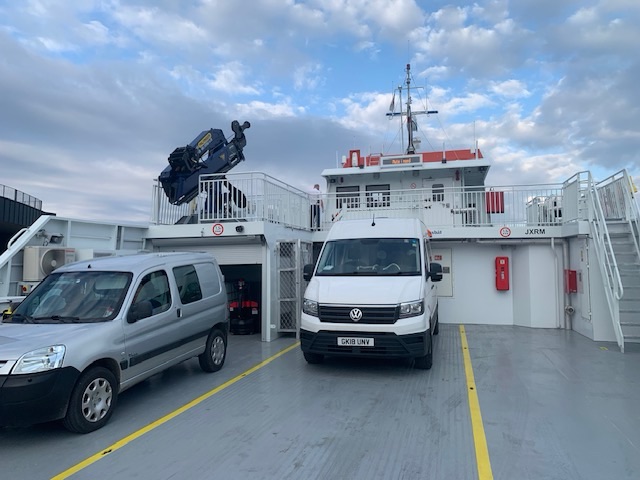
This ferry wasn’t free, but was subsidised, working out at £10 for the crossing with the van. It calls in at several other islands with small populations on route, as well as passing a number of other islands that were just huge jagged walls of rock. I hadn’t expected such a landscape as far south as this. It is extremely impressive to sail so close to them.
The major habitation on the island of Reksta is Rognaldsvåg – a fishing village with residential buildings, boathouses and seahouses. It has a permanent opultaiom of 41, which ten years ago was more than a hundred. The island has two harbours connected by a canal along which the seahouses are clustered. Rognaldsvåg is rich in atmosphere with several ancient monuments, graves and viking house sites. Though it has activities such as diving, fishing and walking available, it doesn’t attract the tourists that other islands do. The ferry cannot transport motorhomes, which is one reason.
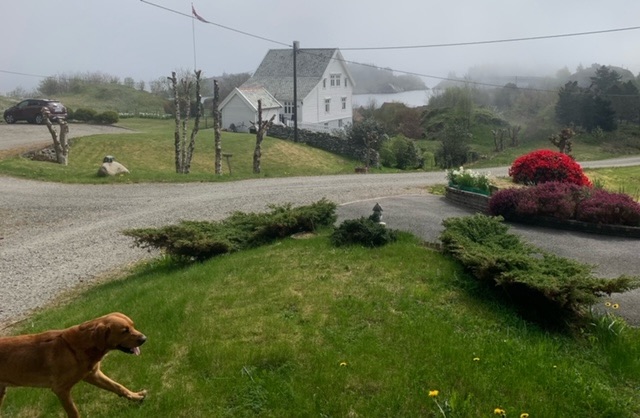
The lady I had met on the ferry directed me to the old schoolhouse as a place for the van. The school has had no pupils for several years now, but is tenderly cared for by locals as a type of welcome centre. Showers and toilets are available, though my visit is a few weeks before the tourist season, so as yet it isn’t open, unless I was t request it to be. By the time I arrived here, it was 9:30 pm, and time to settle in as the weather threatened to change. On an island as small as this, 5.8 square kilometres, it’s important to get permission I think, before stopping to wildcamp anywhere. Within an hour or so, every resident, 32 of the 41 here at present, are going to know you are here. Writing this in the early evening, I think I’ve met more than half of them.
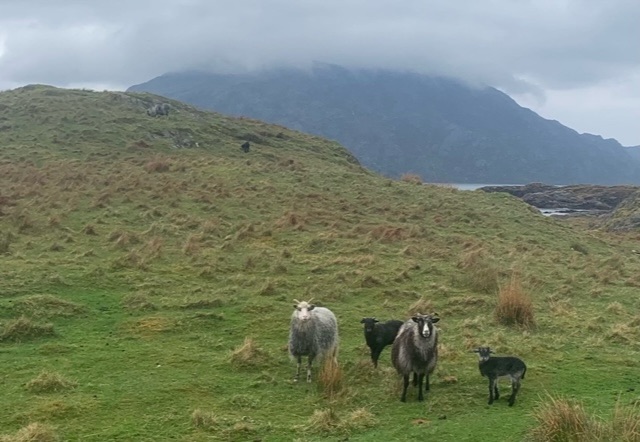
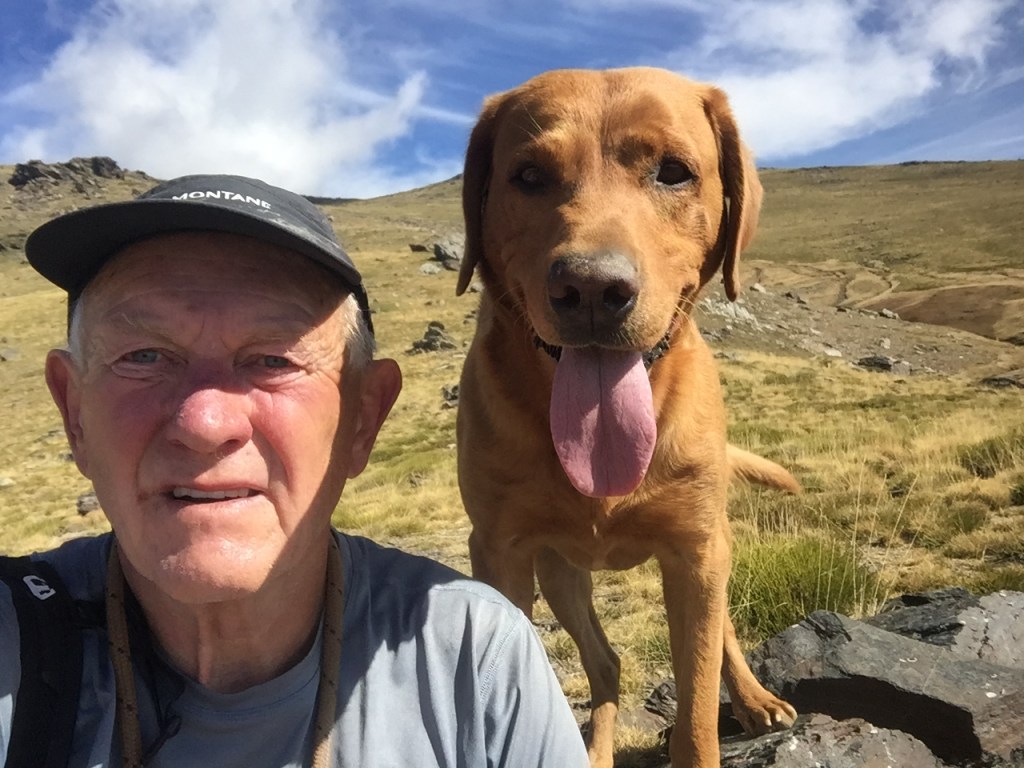
The most chatty has been a farmer, probably about the same age as myself, Tom. He was keen to know what breed Roja was, as was a keen dog person himself, and a believer that they should be off lead, as Roja was, as much as possible; the sheep, which he looks after, have lambs at present. He said though, that most people disagreed with him. The Scandinavians are very big on having dogs on the lead, I know in Denmark and Sweden it is actually the law. Tom was proud of his house, 147 years old, though he had moved here just 25 years ago. He told me quite a bit about the history of the island, as well as the wildlife, as we watched a pair of sea eagles hunting on the mountain above. I mentioned I had been in Shetland last summer, he said that the father of a friend of his, pointing me out the house, had sailed to Shetland in the war as part of the resistance against the Germans, taking escaped prisoners to safety. This wasn’t actually part of the famous Shetland Bus, which operated from further south, Bergen, but associated with it. Like many, he decried the dwindling population, and the inevitable increase in holiday homes.
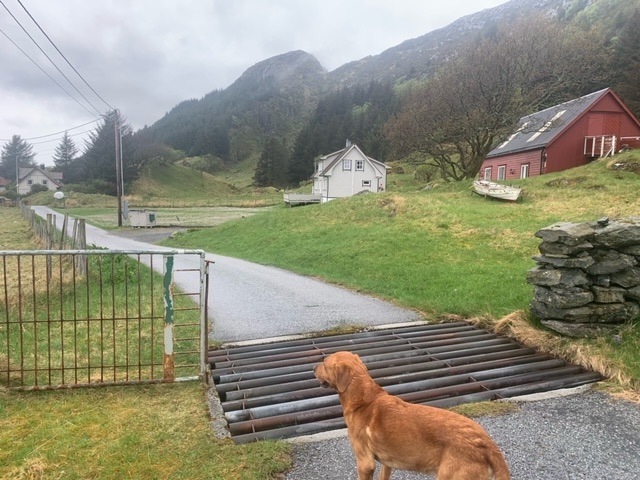
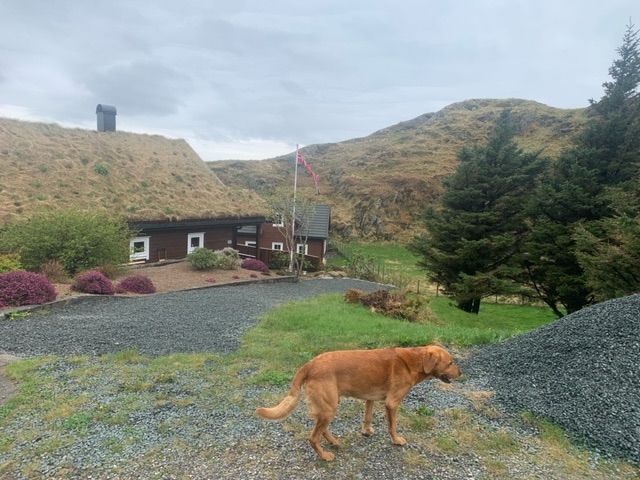
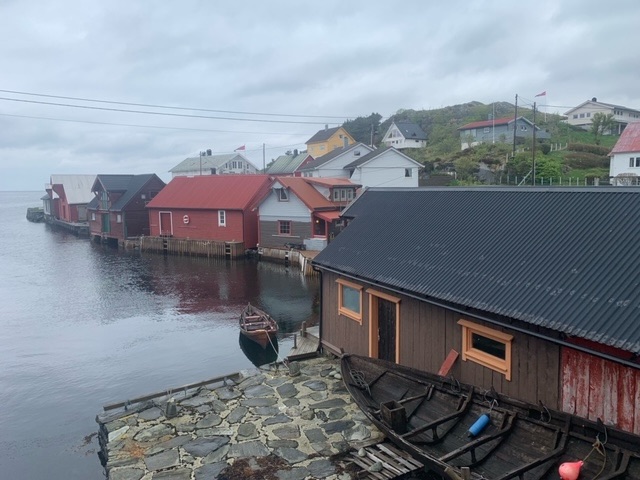
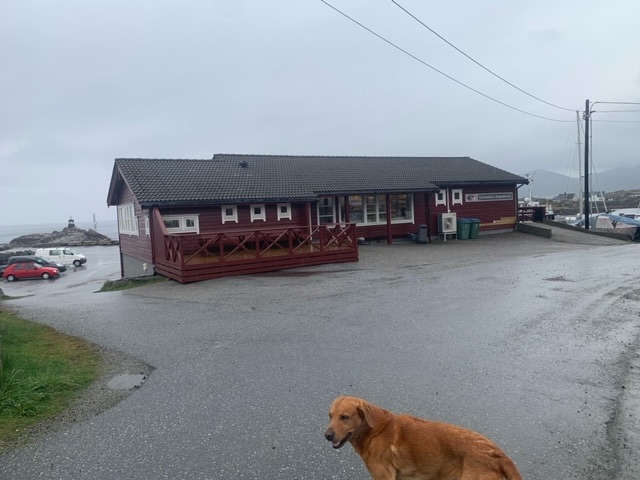
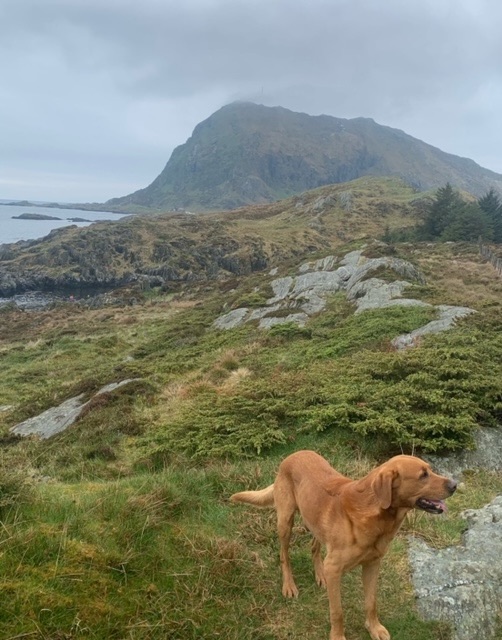
Rain did drift in overnight, along with a much stronger wind from the southwest, which I expect prevails here. Today was forecast to be a wet one, which gave me the chance to catch up on my reading. Unable though, to concentrate due to Roja’s stare, we headed out in the light rain just after 11, and took on a circular hike around the island. All the locals we met, about 8 of them, were extremely friendly, and wanted to chat. At these times, Roja realises that there is going to be something of a delay, and finds a comfortable spot to settle down. He understands now about my frequent ‘stop-and-chats’…
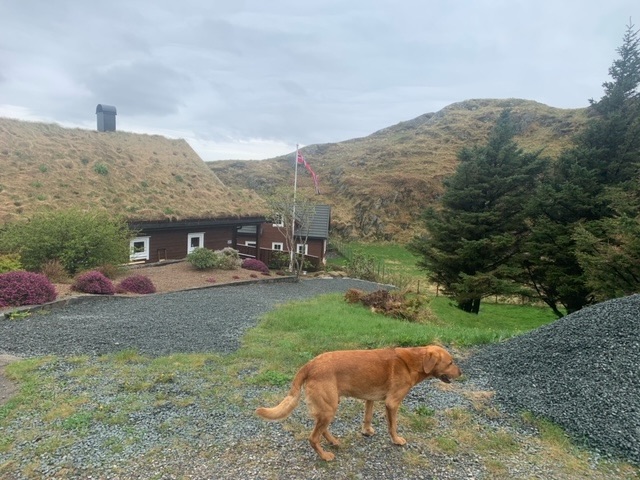
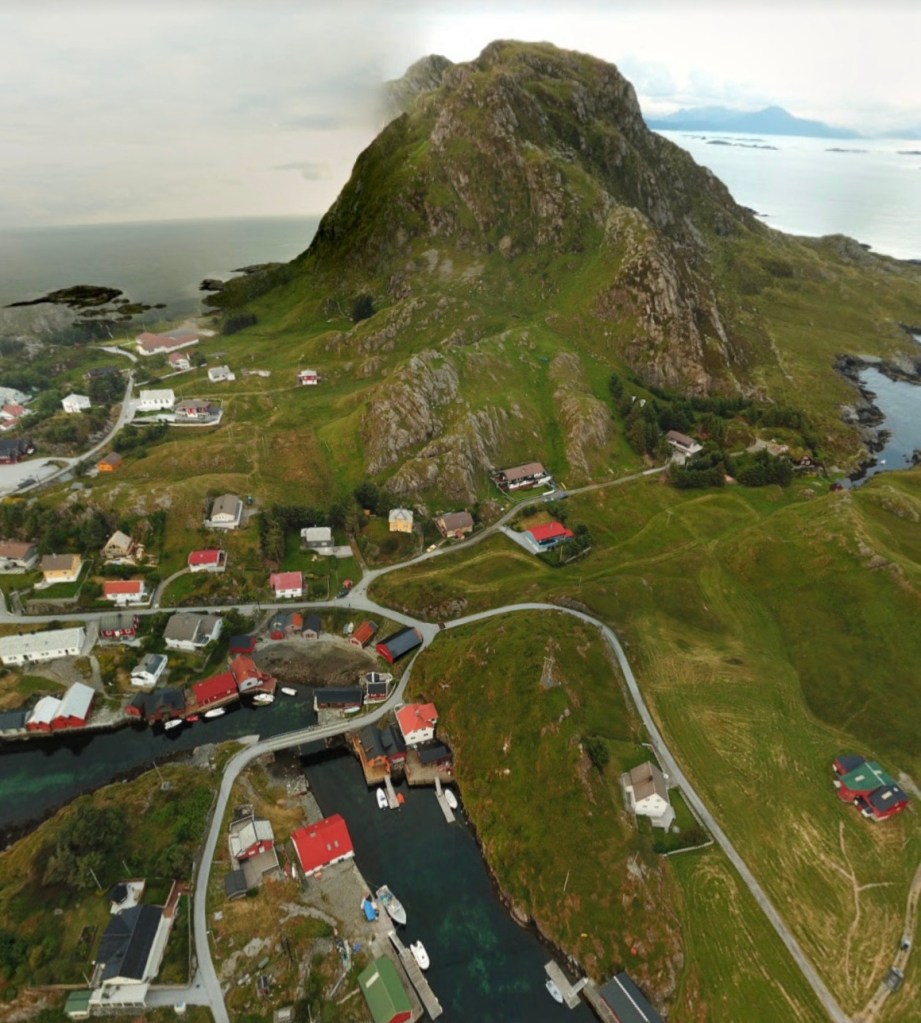

I picked up any other information I needed from the small shop by the quay, and was back at the van just as the rain set in again in early afternoon.
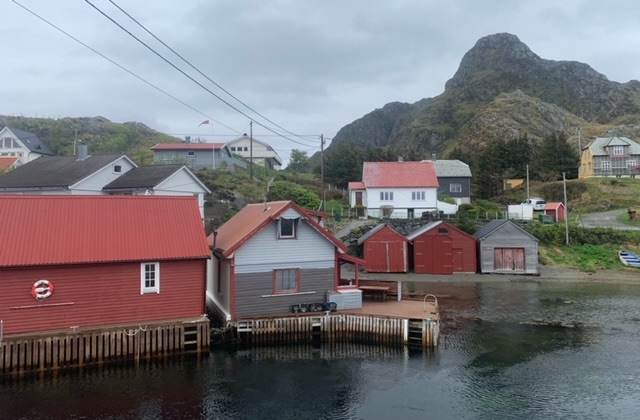
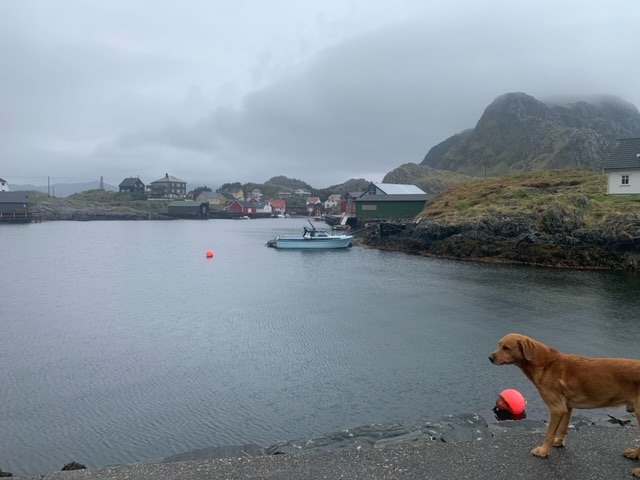
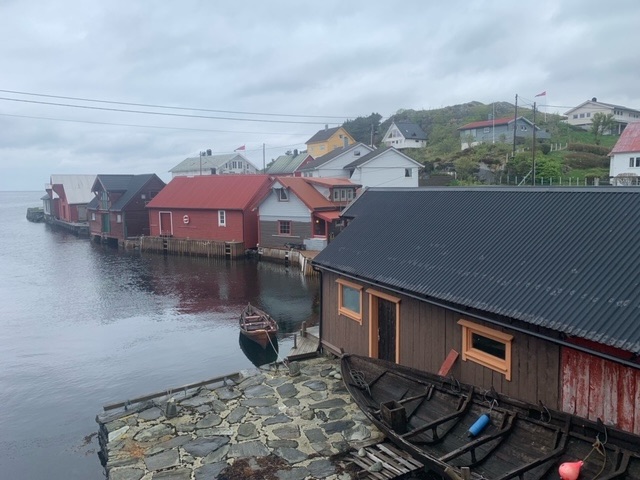
I caught up on some book reviews, the blog, and a few other matters of business, though by the time we headed out for an evening stroll, the rain had not yet abated. It has been dry for a while here though.
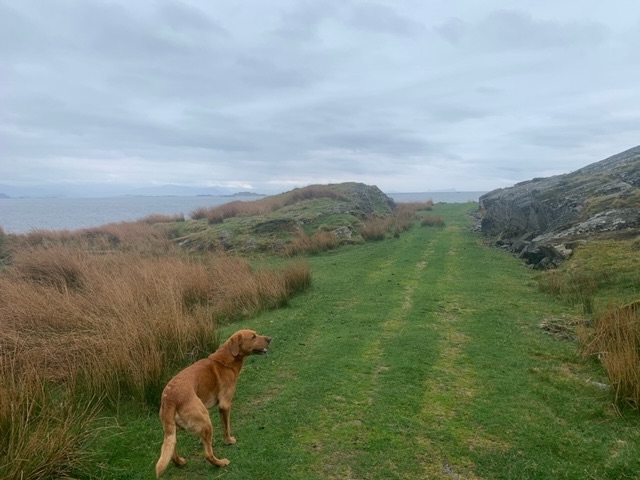
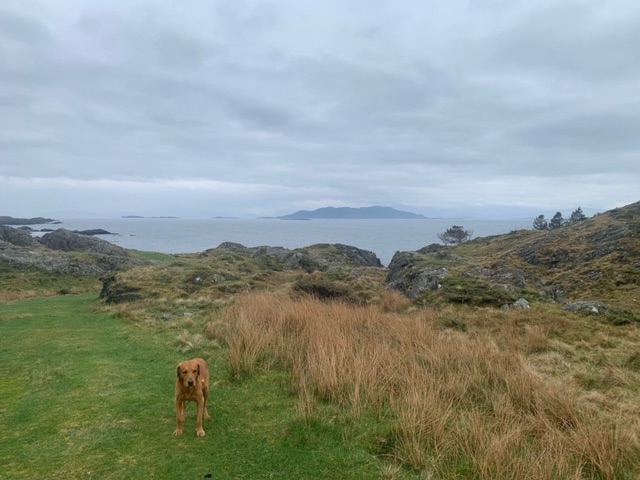
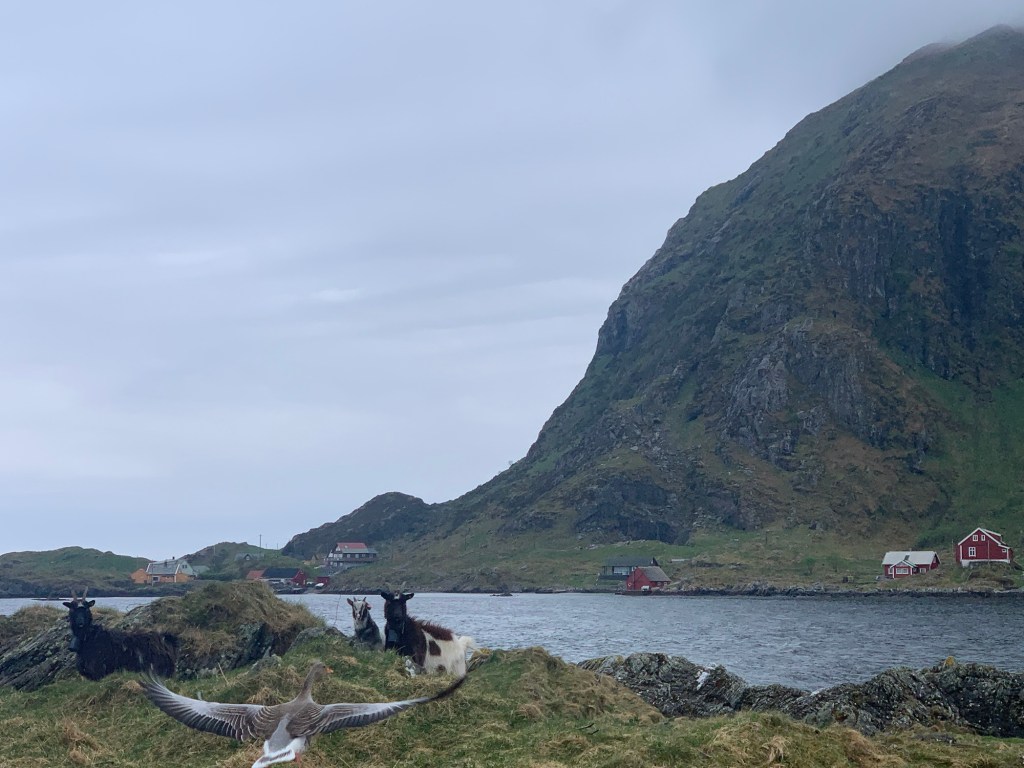
The plan is to be here tomorrow, hike on the neighbouring island of Kinn, which has a rich history, reachable by a passenger boat, then take the ferry back to the mainland in the late afternoon.

 Safe Return Doubtful
Leave a comment