I watched the final ever episode of Curb last night, the end of the twelfth series. I can’t quite believe it’s finished, maybe David will change his mind, but as he said mid-way through the episode, he is 76. It is a bit longer than usual at 50 minutes, and manages to wangle in reference to some of the great moments of the past. I just keep watching these, and will probably start again with the first series in a few weeks. I must have seen each series several times, and can’t think of anything else that comes close to it in entertainment value.
The rain cleared during the morning as a cold front came through, leaving in its wake fine conditions, though with a northerly breeze that kept temperatures around 10C.
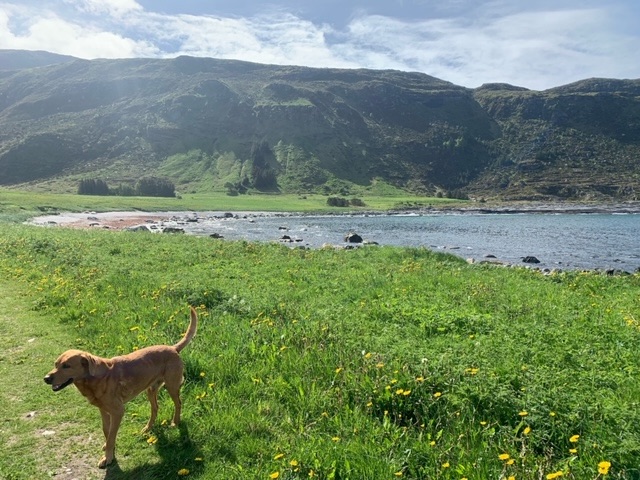
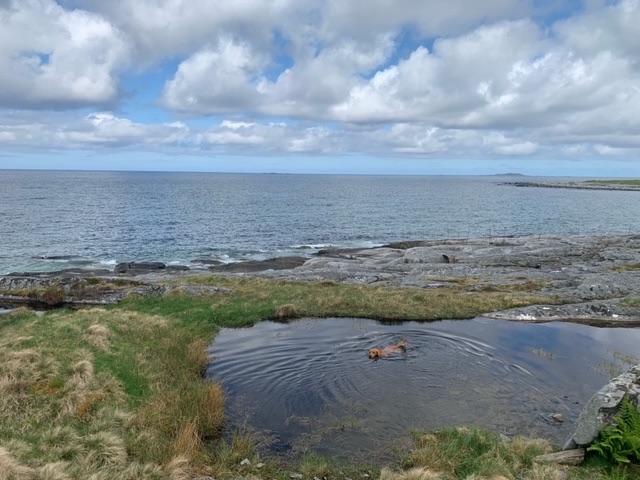
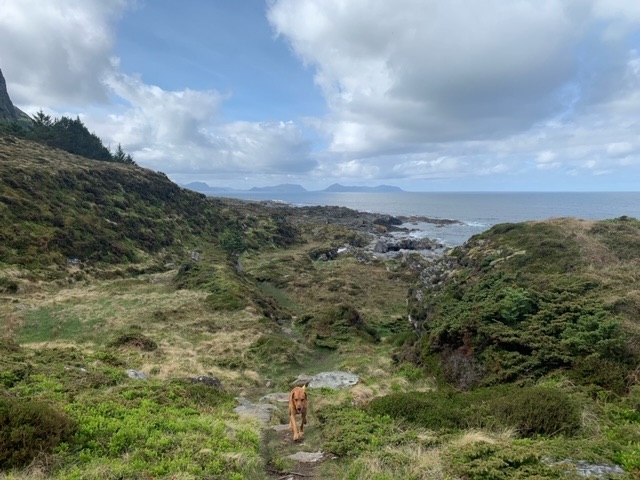
We walked a part of the coastal path just after 10:30 am, with no one else out. Returning to the van a couple of hours later, a few locals were taking their Sunday perambulations and whispered gentle greetings.
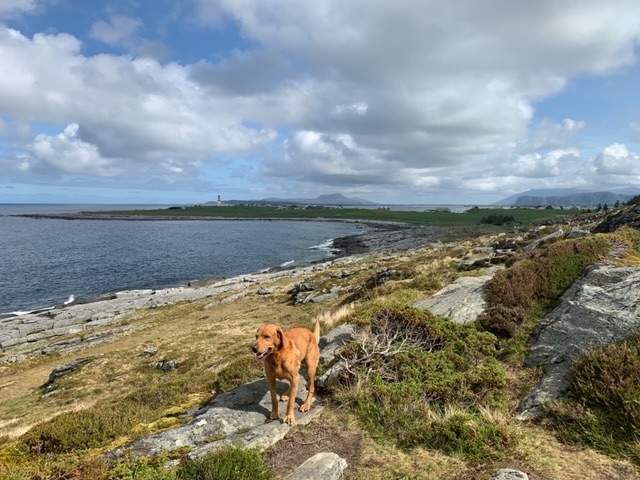
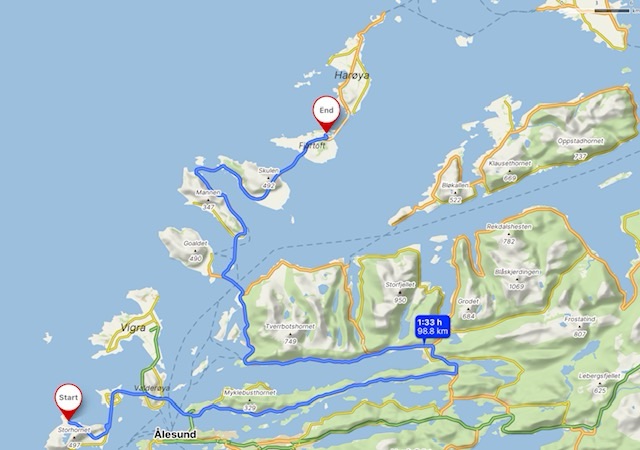
Late in 2022 the Nordøyene island group lying to the northwest of Ålesund were connected together by a tunnel and bridge system, called the Nordøyvegen. Previously connection had been by ferry.
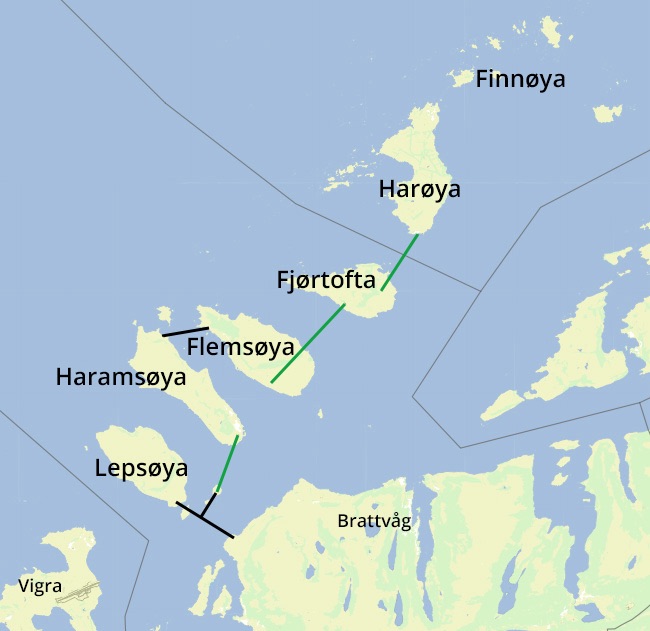
From the mainland there is a kilometre long bridge to Lepsøya, then a five kilometre sea tunnel to Haramsøya, a series of bridges that make a causeway to Flemsøya, a four kilometre sea tunnel to Fjørtofta, and another just a bit shorter, to Harøya. Norway is considered the world’s leader in tunnel construction, and has more than 900 road tunnels, about 900 kilometres. It has the world’s largest road tunnel, in the Laerdal valley at 24.5 kilometres, though it is those that go below the sea that impress me the most, many dropping 300 metres or more in altitude at 10% gradient, before reclaiming it.
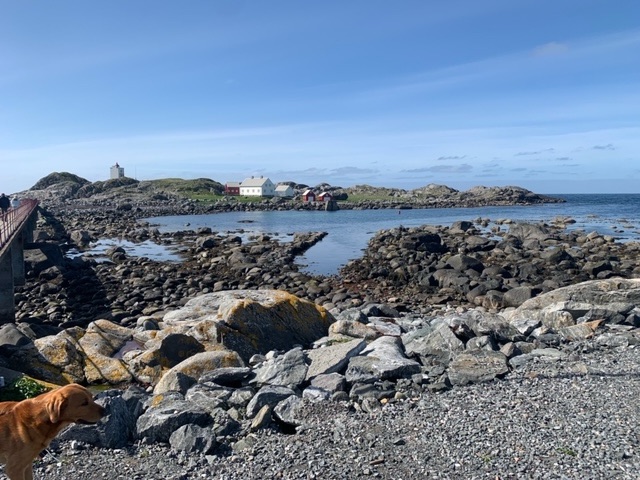
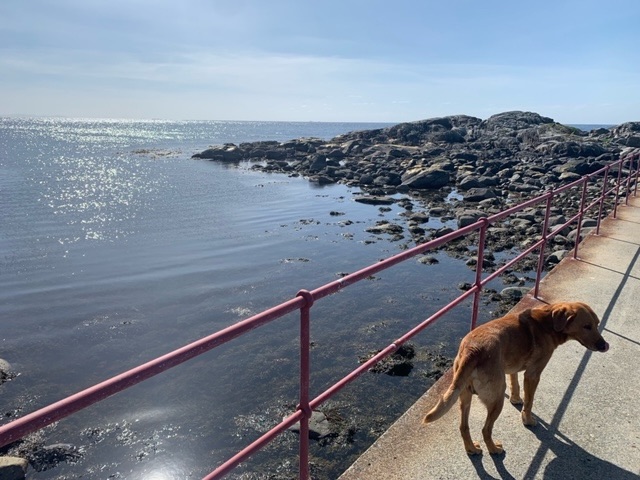
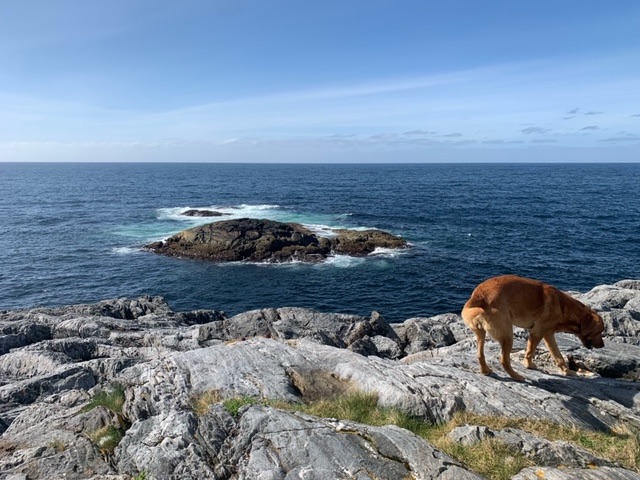
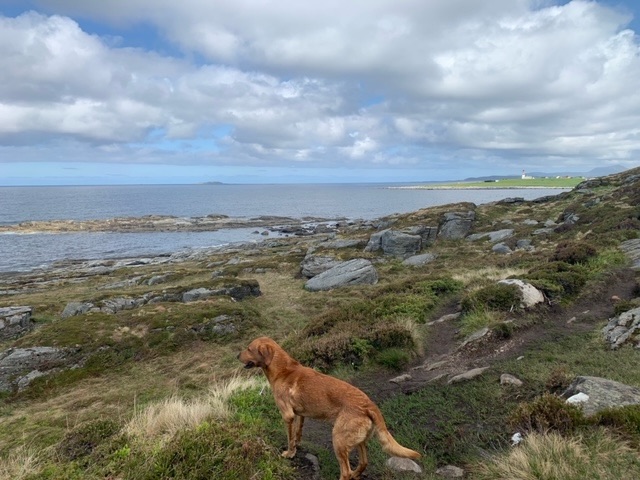
We stopped at the parking for Kvernholmen island, a much smaller island off the north coast of Haramsøya. I was keen to walk over the pedestrian bridge, or causeway, to see Ulla lighthouse, which was established in 1874. In its early days, there was just a small hut for periodic watch-keeping, during the fishing season, but by the end of the century Ulla was developed as a proper, permanently manned station.

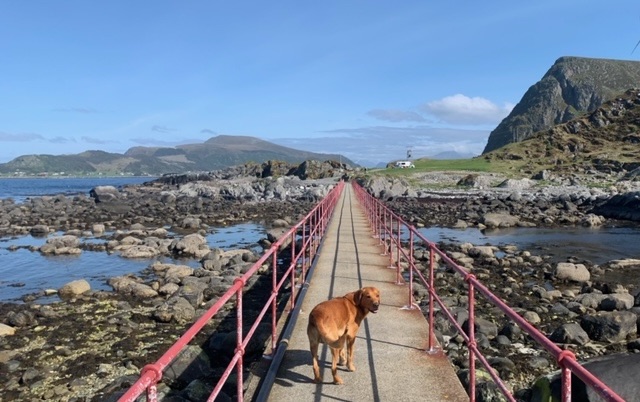
In October 1944, the station was attacked by Allied airplanes, resulting in major damages on both the lighthouse and the living quarters. In 1950 money was granted to rebuild the whole station. It was de-manned in 1975, one of the first in Norway to be automated.
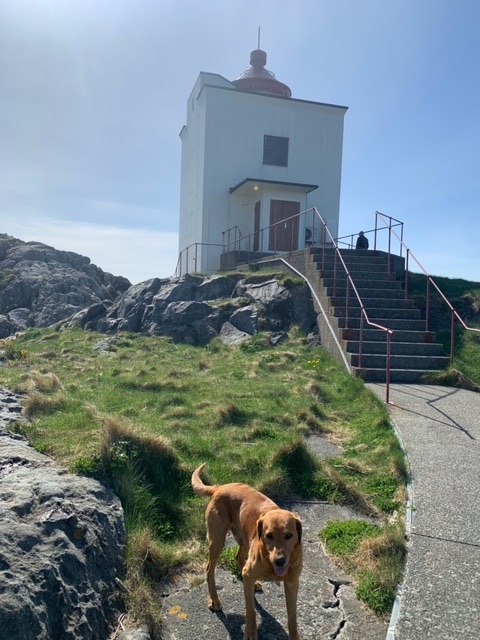
From 1814 to 1905 close to 200 manned lighthouses were built between Hvaler in the south and Finnmark up north.
As is evident, lighthouses, and their histories, fascinate me.
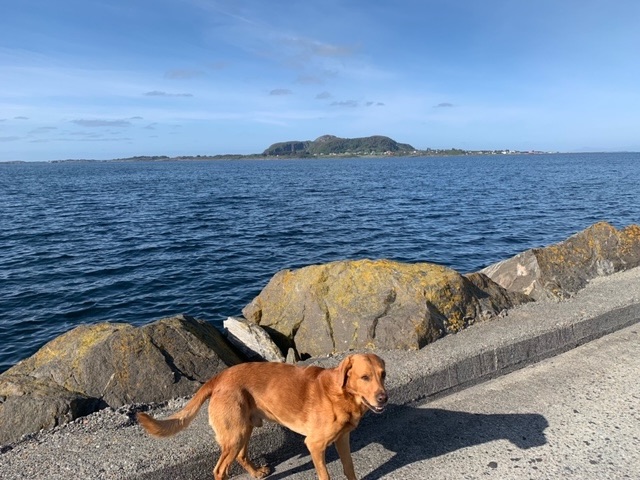
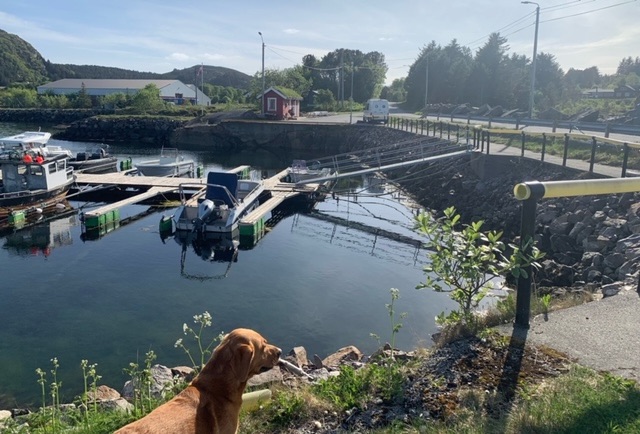
We are parked up for the night on the island of Fjørtofta, at the harbour, enjoying the late evening sun and listening to the cricket from Blackpool.

 Safe Return Doubtful
Leave a comment