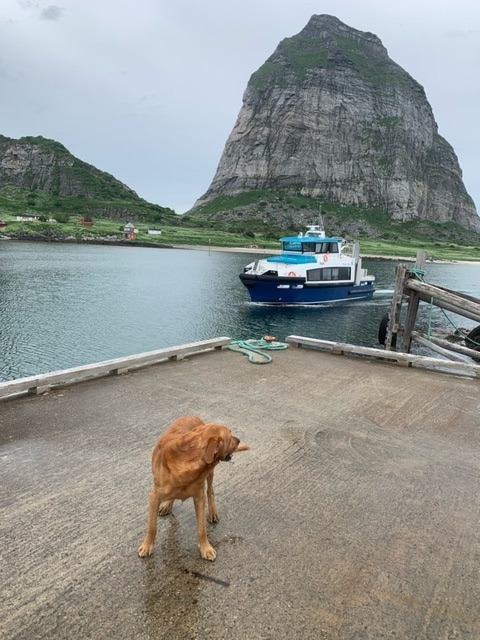
There is a fast foot-passenger ferry over to the Island of Sanna, one ferry that serves the local inhabited islands of the archipelago. At this time of year it goes from Træna to Sanna four times a day. The summer season hasn’t started yet, so there isn’t very much demand.
The crossing that suited me the most was to depart at 5 pm and return at 6:45 pm, which left the morning to explore a bit more of Husøya. There was the sort of wind one might associate with such an island, enough to remove one’s hat involuntarily in exposed places.
I finished a book in the afternoon and prepared dinner, a curried lentil and leek dish I have put my own stamp on.
Roja isn’t so keen on passenger ferries, the last one we took was on the Orkney islands a couple of years ago. It is though, a very short crossing, just ten minutes, during which I chatted to the lonesome ferryman as I was his only customer. He told me that he was taking his holidays during the music festival, as he didn’t want to work when there were so many people around, and preferred days like today. He also told me that the island of Sanna has just two permanent residents, a man and a woman, both widowed, both in the seventies, and that they don’t get on with each other; only in an emergency will they even talk to each other.
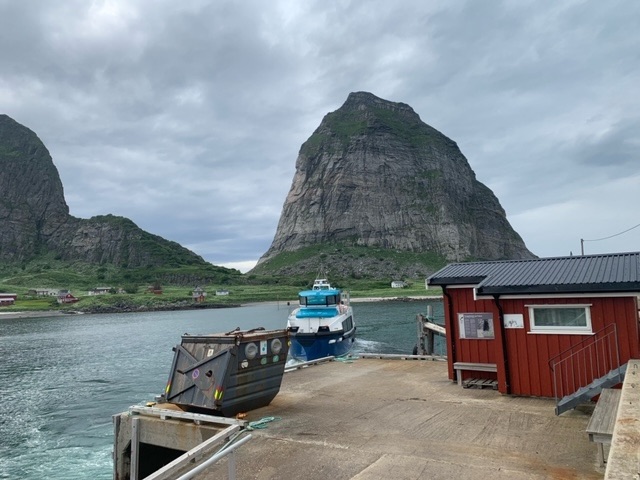
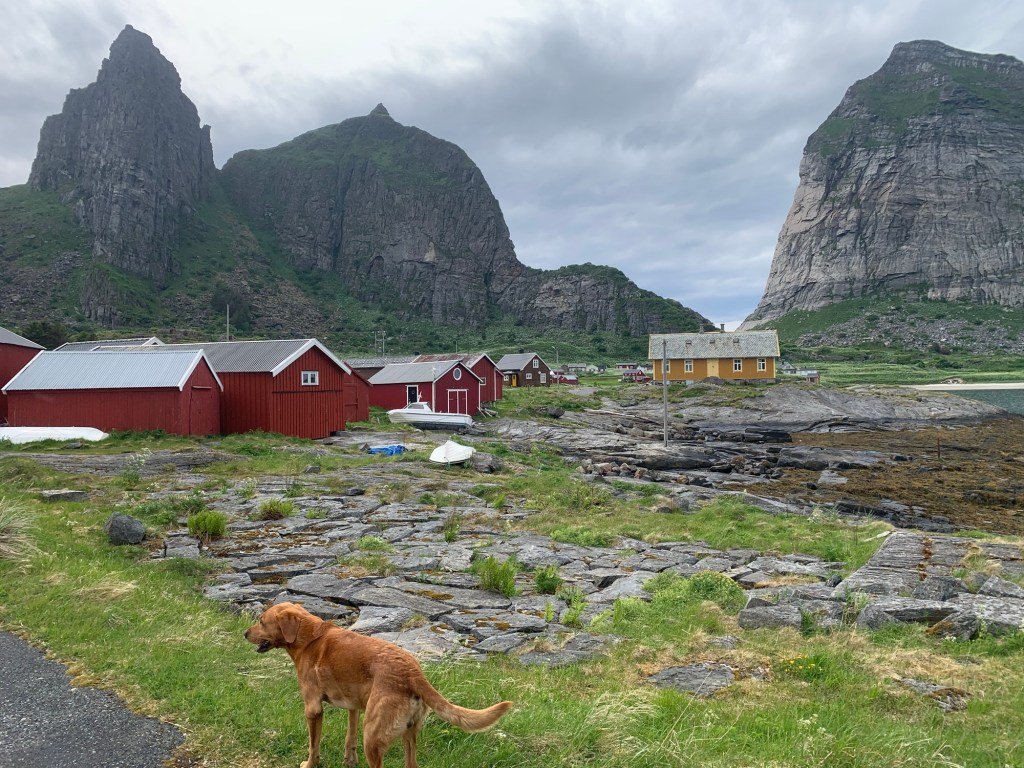
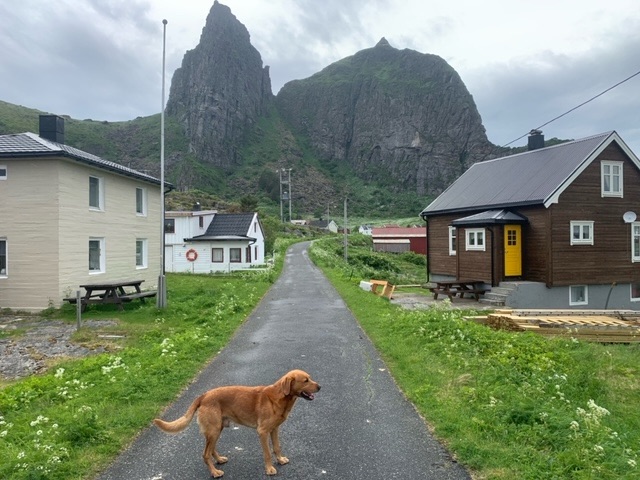
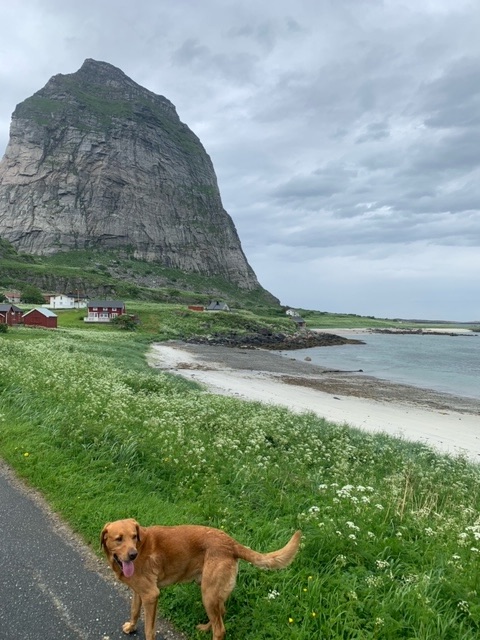
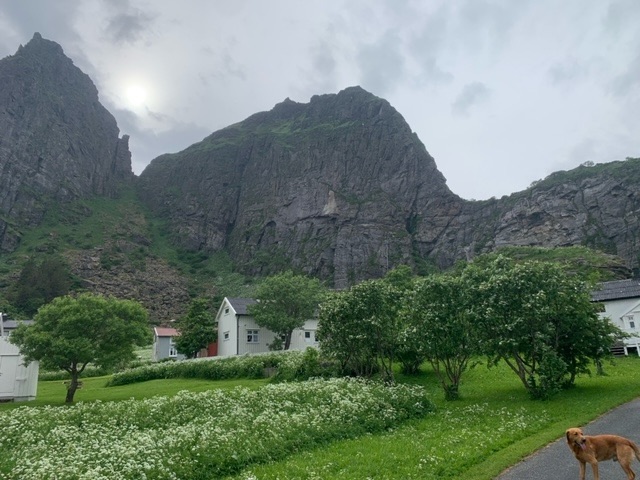
Sanna is one of 418 small islands and skerries that form the municipality of Træna. Sanna is the outermost island, approximately 3 square kilometers and 60 kilometers from the mainland. It has been a fishing hamlet for 9000 years.
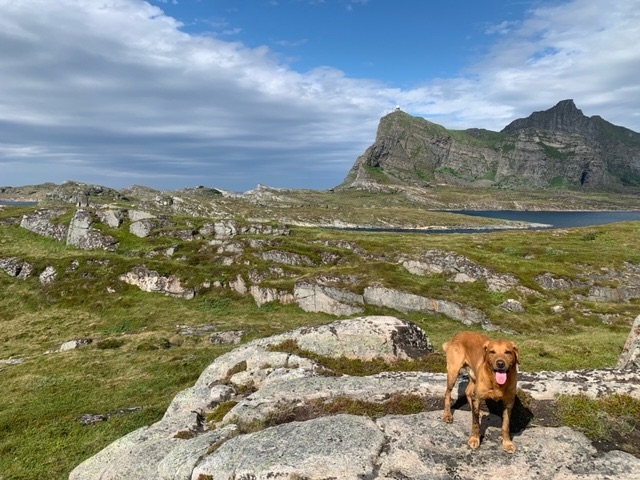
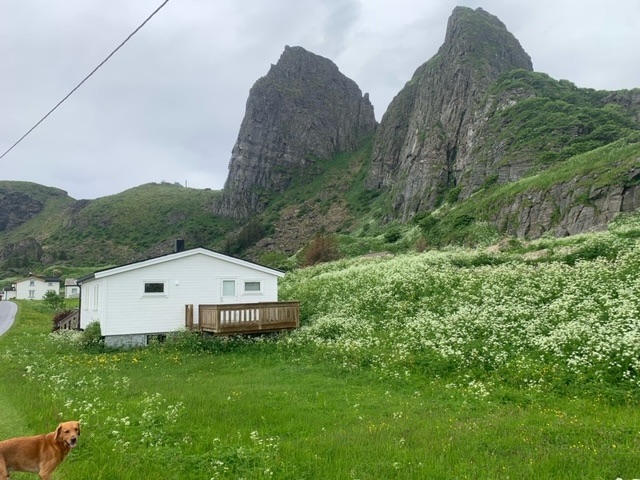
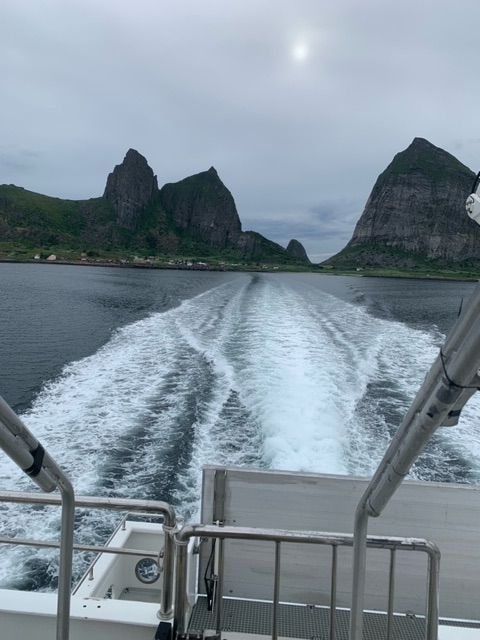
The three peaks on Sanna, Trænastaven (or Kjølen), Mjatind, and Breitind, are probably the origin of the name Træna. The peaks have been shaped by the ice and sea over many thousands of years. They are among the best known navigational marks on the coast of Helgeland. During the land uplift after the Ice Age, the sea washed out at least 17 caves and rock shelters on Sanna. The ‘church cave’, Kirkhellaren, is the most spectacular of them.
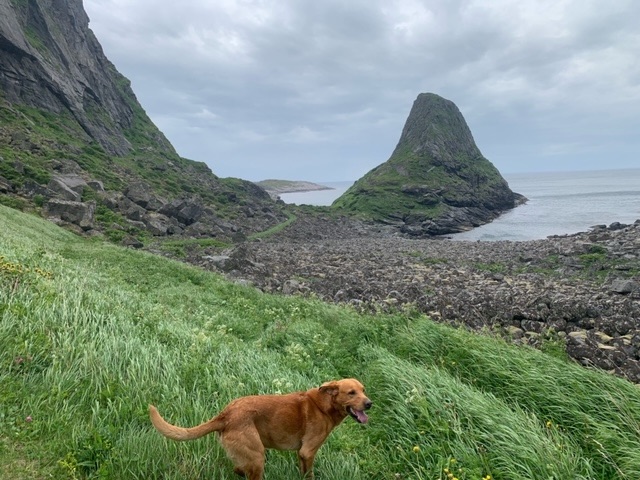
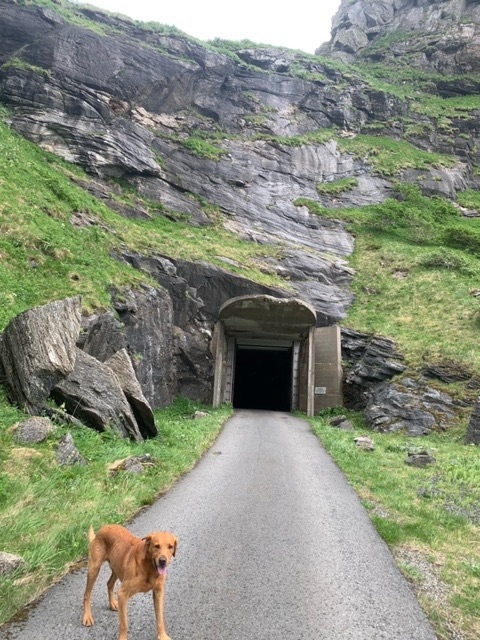
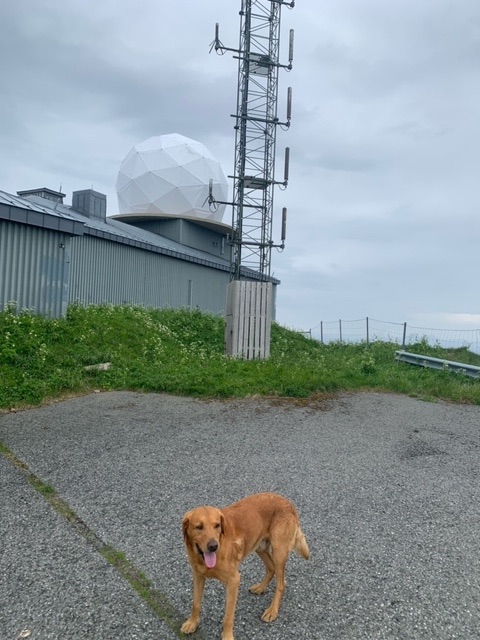
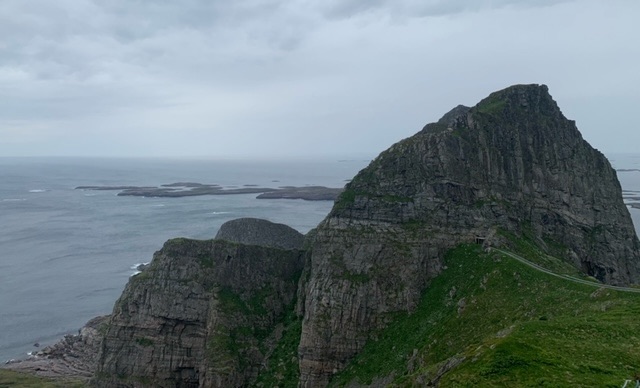
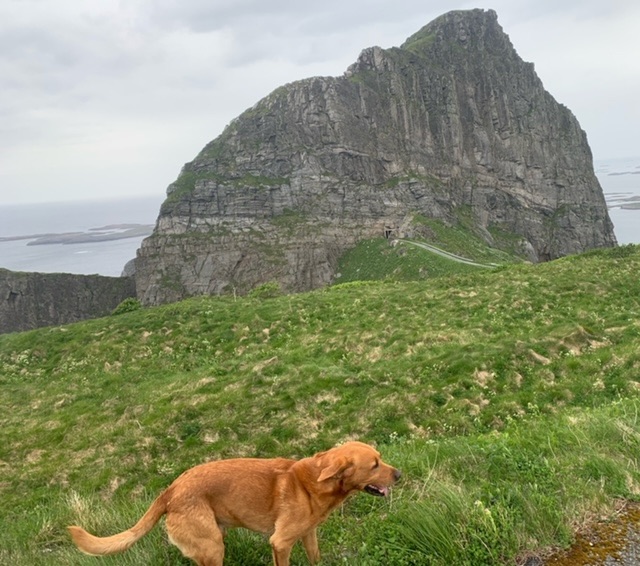
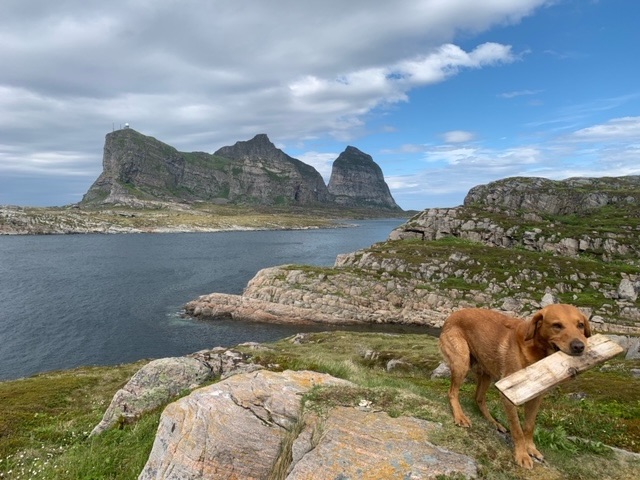
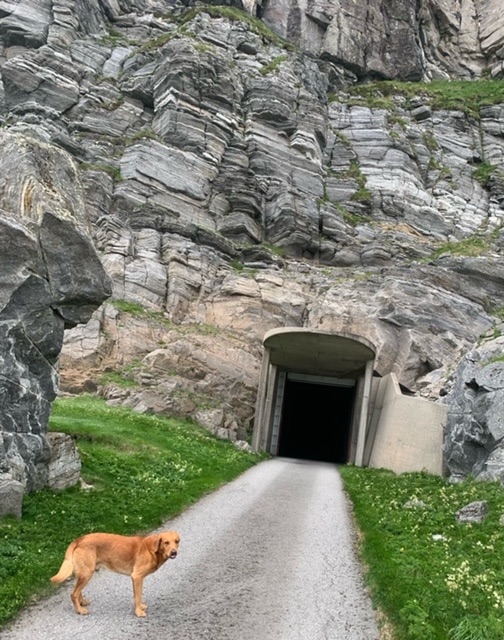
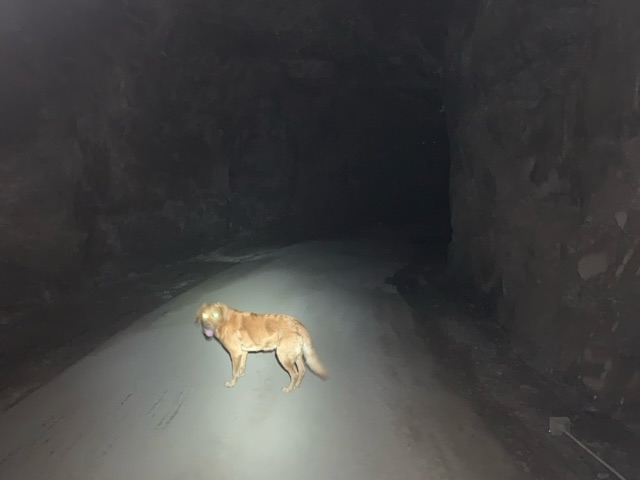
A 500 metre tunnel leads through the inside of one of the mountains to a NATO radar station, it was this that had attracted me. I worked out that there was just time for Roja and I to get through the tunnel, and to the top of Kjølen, at 263 metres. We had 90 minutes, and made it back for the ferry with 20 minutes to spare. By now there were squally and heavy showers, and we were caught in a couple on the exposed ridge where the wind was certainly howling.
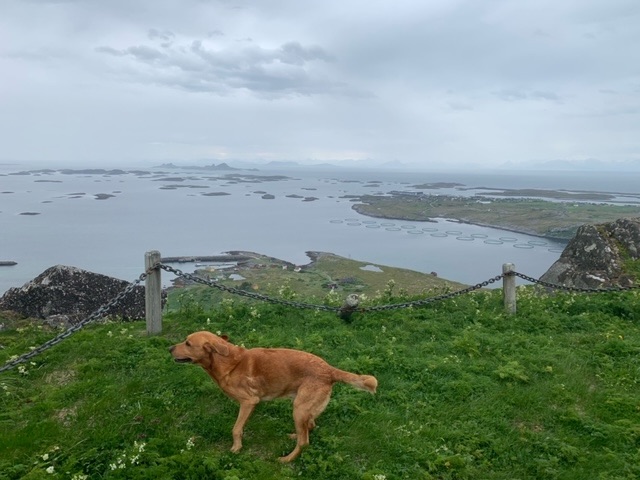
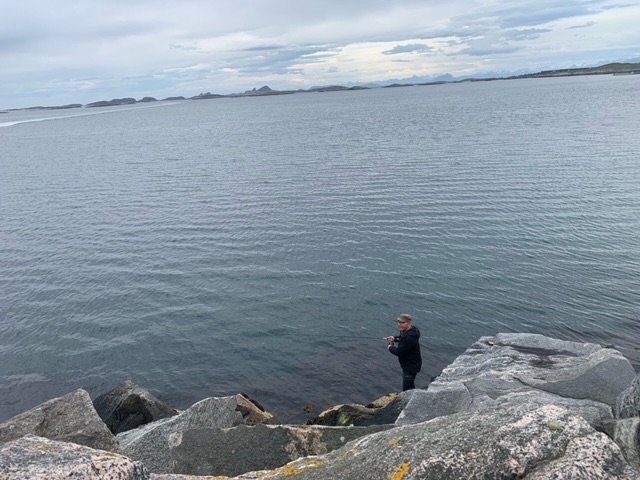
Back at the ferry I chatted to the only person I saw on Sanna, a guy fishing for a cod for his dinner. He was a visitor, from Oslo, and here for a week of tranquility, but still managed to sacrifice a part of that for a ten minute conversation, enough time also for him to pull a 20 kilo fish from the depths for his tea, me, home for my leek and lentils..

 Safe Return Doubtful
Leave a comment