First published in 1937, under the pseudonym of Murray Constantine, this is set some 700 years in the future. Katherine Burdekin wrote feminist dystopian fiction in the 1920s both under her own name and as Constantine. She also wrote some children’s fiction, though this certainly isn’t that.
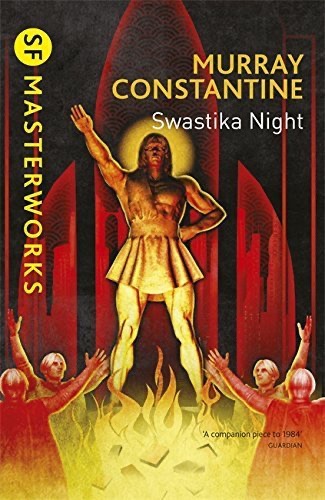
The novel describes a world ruled by two superpowers, the Germans and the Japanese. The people of the Holy German Empire worship Hitler as a god; statues of him exist in every town, where he is depicted as tall blond and muscular. The Nazis and their Axis allies won the war for world domination and achieved the ‘Thousand Year Reich’ of their rhetoric.
It was an astute cautionary tale of the rise of Nazism, and of the dangers of listening to extremist views and extrapolating their inevitable practical results.
The narrative concerns Alfred, an Englishman on a pilgrimage of the Holy Sites in Munich.
It’s a fascinating premise especially considering when it was written, but often the writing is sermonic in its moral message, with details of the rationale for the behaviour of the leaders of the German Empire and extracts from the history book.
It is frequently shocks, with its treatment of women and the threat of violence constantly present.





 Safe Return Doubtful
Leave a comment