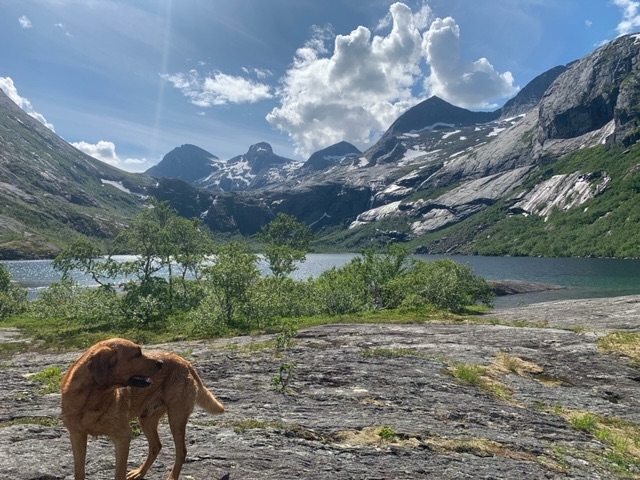
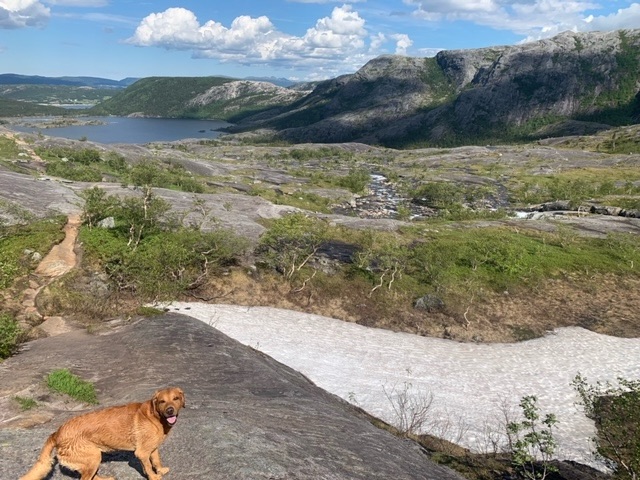
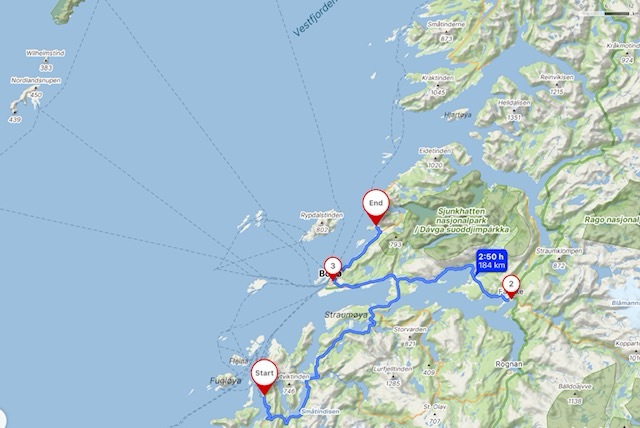
I left Inndyr and headed towards the ferry at Bodø, I had a booking to the island of Værøy, southwest of the Lofoten islands as a stop off on the way there. Midway through the 90 minute journey, mostly on the picturesque Highway 17, I had spotted a hike I wanted to do to the higher of two lakes, Øvre Åselivatnet. This is a spectacular area of mountains which include two peaks that are much sought after by climbers, Per Karlsatind, and Åselitind, both over 1,000 metres. The lake I was aiming for is a four kilometre trek up to about 350 metres, and sits in a breath-taking valley between the steep walls of the two mountains.
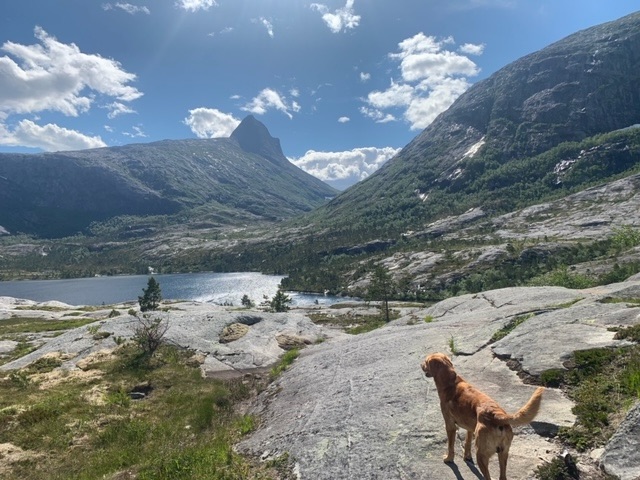
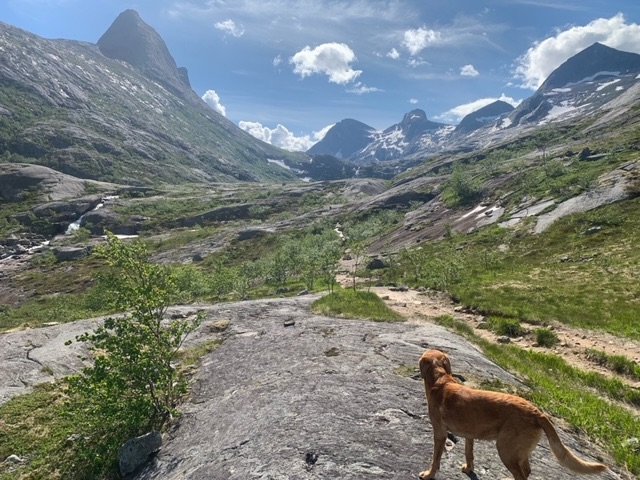

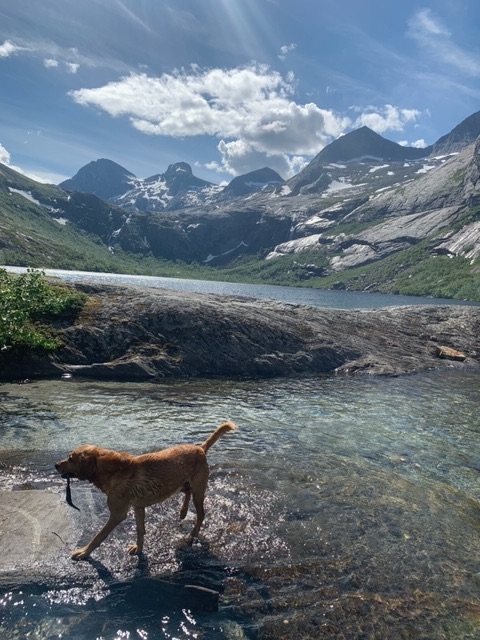
I expected the car park to be busy, but on a fine and warm summer’s morning there was no one else there.
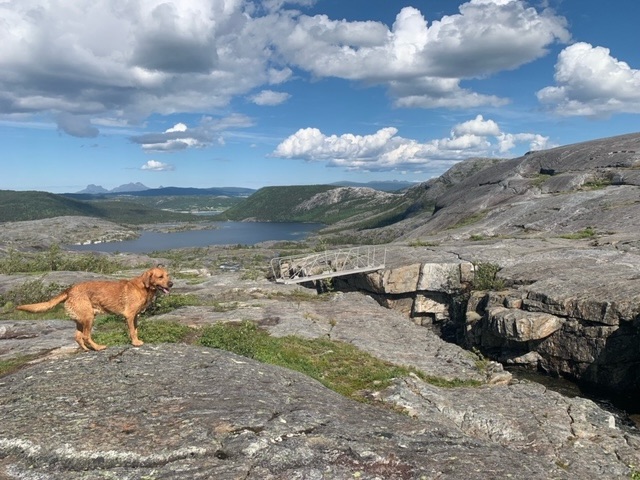
The hike climbs gently over bare rock, following a fast river that becomes a waterfall in several places.
From there I headed to the town of Fauske, to the east of Bodø by 30 kilometres. Here I could to up with LPG for cooking, and do a few chores that would be more difficult in the city. One of those chores was to get my toe nails clipped, something I still can’t do since the surgery, or at least do with any degree of accuracy.
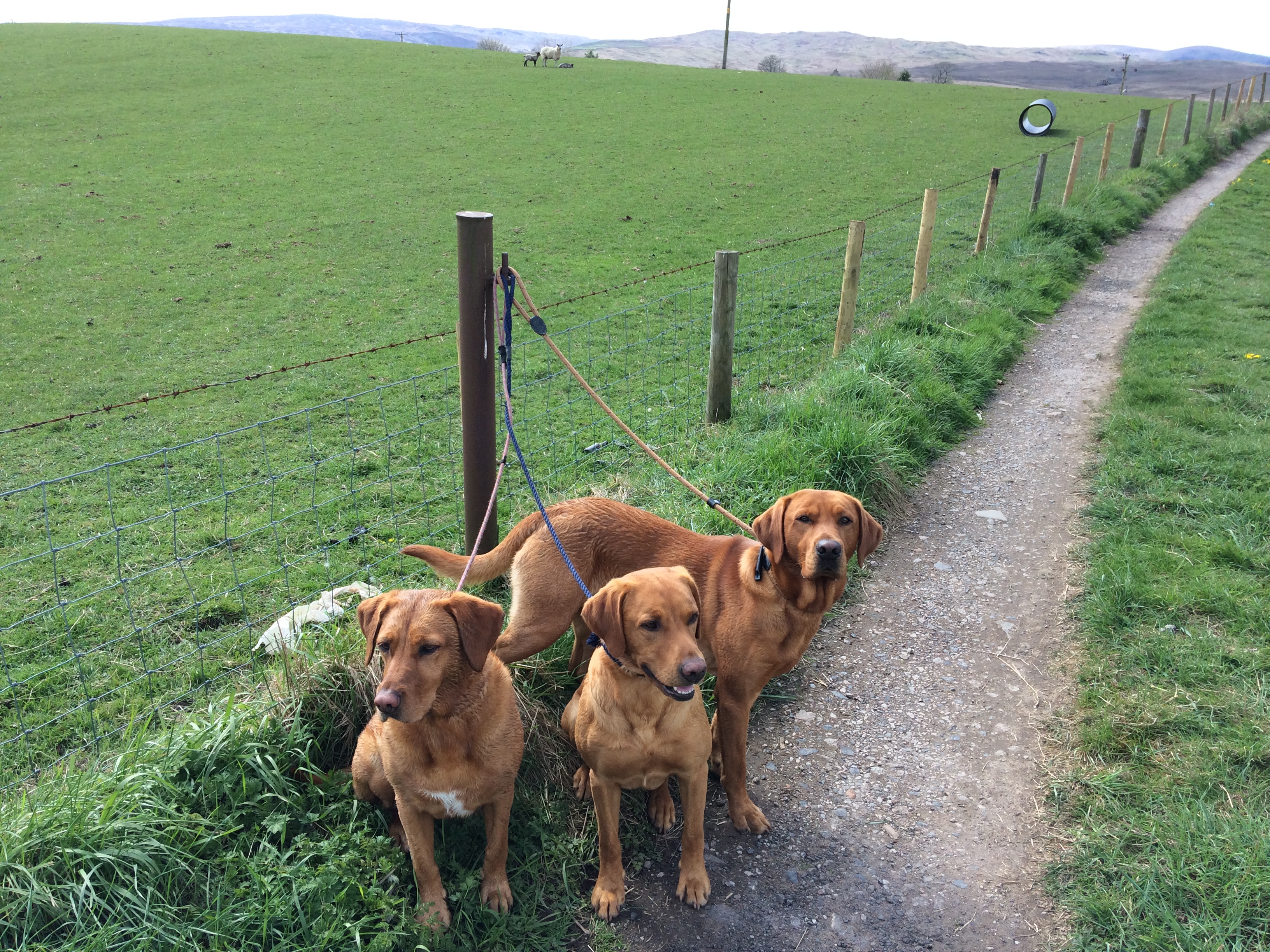
Late afternoon I found a place just outside Bodø to walk with Roja. A local guy who was walking his dog passed and was keen to look at the van. He had a self-build himself which he used to work from. He was a salesman of bakery items, having used to be a pastry chef. Travelling around Norway in his van enabled him to save about 200 euros a night that would otherwise go on a hotel and meals, and that he could take his dog with him. We spoke for more than an hour, and walked the dogs together.
In the evening I drove across town to the ferry terminal. Here, it is possible to sleep in the van while waiting in line for the ferry.
I had been looking at Lofoten and Værøy during the afternoon. The three hour ferry to Værøy is free this summer, after the residents of the island petitioned the government asking for help with their tourist businesses. They got their wish, and now in the high season about 50 motorhomes a day cross, spend two days on Værøy, then take the hour long crossing, also free, to Lofoten. The alternative of crossing directly costs about 75 euros. So many motorhomes on Værøy has caused problems. Many residents have put ‘no camping’ signs up, so much so that pretty much every parking place has one. There is a disused airport runway which used to be a place vehicles could go, but a local guy has bought it, and now charges 30 euros a night to use it, with no facilities at all. It all sounds a bit like the Scottish North Coast 500, which was developed by the tourist board, but has no infrastructure to deal with the amount of visitors it receives.
There were 20 vans, maybe more, in the line for Værøy, and about 70 in the line for the direct sailing to Lofoten. I had heard that where the islands are most scenic, and narrow, at Lofoten, the small road cannot cope.
It didn’t take long for me to make a U turn on my decision to go there. I looked quickly at map, saw an alternative, performed a literal U turn at the terminal, and drove 10 kilometres out of Bodø to a large beach car park and settled down for the night. During the evening I put together an alternative route, which I am very happy with, and will work on the detail in the next few days.
The first part of that was to drive another ten kilometres further north this morning to Mjelde, where there are several beaches possible to get to on foot from the car park. This spell of weather seems it will hold for today, then rain is forecast to come in tomorrow for a few days.
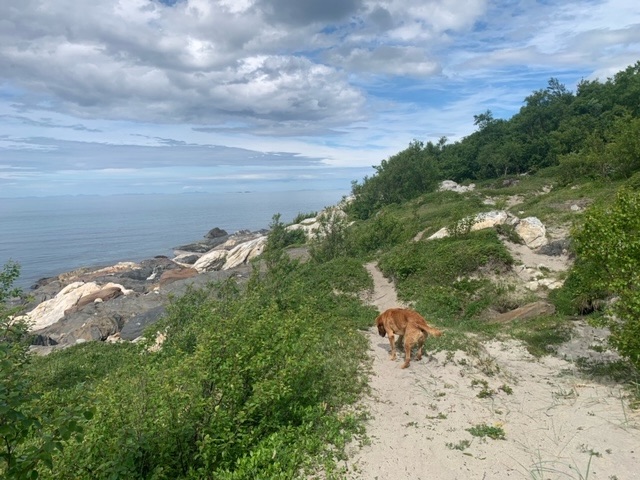
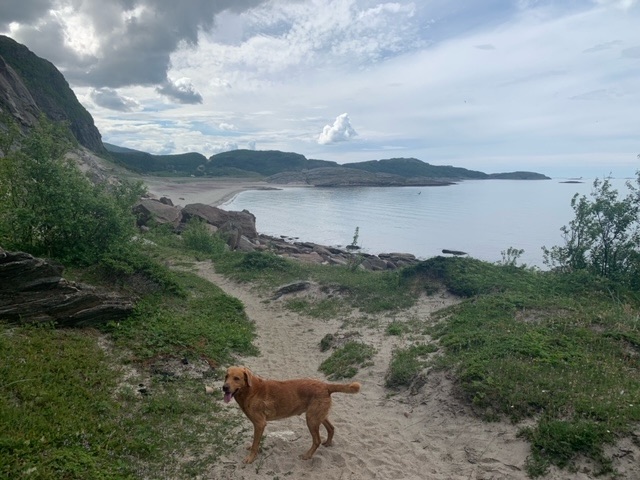
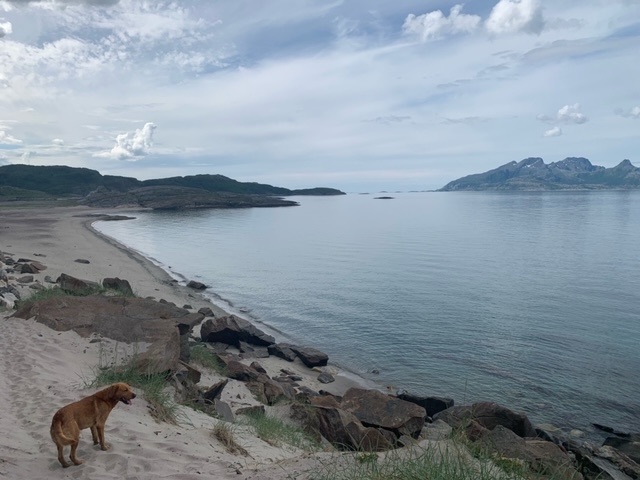
As I parked up an English campervan pulled in next to me, the first I can recall seeing in a long while. It was a retired couple from Bexley, with a similar bent for travelling as me; they had spent time in South America and New Zealand. We walked together for a while, and exchanged tips on various attractive stopovers.
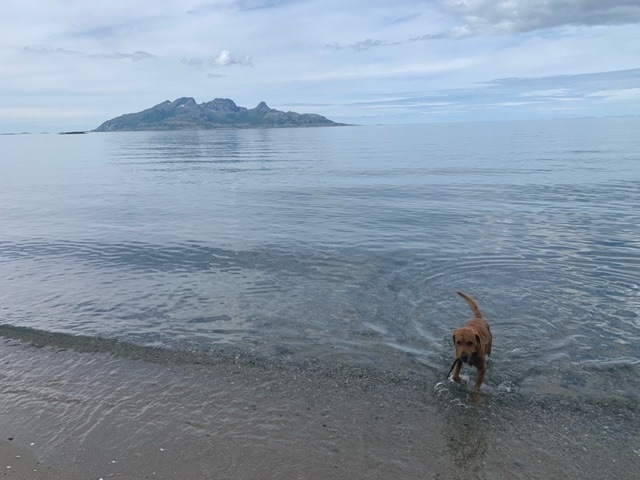
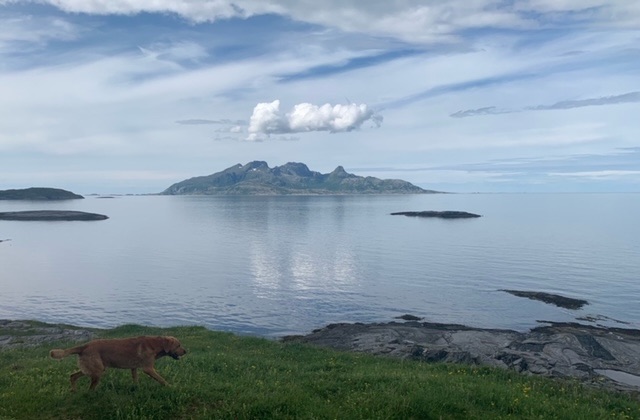

From the tranquility of the islands between Mo I Rana and Inndyr, where I spent 3 weeks, there is now considerably more tourist traffic on the road, be it motorhomes, campervans, cars or motorcycles. For the next section of the course it will be more difficult to find those wonderful park ups, but I am confident that with some planning it will be possible..



 Safe Return Doubtful
Leave a reply to Kate Cooper Cancel reply