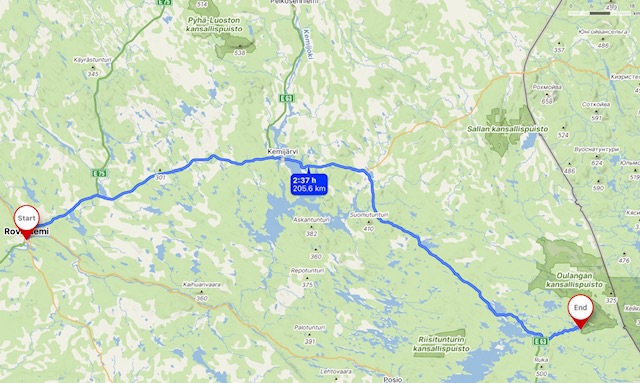
I’ve driven south and east from Pallas National Park. Initially south, to Rovaniemi, where I’ve been two times before. The first time was in September of 1990 when I was on route to Melbourne Cricket Ground in time for the Boxing Day test match, without using aeroplanes. I was hitch-hiking through Scandinavia, and in my way south from Nordkapp. I recall being awoken in the early hours of a cold night by some drunken Finnish guys as the Northern Lights were putting on a fine show. I don’t think I appreciated the sight, and wonder if I will ever see them in such glory again.
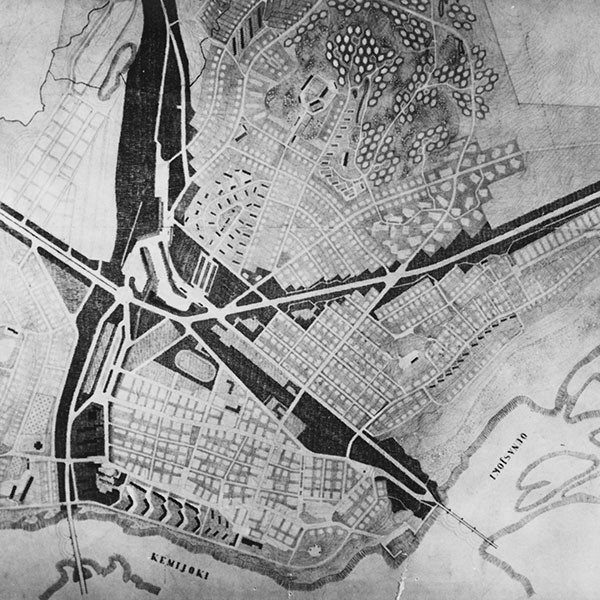
Rovaniemi is built on Christmas tourism, but is an all year round resort, though behind all that, it is a thriving city, almost totally (90%) destroyed in the Lapland War in 1944, and rebuilt in the 1950s, with an opening when the American President Roosevelt made a visit and stayed in a traditional cabin. The rebuild, by Finnish architect Alvar Aalto, was inspired by Roosevelt’s Tennessee Valley project, coming from his New Deal in the 1930s. Houses were constructed to face the sun as much as possible, and be out of the Arctic wind, with hydroelectric plants on all the rivers. Impact assessment were created for the effect on indigenous Sami, reindeer herds, and its unique microclimate. The street plan is designed to resemble a reindeer’s antler. By 1984 Concorde was bringing thousands of Santa tourists to the city. Aside from that though, there is a real outdoor feel to the place, with lots of opportunity for activity only minutes away from downtown all year round.
I stayed up above Santasport, where many of the sports facilities are, and took a 5 euro sauna at one of the most renowned facilities in the country.

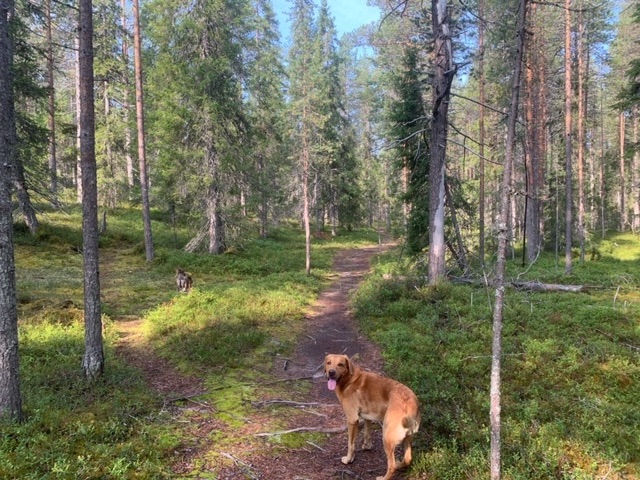
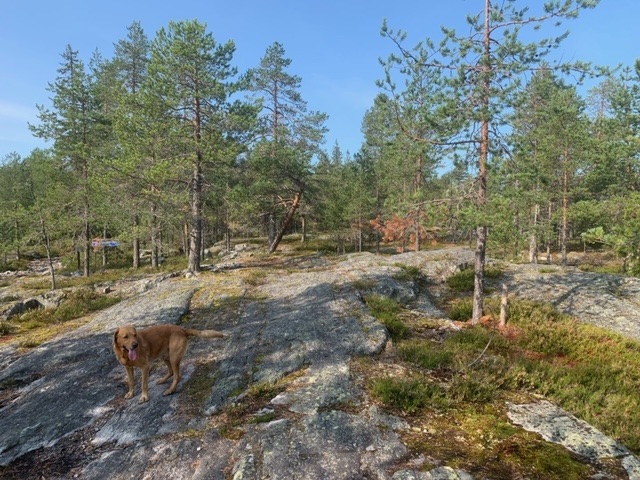
The following morning Roja and I re-explored the paths and tracks on a fine autumn day, before driving east for a couple of hours, pretty much along the Arctic Circle, to the Oulanka National Park.
Oulanka is one of the most popular National Parks in Finland, but now, two weeks after the summer supposedly finished, and the children went back to school, the mosquitoes to their winter hide-outs, there is just a smattering of visitors, though in the autumn sun the Park looks wonderful. It is winter though when it is busiest. I was here to trek the Bear’s Round, or the Karhunkierros, Finland’s most well-known hiking route. Hiking is the most undertaken activity here, though cross-country skiing, snowshoeing, cycling and kayaking are very popular also. For hiking there is a good network of routes, huts, campsites, and more upmarket cabins and resorts as well. No fishing is permitted.
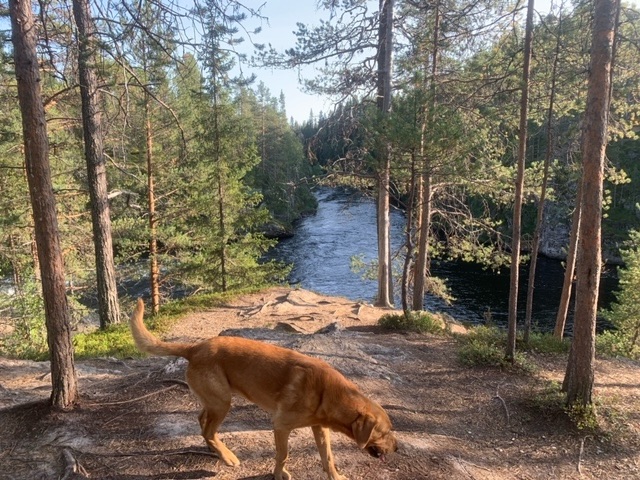

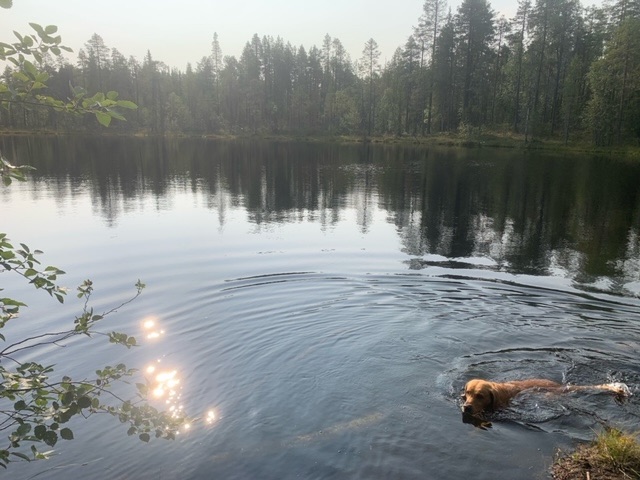

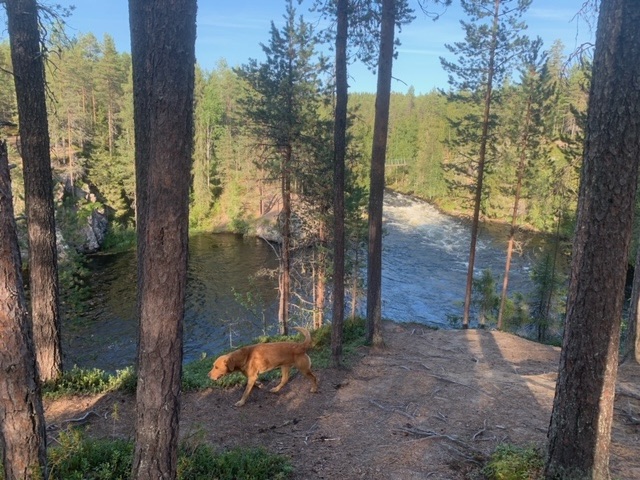
This morning Roja and I undertook the 14 kilometre circuit that makes up a part of the Karhunkierros, and we will expand on that in the next couple of days.
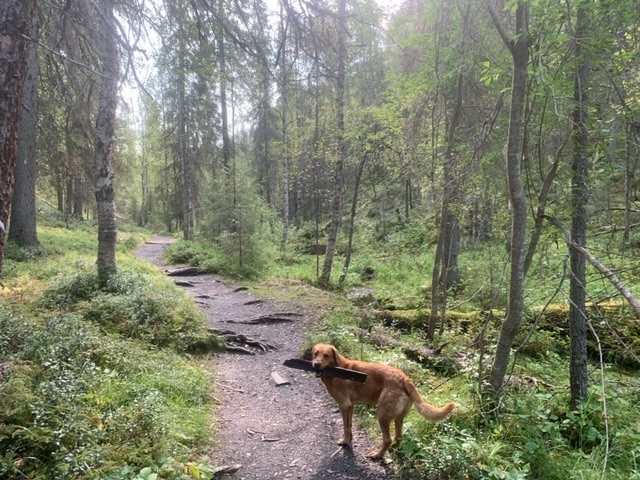


I’ve found a place for the van in a small hiking carpark, just outside Basecamp resort. Though the resort is still quite busy, the only people using this car park are day hikers. The resort offers places for campervans at 10 euros, but that’s is only for a steeply sloping park. I expect they attract customers to the restaurant, though it would only be a ten minute walk from where I am.
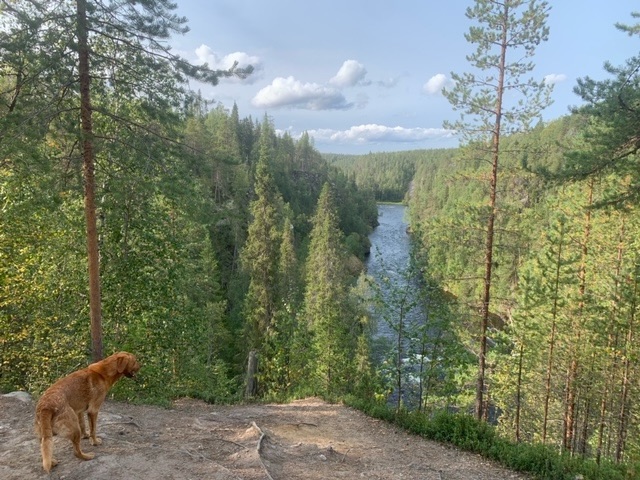
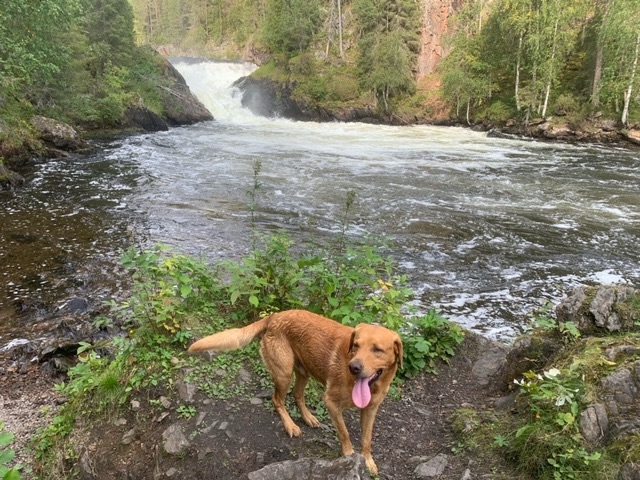
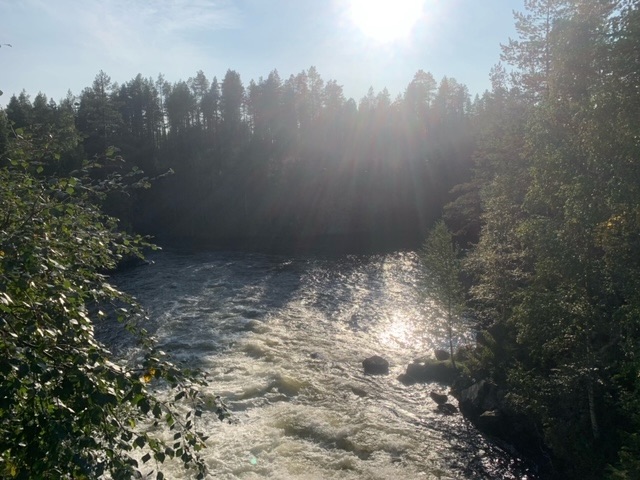
Oulanka is of importance because of its unique river ecosystem, and the surrounding untouched and unlogged boreal forest, as well as that part of it is in the Arctic. The north has vast mires. The middle, where I am currently, is made up of pine forests and river valleys with rapids and waterfalls. Endangered species thrive here, such as bear, lynx, wolverine, Siberian jay, and capercaillie.

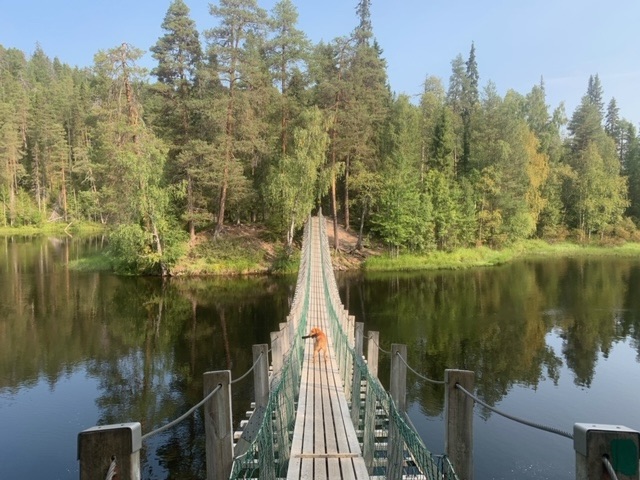
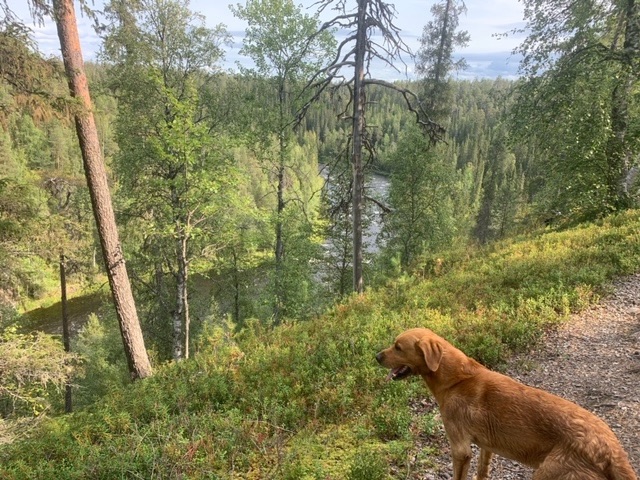
The National Park runs right up to the Russian border, which is about 15 kilometres, as the Siberian Jay can fly, from where I am. In Russia the Paanajärvi National Park borders it, just as impressive, just as grand, just a bit more difficult to visit at the moment, and sadly likely to be for some time. Together the National Parks are part of Karelia, historically Finnish, the eastern areas ceded to Russia after the Winter War (1939-40). North Karelia was home to a largely Sami population. From the Early Middle Ages ethnic Karelians inhabited the regions further south, gradually moving west where communities grew. Archaeological discoveries show evidence of Karelian people here from the year 800.
We left for the hike quite early, and for a while saw no one. Later in the morning there were a few people around, but few enough to give the feeling of it being a wilderness. We were out for about four hours, back in the early afternoon to coincide with the start of the Old Trafford Test Match. Watching the evening session just now, temperatures in Manchester look more like one would expect in the Arctic than here.



 Safe Return Doubtful
Leave a reply to dickymcard72 Cancel reply