Non-fiction – British Literature
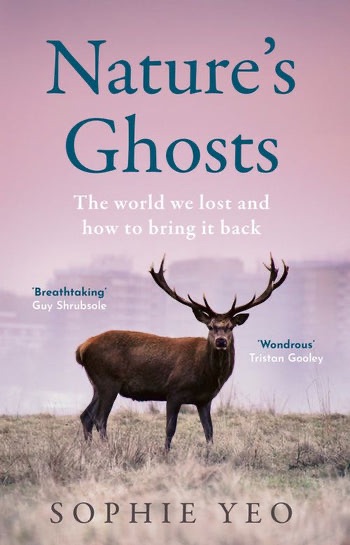
This was shortlisted for the Wainwright Conservation Prize though didn’t go on to win it, which makes me keen to read the winner, Czerski’s The Blue Machine: How the Ocean Works, as if it’s as informative and entertaining as this, I will be in for another treat.
Yeo explores extinction and environmental loss making an impassioned plea for conservation from an angle not usually heard. Interested by rewilding, she investigates when exactly the planet ceased to become wild. She discusses how letting nature take its course might not always be the best way forward, referring to the historical ecologist George Peterken who believes that nature can exist on a spectrum. It fits in with the amount of times our landscapes have changed and evolved over time.
In the past I have struggled to enjoy books that concern the history of the natural world, but Yeo writing is sympathetic with details of her research as well as other anecdotes punctuating the narrative at exactly the right times.
I’ll highlight a couple of examples. There’s a chapter on a Finnish project called the Snowchange Cooperative which she praises as a world-leading conservation project. She spends time in North Karelia, by coincidence where I was just a couple of weeks ago, and relates her meetings with two of the Cooperative’s leading lights.
She considers foraging and wonders why in the UK it is so unfashionable, when elsewhere in Europe at the appropriate time of year so many people head out into the woods with their baskets. The Latvians, it seems, are continent’s leaders; a head’s up for me, as I will be there in a couple of weeks.
Most interesting though are the last couple of chapters which concern folklore and myth..
The psychoanalyst Carl Jung was particularly concerned about the impact of the loss of myth on the human psyche. ‘Thunder is no longer the voice of an angry god, nor is lightning his avenging missile. No river contains a spirit, no tree is the life principle of a man, no snake the embodiment of wisdom, no mountain cave the home of a great demon. No voices now speak to man from stones, plants, and animals, nor does he speak to them believing they can hear,’ he wrote in Man and his Symbols, just before his death in 1961. ‘His contact with nature has gone, and with it has gone the profound emotional energy that this symbolic connection supplied.’ His contact with nature has gone. The sentiment seemed to strike at the heart of the matter. Somewhere down the line, we became detached from the living world. In felling the forests, we evicted the gods that dwelled in the trees. In allowing our streams to fill with sewage, we supplanted healing with sickness. In killing so many animals, we banished the basis of future fables. The erosion of the wild from our daily lives means that the potential for otherworldly experiences has diminished.
This is where the book excels. Yeo is speaking my language. I spend a minimum of three hours wandering the hills and forests daily, and this is a big part of why I do it.
The Lake District, for instance, was recently made a UNESCO World Heritage Site. To keep this status, the park authority must maintain the existing character of the landscape, which was built around the farming cultures of the past 400 years. The beauty of the open fells, however, is marred by the ecological damage wrought by sheep. If we are to preserve this landscape for its history and traditions, could we not also make room for the Neolithic axe-makers, who would have passed through wildwood as they sought out precious greenstone among the peaks of Great Langdale? For the Wild Boar of Westmorland, which supposedly had a den on Scout Scar and terrorised pilgrims during the reign of King John? For the wolves immortalised in place-names? Farming is far from the only story inscribed upon this corner of the north.
She continues with a warning though, that tales told to children of trolls, elves and goblins can give them a negative image of our (relatively) wild places and mean they seek to avoid them.
Numerous studies have confirmed the intensity of animal-related fear among young children. A 2012 survey, conducted by the ChildFund Alliance, found that fears of insects and dangerous animals outstripped fears of death, disease, war and the end of the world. This remained consistent among children from both developed and developing countries, suggesting roots in something deeper than the chance of actually meeting a tiger, stepping on a scorpion or contracting malaria.
This is a powerful book that stands out amongst the many that currently analyse conservation. It’s well written, and Yeo has something different and relevant to say. Hers is a voice that needs to be heard.
My GoodReads score 5 / 5

 Safe Return Doubtful
Leave a comment