translated from the Spanish (Uruguay) by Luis Harss
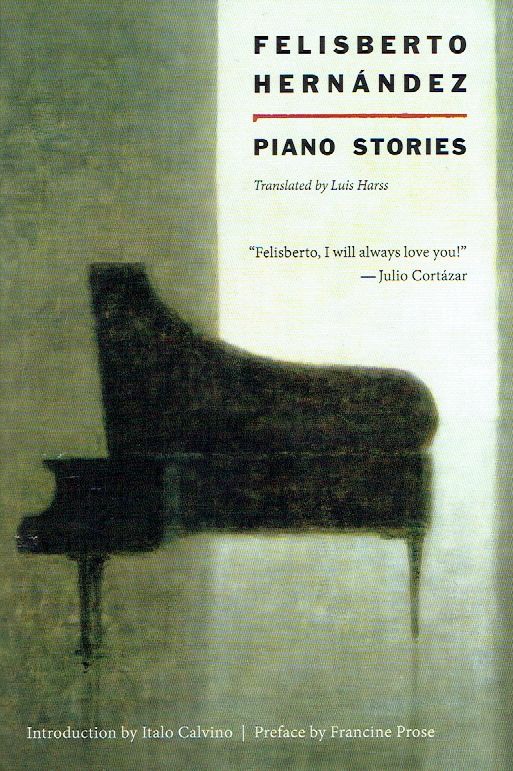
This collection is significant because it contains Hernández‘s masterpiece, a fifty page ‘almost novella’ length story called The Daisy Dolls. It is so good that stands as a gem in its own right in Latin American literature.
Wholly Gothic, irrational and often absurd, it centres on a married couple and the husband’s collection of life-size dolls, one of whom was made to look just like his wife. At the wife’s request, the servants of the house arrange the dolls in various costumes and poses in glass cases around the house. For the reader, a considerable sense of unease develops, though there is often humour as well, and tension builds up with jealousy, delirium, perversion, morbidity, and practical jokes.
It is an incredible piece of literature that can be read in a number of ways, as a feminist story with the dolls used for pleasure then thrown aside, or that Horace, the husband, has a split personality and the dolls represent his hidden side, reflecting back to his troubled childhood. But it is best enjoyed without too much thought, with any in depth meaning being considered on completion.
Daisy Dolls is the penultimate story in the collection, and the one that follows it, The Flooded House is the second best, and shares many of its qualities.
The rest of the stories don’t have the same emotional impact, and tend to be the first-person narratives of nameless men (often piano players, which was how Hernández himself made his living in concert halls), generally obsessed both with the tactile nature of objects and the houses of wealthy strangers. Some have a Gothic feel, with mysterious women, decaying houses, and isolated, hallowed atmospheres where objects are often alive with a sense of desire; a boy feels an attraction between himself and the feminine furniture whose bodies he explores, a man whose fondest companion is his own disease, and a balcony that suicides over its human lover.
It is a highly imaginative and unforgettable piece of work seen now as a forerunner in the genre of magical realism.
Sadly, Hernández (1902-1964) never knew of the success of any of his stories. He just about made ends meet as a concert pianist in his native Uruguay, marrying four times to wives that had enough of having to support him. He toiled at his writing in obscurity and died unnoticed. It wasn’t until 1983 that any of his work was published, and it was in Mexico, with an English translation (from Luis Harss) a decade later. Gabriel García Márquez, Julio Cortázar, Italo Calvino (in his introduction to the book), César Aira and Carlos Fuentes all quote him as being a huge influence on their writing.
My GoodReads score 5 / 5



 Safe Return Doubtful
Leave a comment