In 2004 after almost eight months living in Queenstown, New Zealand working as a cricket coach, I returned to the UK via the United States of America. I took the Air New Zealand flight to Los Angeles and then made my way across the States by Greyhound Bus, stopping to see a couple of old friends on route, and finishing in Boston. From there I flew to Reykjavik and made my way clockwise around Iceland to Seyðisfjörður travelling by bus and hitchhiking, hiking and camping. It was the second time I’d been to Iceland, but more about those visits in a later post. From Seyðisfjörður I took the Norröna ferry to Tórshavn. This is therefore, my second visit to the Faroe Islands, though that first one, in 2004, was a limited experience. I had a week before the ferry called again and camped initially at the Tórshavn campsite. For the whole week there wasn’t a breath of wind, and fog and mist clung to the islands like a shrunken shirt on an overweight prop forward, giving a visibility of less than ten metres. I travelled to a couple of the nearby islands, but it wasn’t easy on a limited budget, and neither was it rewarding with such limited viewing. From there I rejoined the Norröna to the Shetland Islands, where it called, for a few years (as I wrote about yesterday), then onto Thurso by Northlink ferries and eventually to Cumbria.
A campervan is a much better idea for a visit to the islands, though in July and August, with so many around, they strictly must stay at campsites. This is a great time to visit.
The Islands have a surprisingly temperate climate, or a low range of temperatures with an average maximum in the warmest month, July of 13 degrees centigrade, and low of 9, and an average maximum in the coldest month, January of 6 degrees, and low of 2. If any snow falls, it is usually gone the following day. Not such a low range on a worldwide scale though; Malaysia and Jakarta claim the crown, Kuala Lumpur, Jakarta and Klang with a range of just 1.1 degrees.
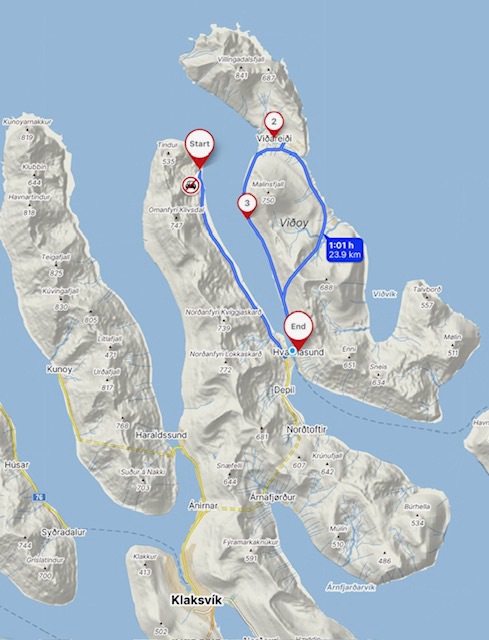
My stopover place north of Hvannasund on the island of Borðoy was excellent, with a great view across the fjord. As it went dark the winds increased significantly and were gusting above 60 miles per hour until late afternoon today. With that came heavy rain squalls, though that’s only small potatoes for these islands.
The rain eased mid-morning today, just as I was done with my reading session and ready to head out.
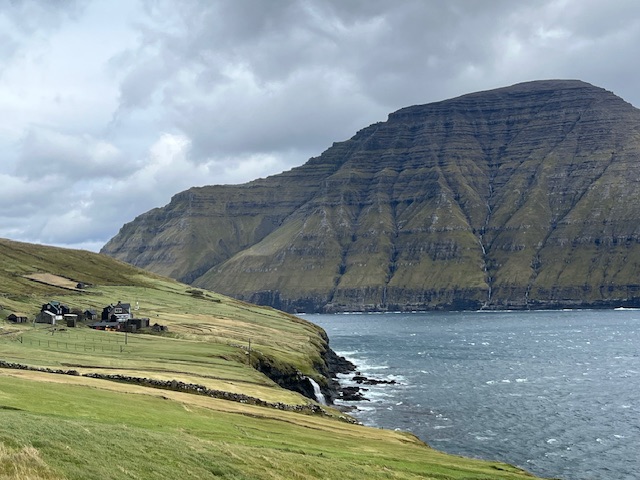
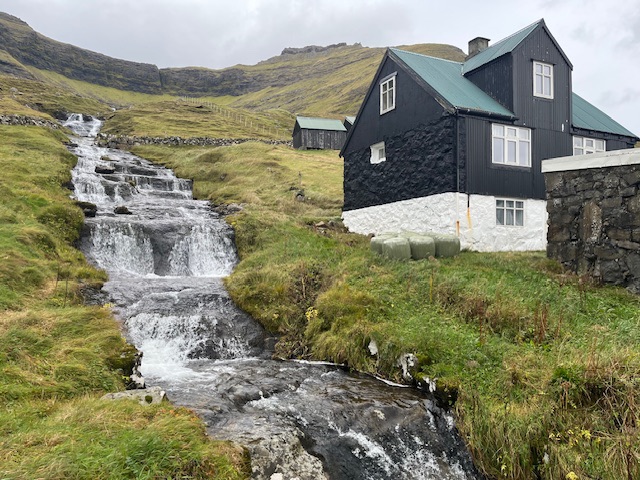
A couple of kilometres ahead north was the end of the road, and the small commune of Múli, dating back to the fourteenth century. There is a short hike here around the headland through the old farming community, nobody lives there year round now, but it is preserved as a site of historical interest. It was one of the first settlements on the Faroe Islands, and had between 10 and 25 residents from the 1800s until the 1980s. At one point there was a school with ten pupils. These days shepherds use the houses in the summer only.
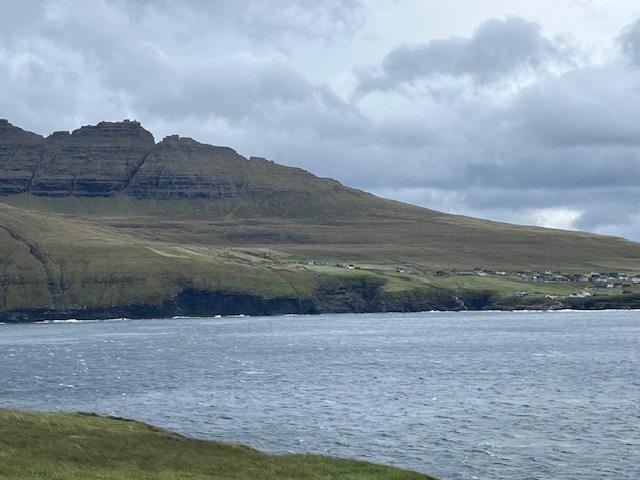
Its most famous resident was Guttormur Rasmusson in the late 1600s. He was a skilled sorcerer of some repute, acting as the local healer. He administered poultices to a priest with mental illness to cure him, and rescued ten men from the neighbouring island of Viõoy who got into trouble when they were stranded high on a rock on the north side of the island by putting them in a trance to overcome their fear of crossing back to the mainland by a single piece of frayed rope. He mixed potions for several troublemakers in the nearby communities that was said to have led to their rapid departure from the islands.

Later in the morning I drove around the fjord, over the bridge at Hvannasund to the island of Viðoy and the town of Viðareiði, almost directly opposite where I had spent the night, a kilometre as the raven flies.
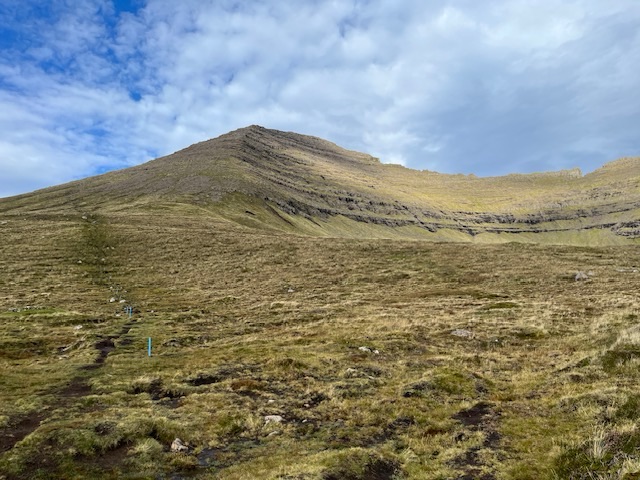
From here I took the steep trail up above the town towards the peak of Villingadalsfjall (above), though only up to 500 metres, as the wind was still strong. That amount of height though, gave tremendous views.
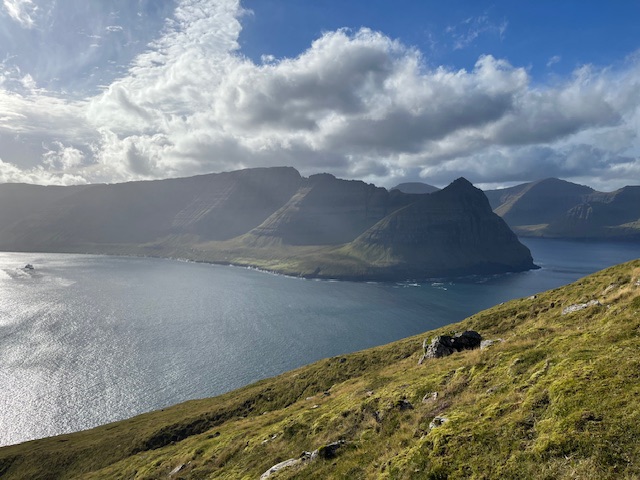
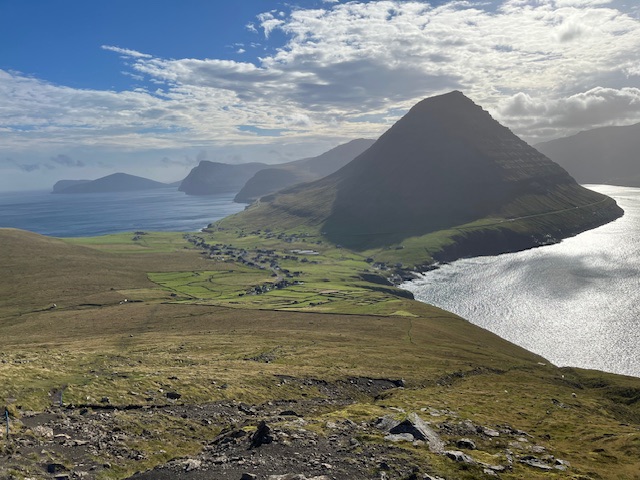
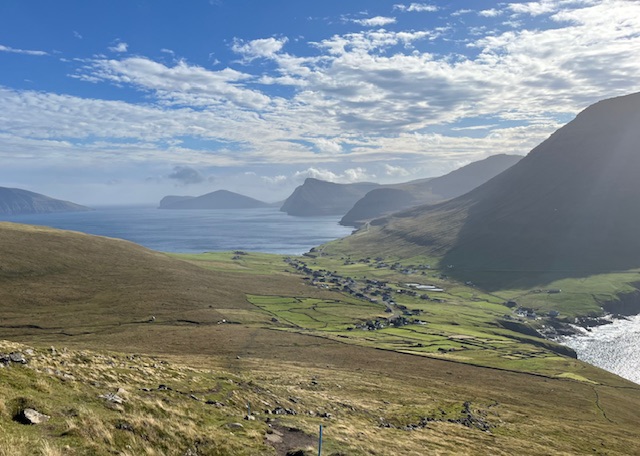
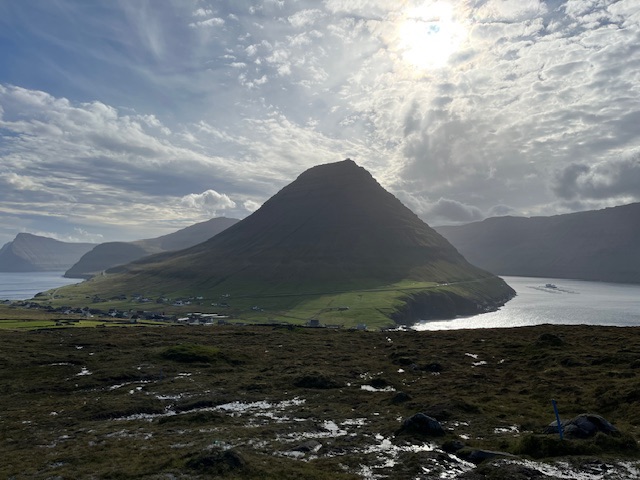
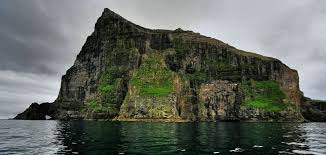
This trail goes on to Cape Enniberg just a couple of kilometres after the peak, the northernmost point of the Faroe Islands, where there is some ruined farm buildings from the sixteenth century and a 756 metre cliff and drop to the sea. It is one of the highest promontories in the world. I’m not good at such places on the calmest of days though, and certainly not today with 60 mph gusts..
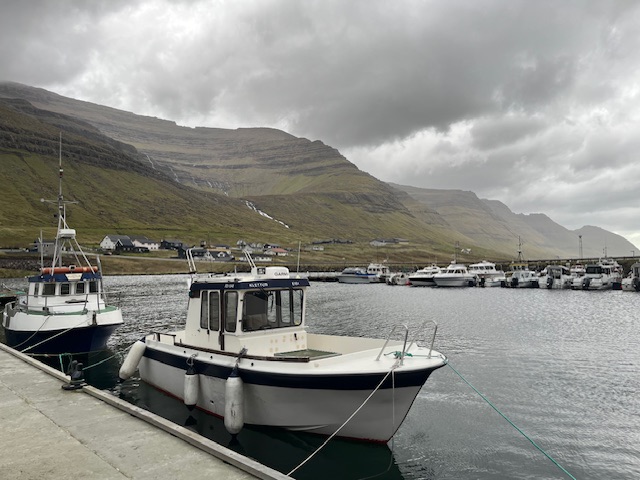
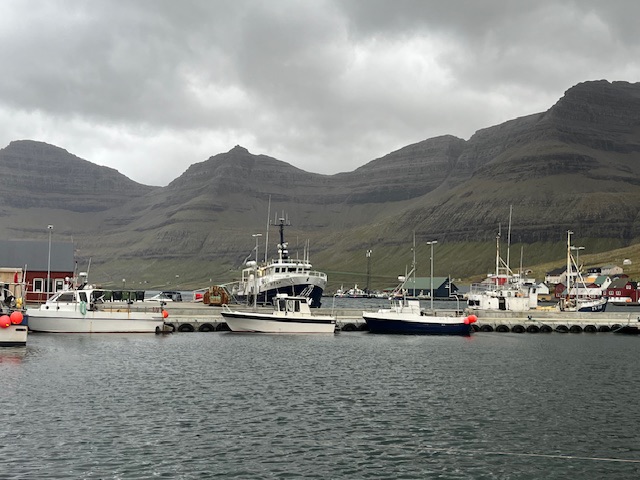
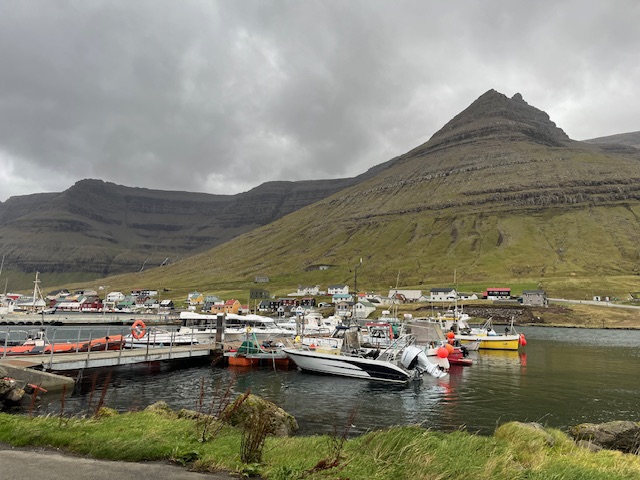
I’m parked up at the harbour at Hvannasund tonight, a quiet place close to the town, but also sheltered from the still strong southerly wind.

 Safe Return Doubtful
Leave a comment