I’ve had to change my definition of a fine day since I’ve been on the Faroe Islands, to one which doesn’t have heavy rain arriving sideways along with the thirty miles per hour plus winds. A day with breaks in the rain is decent enough, but it’s not the getting wet that is the issue, it’s the clouded view. If it’s possible to see the spectacular jagged and sheer mountains around the coasts, then it’s a fine day. And I’ve not had many of them, three out of ten days so far. so when they come along, it’s necessary to pack quite a bit in.
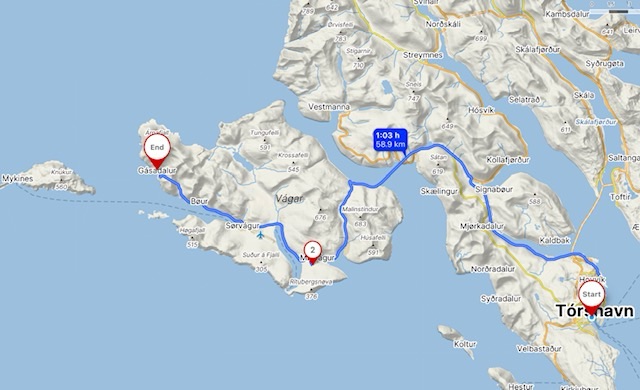
Yesterday was such a day, though the forecast had not predicted it. I headed out through the westernmost of the sea tunnels to the westernmost of the main islands, Vágar.
This tunnel is not as expensive as the others to travel though, £12 as opposed to £35, probably because it’s the most used, as the islands’s airport is on Vágar. I had planned on staying on the island for three days, but as the main entrance to the Faroes most of the places suitable for a night’s stopover for a van are prohibited with signs. And the campsite is closed. I am pretty sure no one would have moved me on at this time of year, but I don’t like to go where I’m not welcome, so I changed my plans to fit the three hikes to the spectacular bits of the coast into one day.
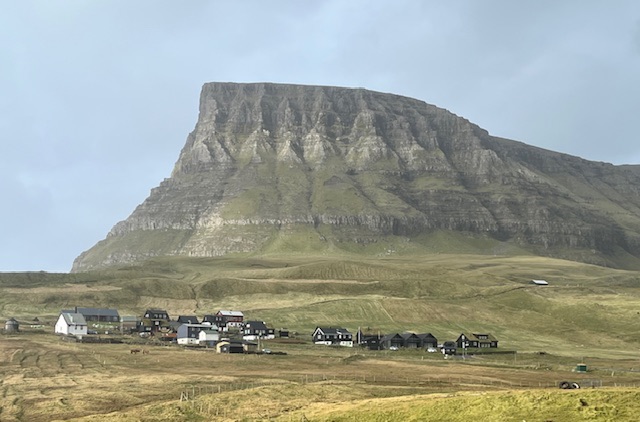
The road around the west of Vágar ends at the tiny village of Gásadalur, nestled into an amphitheatre of Árnafjall mountain (722 metres), and with a waterfall, Skarðsáfossur, that descends directly to the sea. It is used on screensavers throughout the world. Gásadalur is a farming village, though these days most of the houses are rented out to tourists.
There is not much fishing as the beach is difficult to get to. When the British occupied the Faroe Islands in the war they built steps up the cliff, which are still present, though too treacherous for visitors to use. In order to reach any of the other villages by land, residents had to take the high route over mountains more than 600 metres high. This isolation explains why the village population had decreased, in 2002 to just 14. In 2004 a road tunnel was blasted through the rock, and there was a brief increase in population, to 23 in 2012, but more recently it has decreased again, for the reason I mentioned, common to many beautifully situated villages like this, that houses are rented to tourists.
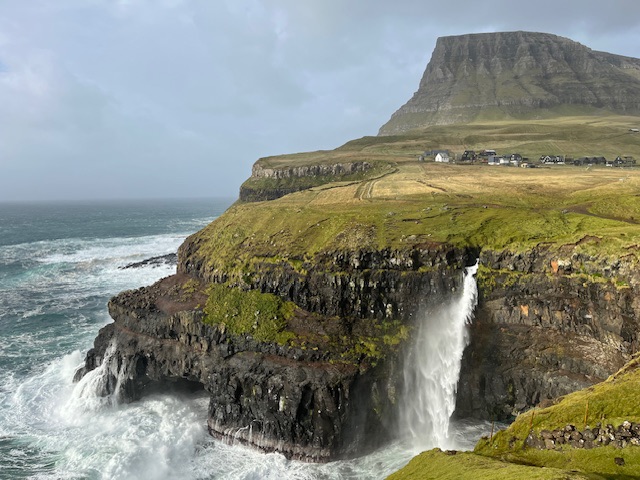
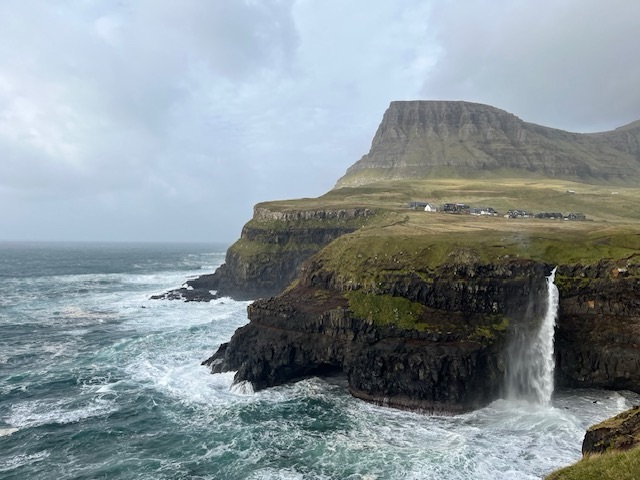
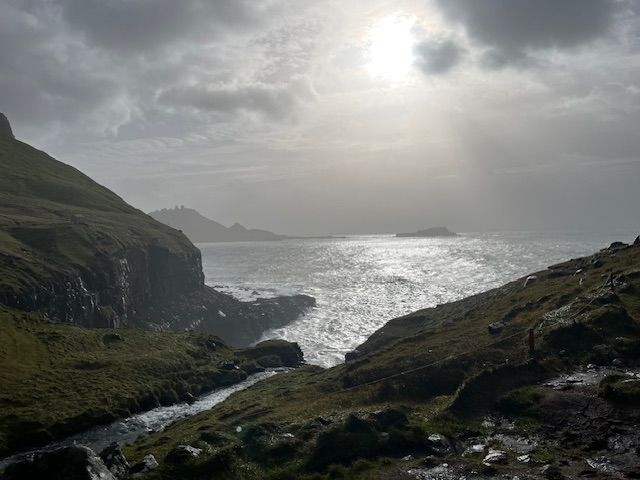
Interestingly, Gásadalur is home to many of Vágar’s Huldufólk. The Huldufólk, or hidden people, are supernatural beings that live in nature. They look and behave like humans, but live in a parallel world. They can make themselves invisible.
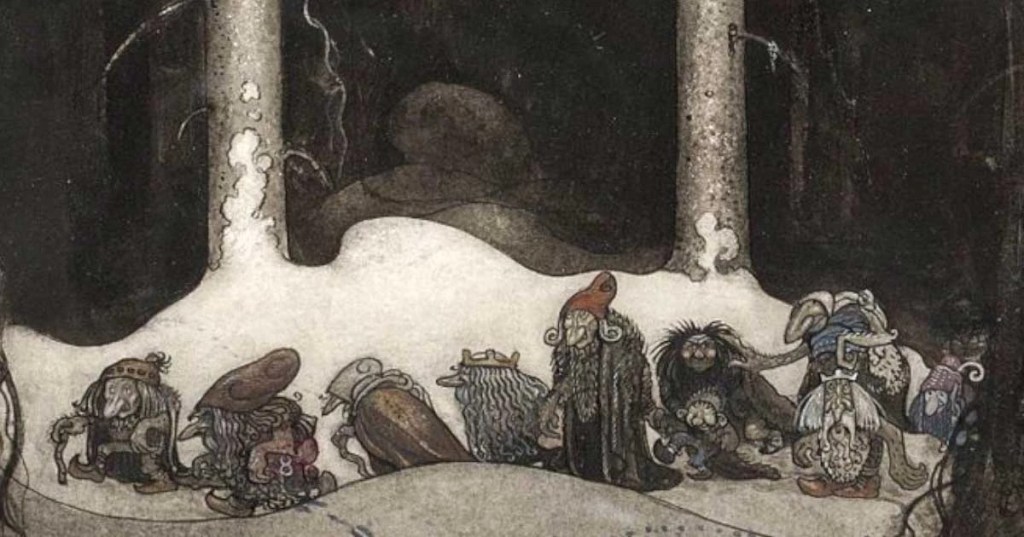
In Faroese folk tales, hidden people are said to be “large in build, their clothes are all grey, and their hair black. Their dwellings are in mounds, and they are also called Elves.” Parents caution children against throwing stones, as it may hit the hidden people. In a recent survey (March 2024) conducted by Local.fo (the radio station), of 5,000 people asked, 20% accept that ‘the hidden people’ actually exist, a further 20% preferred not to answer, and just less than 5% claim to have seen them.
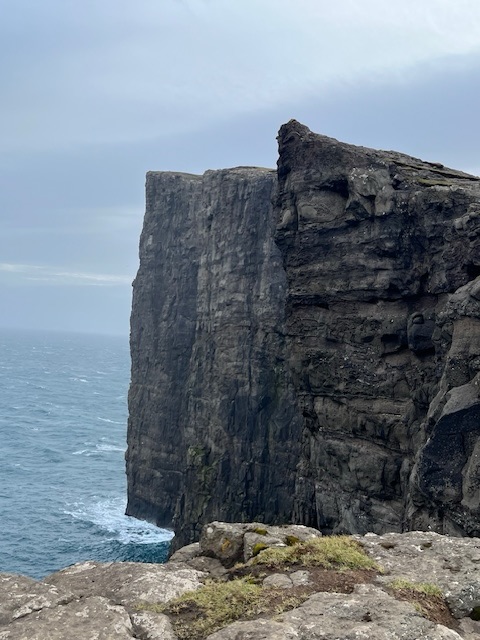
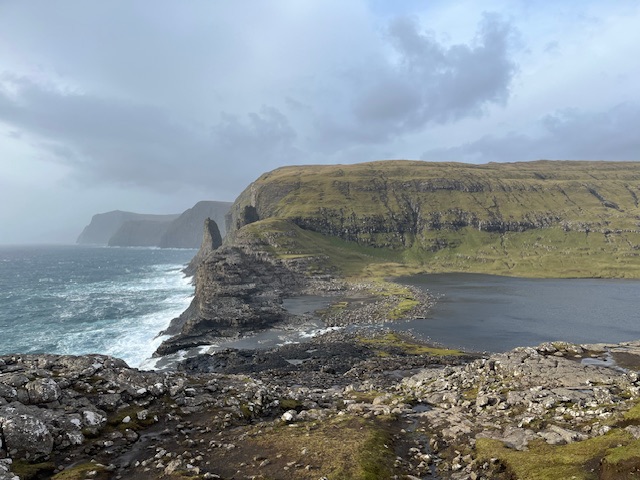
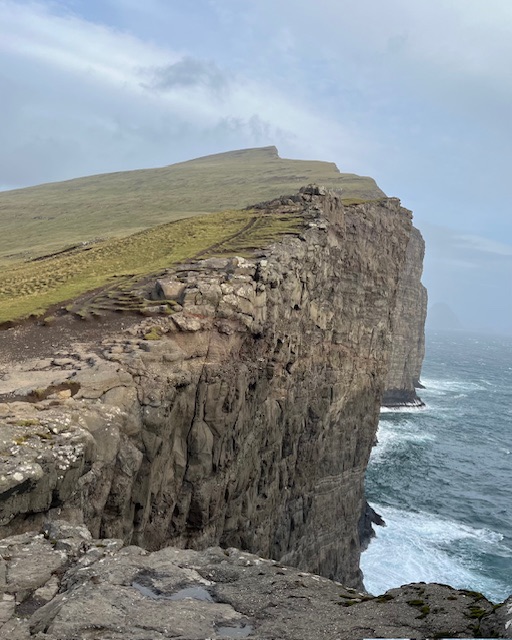
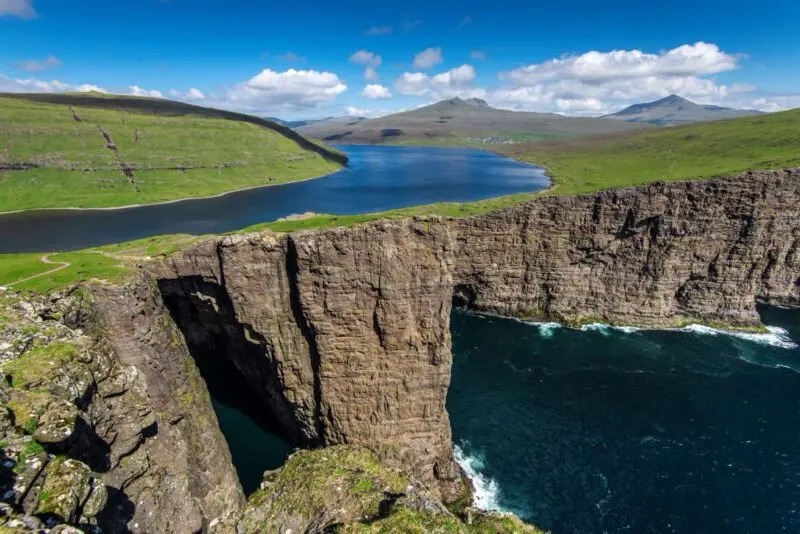
From Gásadalur I drove back past the airport to the town of Miðvágur from where the hiking trail to Trælanípa departs. Trælanípa Cliff is one of the most renowned sights in the Faroes.
A three mile trail from the visitor’s centre gradually ascends to a height of 250 metres above sea level and a viewpoint that looks down on Lake Leitisvatn which almost floats above the ocean. Maintained hiking trails are rare in the Faroe Islands, which is a pity. There isn’t a funded National Park network, nor is there any volunteer or charitable group for the upkeep of paths. A week ago, when I was at Viðareiði in the Northern Isles, there was a request for hikers to pay 300 kroner to walk the trail, about £35. Here at Trælanípa there is a turnstile at the cafe and a charge of 200 kroner. It seems to me that some sort of tourist tax is a better way to fund the building of new trails and the maintenance of existing ones, rather than charging a large amount to a relatively small percentage of visitors.
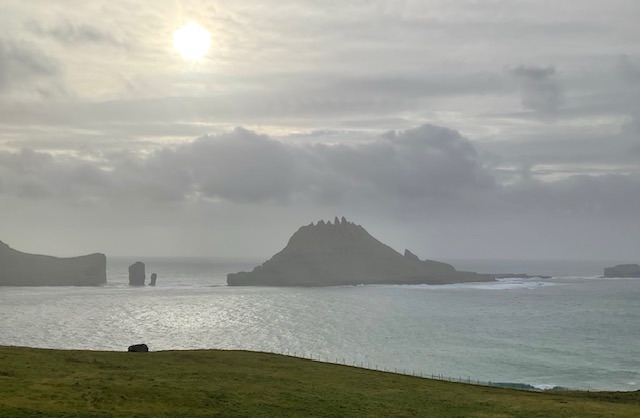
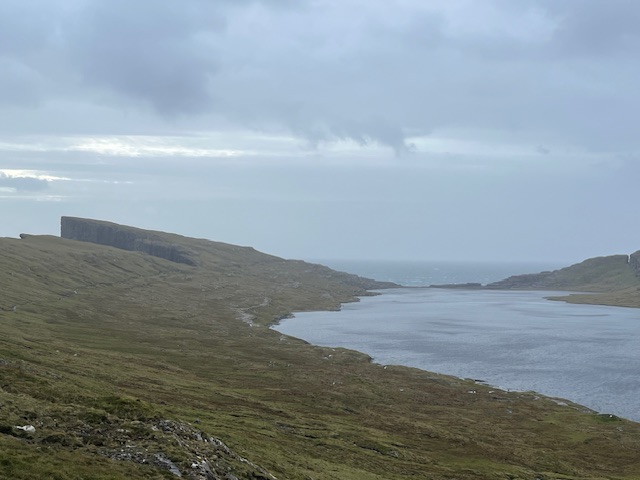
Anyway, I didn’t start the trail until 3 pm, and was aware that rain was arriving soon, but just about managed to get to the viewpoint with a hazy sun, and back to the carpark before the rain began.
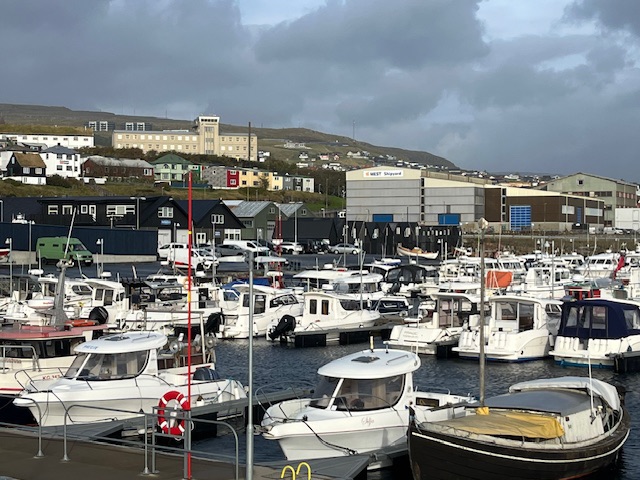
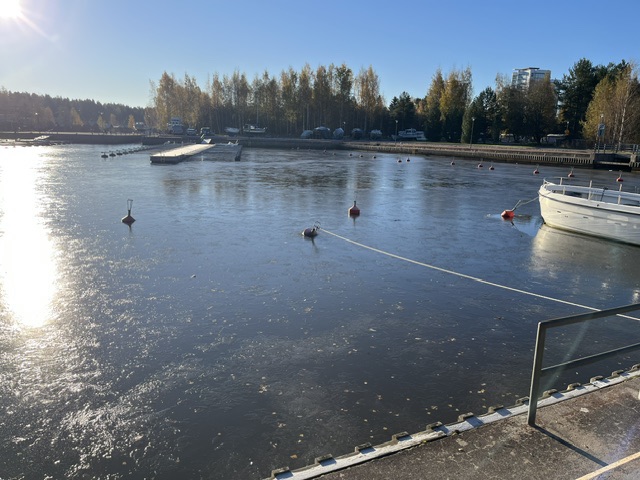
I’ve found a really good place to stay on a marina in Tórshavn. Most car parks have a limit of a certain number of hours displayed as you enter them, but at this marina, a bit further out of town than others, there isn’t a limit, as in the summer boat owners park here often for a few days. It’s also really quiet and so ideal..




Leave a Reply