Non-fiction – to be published 6 August 2026
More than 16 years ago Ryan wrote [book:Golden Boy: Kim Hughes and the Bad Old Days of Australian Cricket|7934288]. In 2019 Wisden Cricket Monthly voted it ‘the best cricket book ever’, voted for by several leading journalists.
This, not so much a follow up, but in the same style of exposing matters behind the scenes that even passionate cricket fanatics will not be aware of, may challenge for that title.
I was passed an advance copy by a friend of the author, one of my friends, who is a sports book publisher and author, that I spent the weekend watching rugby with a few weeks ago.
To be outstanding as a piece of non fiction about a subject as niche as cricket it is necessary for the book to appeal to a much wider audience, and this certainly does that. Ryan is bold and prepared to experiment with the writing up of his research as it is not possible for it all to be complete. His writing style suits that essence of fiction that may, very occasionally, be present.
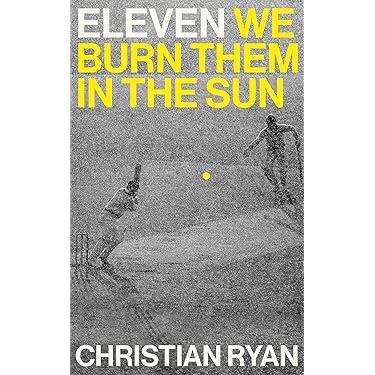
It’s a difficult book to summarise. Broadly, it concerns eleven unknown players, whose previously unheard stories are weaved together to make a book that asks questions about failure, how we are remembered, what might have been, and most of all, the role that sport plays in those who are dedicated to it.
It begins with West Indian spinner, Shirvan Pragg, and how in 1982 it seemed he was destined for great things. ..(he) bowled chinamen, left-wristed in spin, an arcane art, Shirvan’s involved rapid arm whirl. Plunges in the ball’s flight. Any batter encountering him was beset by issues. And googlies. Then the accident, now chinaman is racist and defunct. And rightly. Shirvan was recently returned from being on tour with Young West Indies. Eleven weeks, six days before he died he’d been on a playing field in Hove, the stink of the English seaside, stripy deckchairs to gaze on… He was killed in a road accident, leaving cricket to wonder on his place in the great West Indies team later that decade.
It’s Shirvan who sheds light on the book’s title also, though to spill that information would spoil the enjoyment of reading it.
From the other stories that are interwoven between each other, that of Frank Ryan interested me greatly, though they are all fascinating. Ryan attended school in Wallasey, one which years later gave me my first teaching job. As well as a cricketer Frank was a jazz musician.
He wore anticlothes. A word invented by George Melly for Frank. He skipped baths to smell, and reek. Exactly seventy-two years ago Frank who was born in Wallasey at the mouth of the Mersey leaned back producing wild sound gusts out of his trombone in an Oxford cricket dressing room in spring, a teammate Berry hammering out a rhythm with two stumps, three other players, Grieves, Hilton and Lomax, singing along as in that moment for Frank jazz and cricket came together. He was afire that week, he kept wicket safely enough for MCC at Lord’s to provoke a note from the powers asking about his availability to play West Indies in West Indies. The plane would be taking them away over winter, 1953 and 4, blizzards squashed north England, it flew without Frank. But he could be acrobatic handling the fast men, off whom he caught seven in Gravesend. Less so slower bowlers but he stumped Cowdrey at Mote Park. The family was nonsporty and unmusical. Frank pursued music and sport. With both, jazz bands, wicketkeeping, he’d stand legs apart, fingers were important. Danger of self-sabotage. Constant catching’s stressful on a wicketkeeper’s fingers which is ugly news for trombonists but Frank didn’t have to sabotage himself, he had a saboteur. In that Oxford dressing room unused to explosions of jazz sat another teammate Washbrook. Washbrook: disgusted. It happens. A career and life can be thriving. Then you run into a prick or a snob or in this case a prick and snob. Washbrook. A man with a head swirling with axioms – every cloud has a silver lining was one from mum. If you are never satisfied you’ll never be swollen-headed. Had confided Hirst the allrounder, three and a half times older, advice never bettered felt Washbrook. Nothing succeeds like success he heard the world say. And there is nothing more calculated to take a man’s conceit out of him than cricket. That last was pure C Washbrook. Who had a thing about ten-thirty. Ten-thirty to bed said senior Paynter, who was overflowing, saying “Glad it’s thee, Cyril.” Washbrook was pro-entertainment. Entertaining others meant giving them the best of him and that took single-mindedness, he had to be that ball, meld into it. Meld into the bat. Had to be clock-sent to bed. Woke one morning as Lancashire’s new captain, start of 1954. Frank whơd almost glimpsed the Caribbean with his country missed the county’s next thirteen games. Persona non grata. Picked come July. Had four good games, one bad. Enough – and was put on a train going in a different direction. That is not a metaphor. Two trains. Trains or buses, the team’s bound for Birmingham, Frank’s … – to elsewhere. Frank spoke of a letter mailed to Worcestershire claiming he, Frank, was a grave social risk, so spelling the death of their, Worcestershire’s, intention of recruiting him. “Death Letter” – song on a Mick Mulligan’s Band EP. Frank said he saw the letter and signature, Washbrook’s. They, Frank told Chalke, meaning the conservative cricket culture, had this view of jazz as black people’s plaything. A way in the future thrived an unpretentious wicketkeeping stylist who wore deep the pains of being left out, Jack Russell. A friend of Frank’s, batter Alan Rayment, rated Frank in Russell’s class. The year fifty-six was heady times for Frank. Saw Louis Armstrong perform.
.
Parr went on to manage Acker Bilk, and played for the ‘Ravers’ XI, the only (most likely..) Jazz Cricket team.
Ryan is Australian. Only one of his ‘eleven’ is an Aussie, though there are plenty of references to the country, not least during the Packer years, and Bob Dylan playing at the Sydney Showground in 1978, ..the unhappiest stoner clown in the circus with his black make up dripping in the rain…
Not all of the eleven Ryan chooses are unknown, as he includes is Wasim Raja, but a side to his life that few will be aware of. In passing, he refers to other cricketers also, the Fijian, Ilikena Lasarusa Talebulamaineiilikenamainavaleniveivakabulaimainakulalakebalau, for example.
It’s a wonderful reading experience, like nothing I have read before. It may help to be a cricket fan, but it is by no means necessary.
Though no doubt this took years to research, Ryan may have stumbled on something here.. hopefully, in due course, he may bring us another ‘eleven’.
My GoodReads score 5 / 5








Leave a Reply